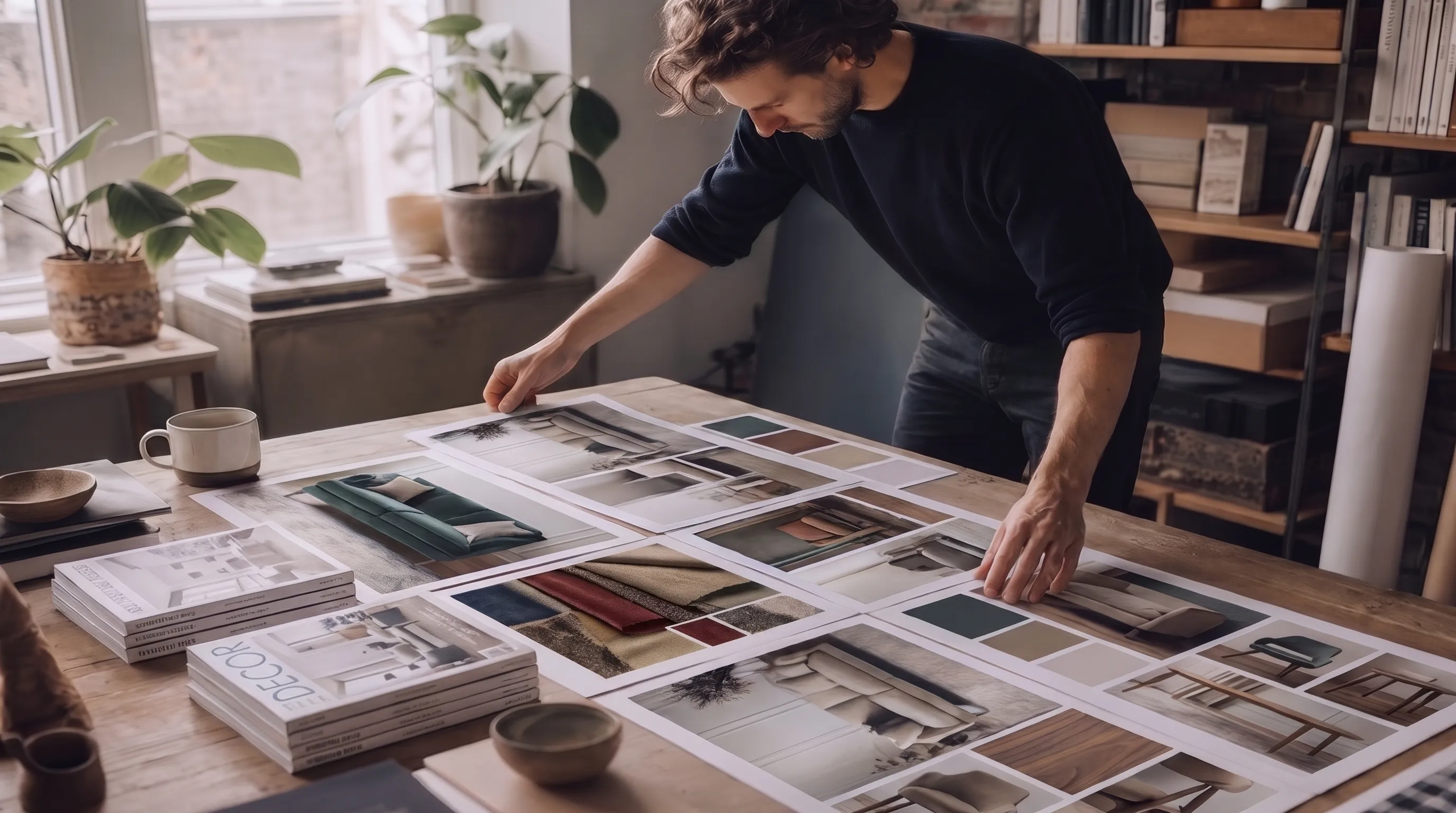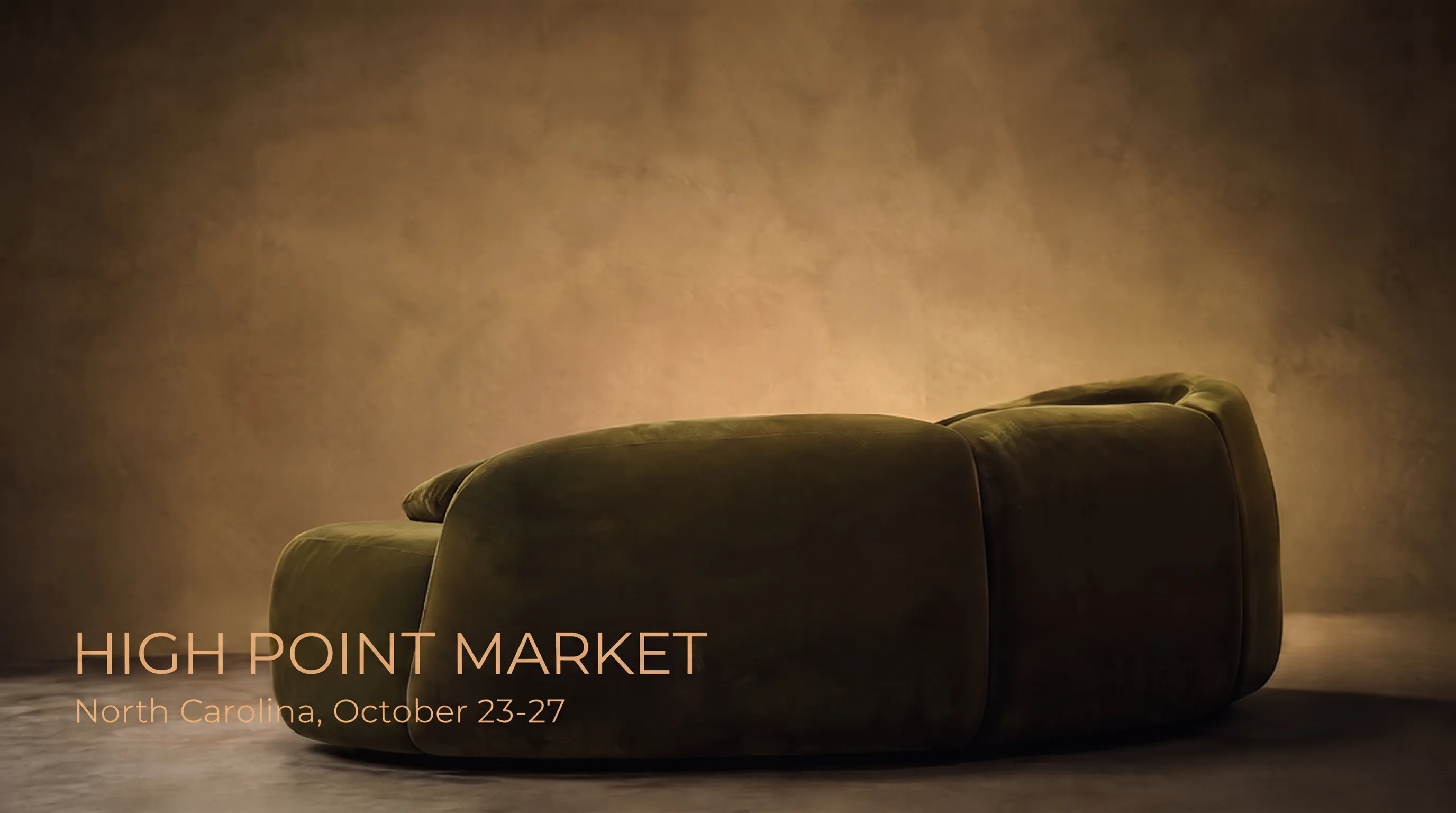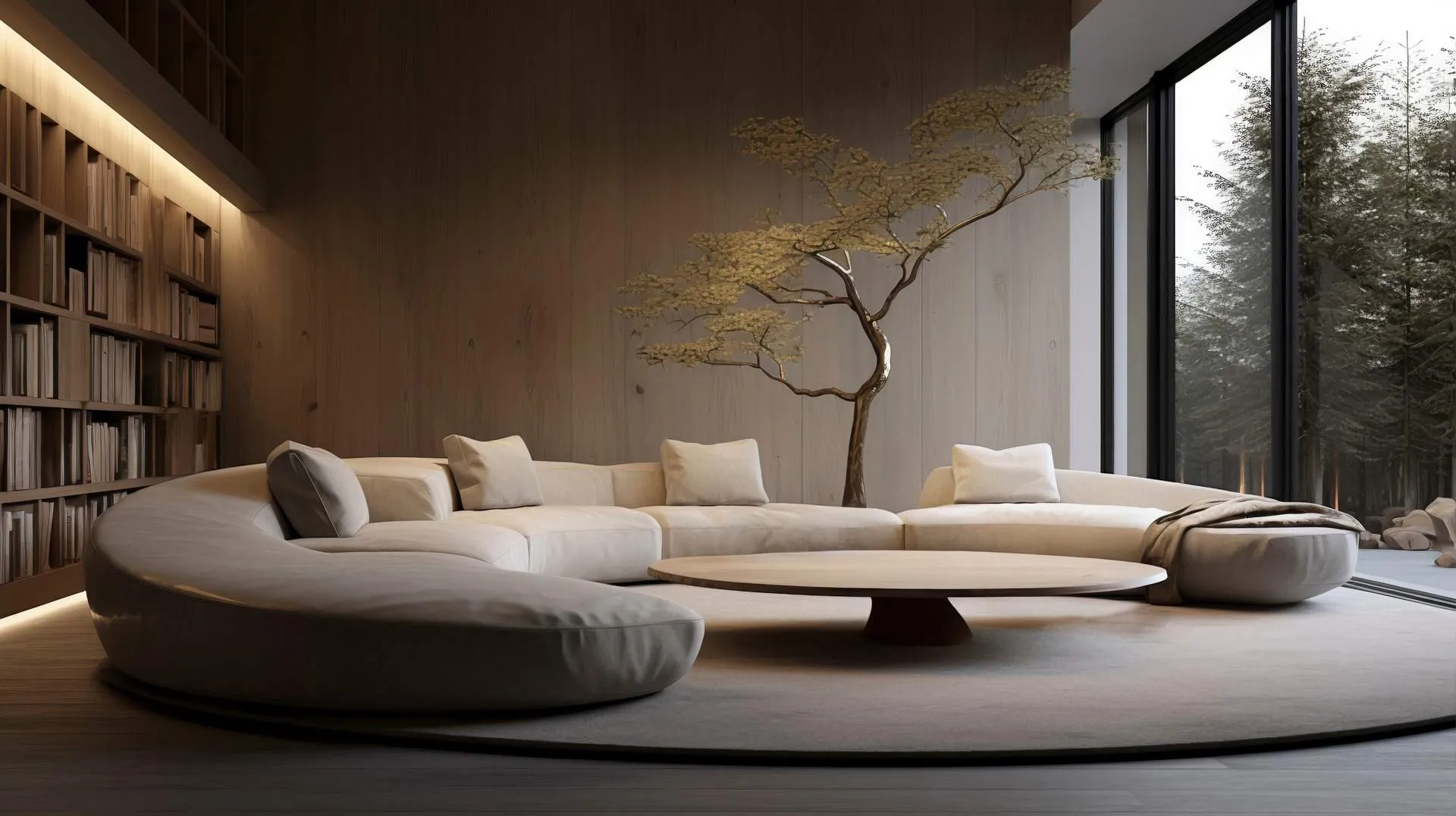
The two major January furniture fairs — IMM Cologne and the winter Maison&Objet — set the season’s tone. This year: warm natural tones and soft, rounded forms.
Before the trends themselves, it helps to understand the context they appear in — who organises these fairs, how often they run, and why the January editions specifically count as the industry’s starting point.
What IMM Cologne is, and why it opens the year
IMM Cologne runs every January at Koelnmesse and is considered the furniture calendar’s opening event. First held in 1949, it has over 75 years of history behind it, not a venue built around a passing trend.
IMM Cologne is also known as where distribution deals and bulk contracts for the year get signed — a working marketplace, not just a showcase.
What Maison&Objet is, and how it differs from Cologne
Maison&Objet is a separate Paris fair held twice a year, broader in scope than furniture alone — decor, tableware, home textiles, even home fragrance. One session can draw over 3,000 exhibiting brands and 70,000+ trade visitors.
Why the two fairs are often mentioned together
The two fairs fall in the same month, days apart, and many buyers visit both on one trip — so the industry reports on them together as one combined starting point for the year.
A warm neutral palette instead of cool grey
Both fairs show noticeably less of the cool grey that dominated for years, and more warm beige, terracotta and walnut — a shift that pairs easily with wood and wool already common in many collections.
A renewed interest in warm-toned walnut and oak veneer stands out, contrasting with recent springs’ preference for bleached, pale wood — if confirmed at spring fairs too, this points to a longer-term shift.
Rounded forms, no sharp corners
Sofas and armchairs with soft, rounded armrests keep gaining ground at both fairs — a trend running several seasons now, not a one-off novelty. Rounded shapes read as taking up less room and suit compact city flats.
At Maison&Objet this shows clearly in modular systems: rounded sections join less visibly, so a multi-module sofa reads as one sculptural shape — an effect that scales with the sofa’s overall size.
How January-fair trends usually play out afterward
Based on past years, a January trend rarely stays unchanged — it is tested at Milan’s Salone del Mobile in spring and confirmed or dropped by the autumn fairs. January is a first hypothesis, not a final verdict.
How professionals read trend round-ups, unlike shoppers
Professional attendees rarely look for a ready "buy this" answer on the floor — they gather raw observations from several stands and compare them only after returning, usually within a week or two, which is why thorough wrap-ups rarely appear on closing day.
A private buyer can use a smaller version of the same strategy — wait until a theme repeats across several independent sources rather than acting on one striking social-media post. A genuine trend surfaces everywhere at roughly the same time.
What to check before following a trend
- Does the direction repeat across several studios, not one experimental brand
- Is it confirmed by later fairs in the season, not just January
- Does it pair with materials already in your interior, or require replacing everything
- Can it be tried cheaply first — through textiles or one piece — before a full commitment
Modularity and transformability — a theme that will not leave
Modular, reconfigurable furniture — sofas with movable sections, poufs with hidden storage, folding side tables — has held steady for several years now, unlike the colour palette, and has become a baseline expectation rather than a bonus feature.
This is especially practical for the Russian market, where apartment layouts and moves change often — furniture that can be rebuilt for a new room saves money over several years, even at a slightly higher starting price.
Materials on the stands: beyond textiles
Beyond fabric, both fairs showed more natural stone and handmade ceramics — mostly in decor and tabletops rather than upholstered furniture — part of the same shift toward warmer, more tactile surfaces.
Metal legs and frames also shifted warmer — aged brass and bronze instead of the cold chrome or matte black that peaked a few seasons ago. Such base-material details often outlast the main headline trend.
Maison&Objet also showed a line toward mindful production — recycled materials, local wood species over imported exotics, shorter supply chains. Still more a statement than mass practice for big brands, but drawing noticeably more press attention than in past years.
Independent studios versus major brands
At Maison&Objet, small independent studios usually show bold ideas first, with large brands adapting them for mass production a year or two later — so when a look already appears across several big brands, the trend has settled in, not just started.
What of this applies at home without a renovation
The main practical takeaway from both fairs is not a specific shade but a method: confirm the direction repeats across sources, try it cheaply through textiles first, then decide if it deserves a bigger budget.
You do not need a full renovation: a throw, a few cushions and perhaps reupholstering one accent chair already bring a room closer to the current palette, at a fraction of the cost of replacing everything.
Major brands take fewer colour or texture risks on their core catalogue — their experiments usually appear in limited capsule collections shown at fairs like these, with only the pieces that get a lasting response from buyers and press making it into the permanent lineup.
A short history: how the palette shifted over recent years
A few years ago the same January fairs were dominated by cool, almost museum-grey tones — a trend that held unusually long, two or three seasons, before giving way to warmer colours. Last autumn’s Maison&Objet and London Design Festival already showed the first shift toward textured natural materials; this January session confirms and amplifies that direction rather than starting it from scratch.
This matters for anyone reading trend round-ups before an actual purchase: a warm-palette choice made now is unlikely to feel dated in six months, because it continues a direction already confirmed across several previous fairs, not one that appeared out of nowhere.
The same logic applies to Milan: a direction confirmed in Cologne, Paris and Milan within one year deserves far more trust than a striking but isolated installation nobody else in the industry picked up in the following months.
A regional contrast: German Gemütlichkeit versus Parisian minimalism
Interestingly, within the same overall trend, German and French exhibitors emphasise it differently. At German IMM Cologne, warmth shows up as comfort and function — practical storage, thought-through ergonomics. At Parisian Maison&Objet, the same palette leans more decorative, through surface texture and light.
For anyone choosing custom furniture, this distinction is worth remembering — the Russian bespoke market leans closer to the German approach, expecting both beauty and practicality rather than trading comfort for a striking photo.
A note from a KALLEN HOME designer
"We follow these fairs not to copy shapes, but to track where materials are heading — this season we have seen client interest shift toward warm walnut tones, away from the light oak that was our bestseller for two years," says a KALLEN HOME designer.
The next major test for this direction is Salone del Mobile in Milan each spring — if warm tones and rounded forms show up there too, it is a genuine year-long trend, not a one-off from a single January session.
IMM Cologne and Maison&Objet work less as a directive and more as an early indicator — what happens there in January is the first chapter of a longer conversation that continues in Milan each spring.
Worth remembering the reverse case too: not every January idea survives to autumn unchanged — bright blue velvet shown as a potential hit a couple of seasons back softened to muted indigo by autumn and settled into a neutral blue-grey a year later, a common fate for bold colour statements.
Frequently asked questions
What is IMM Cologne?
An international furniture fair in Cologne, Germany, held every January since 1949, traditionally opening the furniture industry’s calendar.
What is Maison&Objet, and how does it differ from IMM Cologne?
A Paris fair held twice a year that, unlike furniture-only IMM Cologne, covers the whole home-decor spectrum — furniture, tableware and textiles.
Will the warm palette stay relevant all year?
A trend from the January fairs usually holds for several seasons, tested in Milan each spring and confirmed or dropped by the autumn shows.
Do you need to replace all your furniture to follow the trend?
No, changing the textiles, cushions or reupholstering one accent piece is usually enough.
How do you know a fair trend will not be a one-season fad?
Check whether the direction repeats across several studios and is confirmed at the season’s later major fairs, not just one.