Every year, after the January fairs, the industry names three or four "trends of the year" — and every year, twelve months later, only some of them actually stick. Checking point by point what made it into real catalogues and what stayed a nice phrase on a stand.
Why bother checking last year’s predictions at all
Trend round-ups are written mid-fair, when it is hard to tell a lasting direction from one bold exhibitor’s striking one-off gesture. The only honest way to check a round-up is to return to it a year later and see what actually reached mass collections, not just one photographed stand.
This article is exactly that check — taking the directions called this year’s main trends at the fairs and comparing them with what actually reached catalogues by year’s end, including our own.
What was confirmed over the year: wood and stone texture
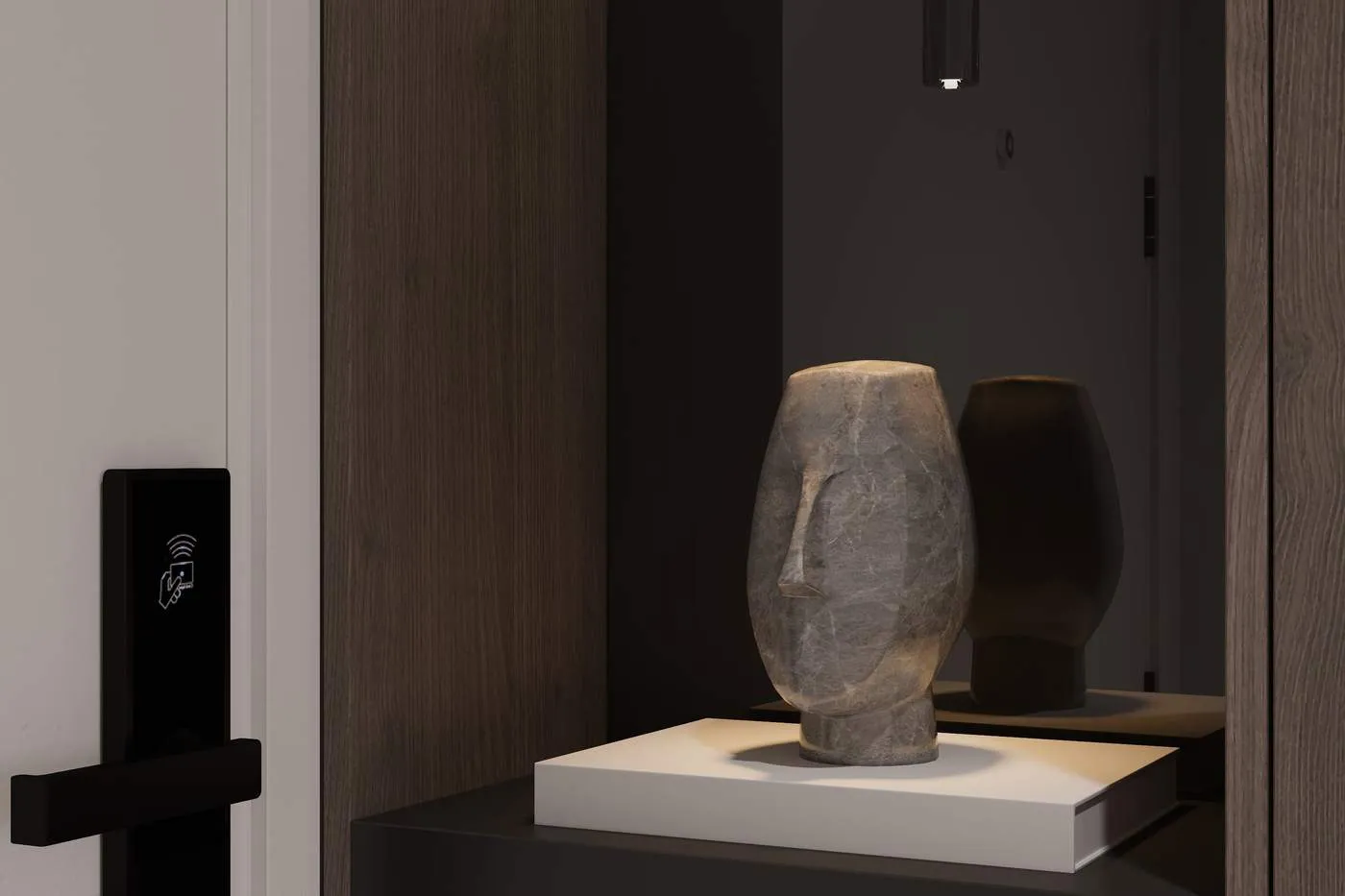
The focus on wood and stone texture discussed in spring at Salone del Mobile and in autumn at Maison&Objet and the London Design Festival moved over the year from fair-floor talk into real collections — a rare case of a trend proving lasting, confirmed across several different venues, not one.
The practical sign that a direction has settled, not stayed a buzzword, is appearing at large mass-production brands, not only small SaloneSatellite studios. That is exactly what happened with fluted, raw wood and rough, unpolished stone this year.
What was confirmed: deep seating and modularity
The second direction called "emerging" rather than "settled" a year ago — deep, relaxed seating and modular sections rebuildable for a new room — moved over the year from "interesting experiment" to "standard client request": clients now ask for modular sofas themselves, without the workshop suggesting the idea first.
- Textured wood and stone — confirmed across four major fairs in a row, reached mass collections
- Deep seating and modularity — went from experimental request to standard client expectation
- Handwork over conveyor production — growing every season, confirmed by dedicated stands and rising bespoke demand
- Bold accent colours — did not hold; clients still choose a calm palette for large furniture
What did not stick: bold accent colours
Bold accent colours, much discussed in summer after a wave of capsule collections in saturated blue velvet and terracotta, are applied noticeably less often in practice than those round-ups predicted. Most clients still choose a calmer, longer-lasting palette for large furniture — a sofa or a bed — leaving bright colour for cushions, throws and decor that are easier to swap when the mood changes.
This is not a one-season fluke — past bold colour statements met a similar fate: a striking shade looks great on a show stand under professional light, but gets chosen less often for a piece someone will live with for five to ten years in an ordinary flat.
What year-end round-ups usually skip: last year’s trends
Most industry year-end round-ups focus only on the new season, skipping a check on what happened to the directions called the year’s main trend twelve months earlier. Last year’s focus on light, bleached wood did not vanish this year, but visibly shifted — warm walnut began pushing out light oak exactly where oak led a year ago. The direction did not die, it evolved, and a round-up limited to the new year alone misses that evolution.
Partly confirmed: mindful production
Recycled and local materials over imported exotics were discussed at every major fair this year, but confirmed only partly — for large international brands this is still more often a statement on one stand than practice across the range, while small bespoke workshops already using local wood and short supply chains found the theme matching existing practice rather than changing anything.
How we decided what counts as a confirmed trend
The test is simple and applied consistently to every direction: a trend counts as confirmed if it repeated at three of the year’s four major fairs — Milan in spring, ICFF in New York, Maison&Objet in Paris and the London Design Festival — not if it was loud at just one. A direction mentioned only once is filed here as unconfirmed, however much press coverage that single fair got.
Regional differences round-ups often smooth over
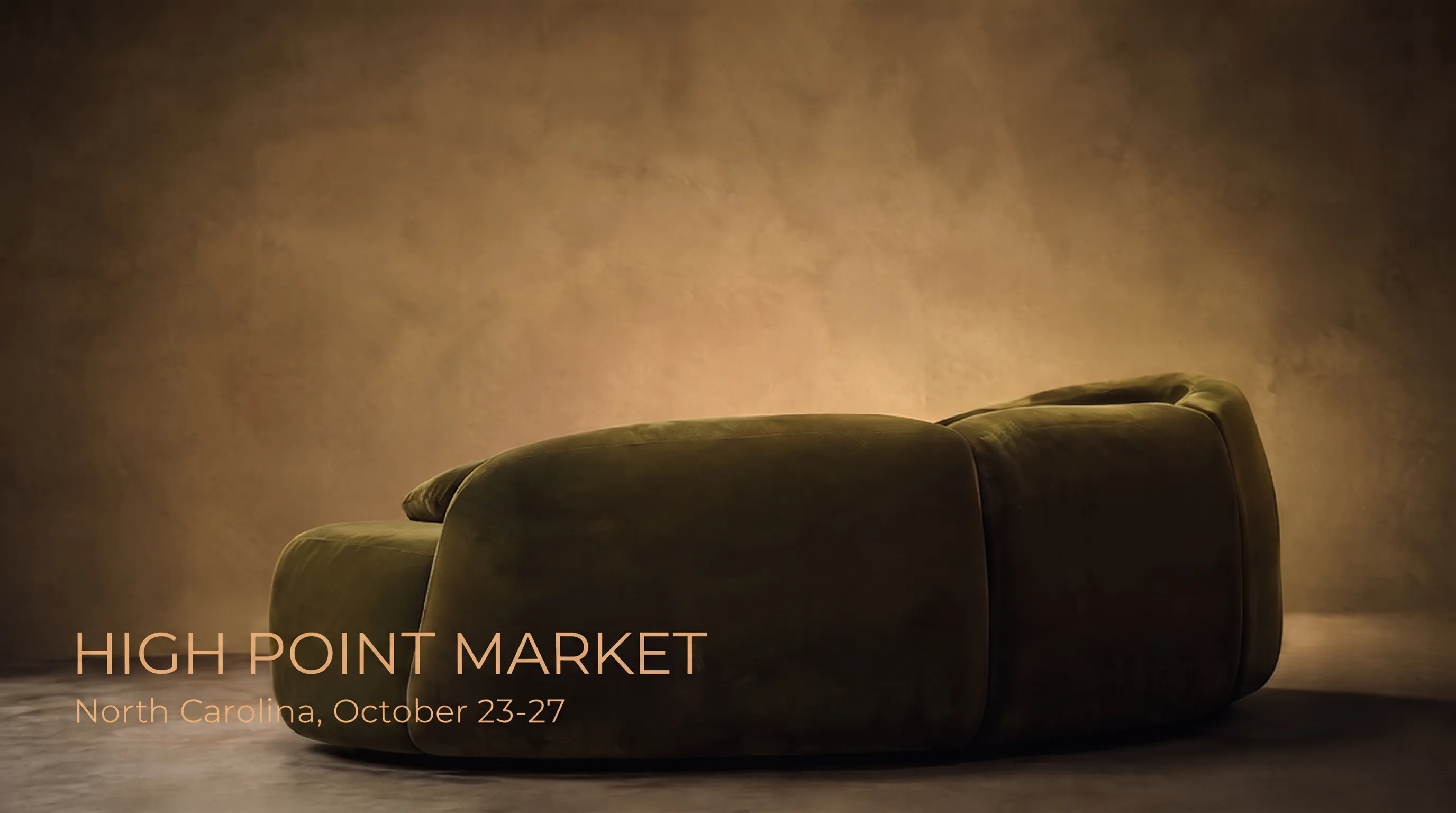
A general year-end round-up usually averages out what actually evolved differently by region — the American market, per High Point Market, moved toward large, deep seating and mixing furniture eras in one room, while European venues focused on material and texture rather than scale. For a reader, this means a headline "trend of the year" almost always hides two or three parallel, not identical, regional stories.
The gap between a decor trend and a furniture trend
A separate pattern confirmed year after year — trends in small decor (cushions, vases, lamps) change and settle noticeably faster than trends in large furniture like sofas and beds. The reason is simple and has nothing to do with fashion: a cushion can be swapped in an evening for almost no budget, while a sofa gets replaced once every seven to ten years, so its colour and texture decision is made far more conservatively than the cushions on top of it.
What this means specifically for made-to-order furniture
Of all this year’s directions, the lasting interest in material and handwork aligns best with how bespoke production already works by default — a workshop whose catalogue is already built around wood species, fabric density and hand upholstery does not need to change strategy in response; the trend simply puts into words what was already daily practice long before anyone called it "trend of the year."
Outlook for next year: what will likely strengthen
It is reasonable to expect the focus on material and handwork not to fade but to strengthen — aligned with the industry’s shift toward mindful, durable consumption, itself a settled multi-year theme rather than one season’s fad. A second likely candidate is modularity further settling in as a standard, not an option, especially in markets with compact housing and frequent moves.
What fabric and wood suppliers themselves say, not just designers
A separate, less visible signal of a genuine trend comes not from designer interviews but from raw-material suppliers directly — if a specific wood texture or fabric density starts rising in orders across several different suppliers at once, not one, that confirms a trend far more reliably than press mentions. This year, exactly that rise showed up among fluted and milled wood suppliers — order growth for that texture, by the workshops’ own account, ran noticeably ahead of smooth panels.
Outlook for next year: what will likely not hold
By analogy with this year, any bold colour statement next January will likely meet the fate of blue velvet and terracotta — loud on the stand, noticeably tamed by autumn into a calmer, sellable version. Not pessimism, just the pattern of recent years: colour trends hold up far worse than material ones.
An example of a trend that failed to confirm entirely
A few years back, one season loudly discussed glossy, mirrored furniture surfaces as a returning eighties trend — vivid at one fair, well covered in the press right after, but nearly gone from conversation by the next major venue that same year, never reaching mass collections in real volume. A good example of how a round-up written right at the fair can honestly describe the moment without predicting the year.
Why fair press releases systematically overstate novelty
Fair organisers have a structural incentive to call as many directions as possible "the trend of the year" — that is part of the venue’s own marketing, not neutral analysis. An official press release from any major fair almost always names more trends than actually stick; some are honest observations, some are overstated in the organiser’s interest, and telling them apart on the show floor itself is nearly impossible.
How brands themselves treat first-season trends
Large-scale manufacturers rarely launch a full range right after one January fair — too risky to commit production to a direction that will not hold by autumn. The typical practice instead is a limited capsule collection as a trial balloon, watching buyer and press reaction, and only rolling the direction into the core, long-term range once confirmed at a second or third fair.
The same "trial balloon" principle works in reverse for small bespoke workshops too — before officially offering clients a new material or texture, it makes sense to use it first in one or two showroom samples and watch the reaction, rather than immediately rebuilding the whole catalogue around an unproven direction.
What signs mark a confirmed trend even as it first appears
- Seen at several different studios at one fair, not one bold exhibitor
- About material or construction, not only colour or a temporary decorative trick
- Large brands test it in a capsule collection the very first season, rather than ignoring it entirely
- Logically continues what was already being discussed a season or two earlier, not appearing from nowhere
What this check already tells us about next year
Applying these same signs to directions that only started being discussed late this year — aged, patinated brass instead of matte black metal, for instance — shows the "repeated across several stands" sign already present, while the "confirmed by a large brand’s capsule collection" sign is not there yet. Worth watching, but too early to call it a settled trend before next spring’s shows.
A note from a KALLEN HOME designer
"Every January we honestly write down what we think is a lasting trend versus one fair’s pretty experiment, and every December we come back and check those same words against what actually happened. Over several years, material has almost never failed that check, and a bright seasonal colour almost always has," says a KALLEN HOME designer.
By her account, this annual self-check builds the habit of reading trend round-ups not as a shopping list to execute but as a hypothesis worth letting time confirm before committing a client’s budget to it.
The main takeaway from this breakdown is not the specific material list but the method itself — shelving a trend round-up for a year and honestly checking it against reality is far more useful than reading yet another "season’s top trends" list and acting on it immediately.
For a reader who does not follow fairs professionally, the one habit worth taking from all this is simple: before changing an interior on the strength of a fresh trend round-up, ask whether the direction repeats across at least two or three different sources, or whether the whole impression rests on one striking stand photo.
What from this year is worth carrying into the next
Boiled into one practical recommendation for anyone planning an order early next year — there is no need to wait for January’s results to know which material to pick. Texture and handwork as this year’s direction have already passed twelve months of real-world testing, reason enough to decide now, without waiting for another round of fairs that would, at best, confirm the same thing rather than reveal something fundamentally new.
Frequently asked questions
What can be called this year’s main trend?
A lasting interest in natural, textured materials and handcraft — confirmed at three of the year’s four major fairs.
Why did not bold colours become a trend despite the summer buzz?
Most clients still choose a calm palette for large furniture, saving bright colour for decor and textiles that are easier to swap.
Does this change KALLEN HOME’s strategy?
No — the catalogue was already built around materials and hand upholstery; this trend simply aligns with how the company already works.
How was a confirmed trend defined?
A direction counted as confirmed if it repeated at three of the year’s four major fairs, not just one loud appearance.
Will there be a detailed breakdown of next year?
Yes, the annual wrap-up and forecast come out in the "World of furniture" section at the end of December.