Autumn traditionally opens with Maison&Objet in Paris and the London Design Festival — two differently structured events that together give a fairly complete picture of the year ahead.
A quiet pause before the season — not the same as nothing happening
July and August look quiet publicly, but behind the scenes brands are finalising materials, palettes and catalogues — summer announcements are not rumours, they describe what will actually be on the autumn stands.
In practice, someone following trade media in July already knows roughly what everyone else will report by September — just with stand photos added later. That few-week head start can matter for anyone planning materials or a renovation in advance.
Maison&Objet: how one of the largest interior fairs works
Maison&Objet runs twice a year at Paris Nord Villepinte and gathers thousands of interior and decor brands under one roof; beyond individual stands, curated trend forums distil the season into words and material samples that circulate through trade media for months.
The fair also runs an annual programme spotlighting emerging designers the organisers consider future-defining — one of the few early signals of who will land major commissions years before it shows in sales.
The scale has a flip side: a few thousand stands cannot be walked in full even over several days, so professionals plan routes by sector — furniture, textiles, lighting, decor — and skip the rest. Any fair round-up, including this one, is therefore inevitably selective, not an exhaustive catalogue.
London Design Festival: a decentralised approach, not one hall
Founded in 2003 to cement London’s status as a design capital, the festival spreads across the whole city — museums (including the V&A), galleries, temporary pavilions and design districts — rather than one exhibition hall, with dates varying year to year but always landing in September.
Independent studios and experimental forms have stronger standing here — what Paris shows as a finished commercial product, London often shows a year or two earlier as a prototype or installation, a way to catch a trend being born rather than its finished commercial form.
Being spread across the city is both a strength and a weakness: installations sit inside real historic buildings rather than a neutral hall, helping imagine a piece in a lived context, but seeing everything in one trip is harder than in a compact exhibition centre, so most visitors cover only two or three of the dozens of participating districts.
For an online observer this is not an issue — curators and districts publish their own digests and photo round-ups during the festival itself, and together they usually build a fairly complete picture even without visiting London in person.
Not having a plane ticket does not mean lacking information — if anything, one evening with a laptop can produce a more structured overview than one day of walking the city.
How the two events complement each other
Maison&Objet gives commercial reach — what will actually reach brand catalogues within a season or two. London gives an early signal — what studios are testing that may reach the mass market later, if ever. Watching only one event shows half the picture.
A simple way to track both pictures at once: two columns of notes — materials and colours confirmed across several Maison&Objet stands in one, forms and ideas seen only at London’s experimental venues in the other. A year or two later it becomes clear which items from the second column migrated to the first and which stayed a one-off experiment.
What usually sets the autumn tone: a multi-year observation
Autumn fairs have leaned toward texture and natural materials over bold colour for several seasons running, and this year’s summer previews suggest that continues — the conversation is shifting from "what colour is fashionable" to "how is it made."
This year’s summer previews also lean more on material traceability — not just "solid wood" but a named species and sourcing region, not just "wool" but a named supplier farm — a sharper, more specific version of the mindful-consumption conversation the industry has carried for years.
- Trend forums and press kits publish in June–July, no need to wait for September
- Confirmed exhibitor lists often signal shifts earlier than press releases
- Material palettes are published separately from shapes and tend to outlast seasonal silhouettes
- Independent design media publish their own forecasts worth reading alongside official releases
What actually reaches real interiors, and with what delay
A trend shown at a fair typically reaches mass collections within one to two seasons — the time needed to cost the material into production; London’s experimental pieces often take longer or never convert at all, which is the point — the fair acts as an idea lab, not a sales catalogue.
The delay is not industry inertia but real production constraints: a new material needs durability and safety testing, a supplier able to deliver volume at a workable price, and a reworked construction. For bespoke furniture this path is shorter — there is no need to wait out a full approval cycle for a run of a hundred thousand units, only to confirm the material for one specific order.
This is one structural reason small workshops sometimes offer a genuinely new material before large chain brands — not because they discovered it first, but because their path from sample to finished piece is shorter by an order of magnitude.
Which materials from past seasons already made the journey
A good example is fluted and raw wood, which appeared on trend forums as an experimental finish for several years before becoming a standard option in mass-market catalogues — the same path bouclé-type textured textiles took earlier, from runway accent to an ordinary price-list line.
The reverse example: glossy acrylic surfaces and deliberately "plastic" decor periodically appear on experimental stands but have not taken hold in home-furniture mass collections in recent years — the industry’s overall drift toward natural materials tends to leave such counter-trend experiments as one-off gestures, not the start of a new standard.
Why not every trend deserves a literal copy at home
A fair stand and a living room solve different problems: a stand must grab attention in seconds amid thousands of competitors, so it often uses contrast and scale that would feel excessive in an ordinary flat. Bringing a stand’s look home works better as one borrowed idea — a material, a tone, a proportion — than a literal full copy.
How to read summer previews without attending as a buyer
For someone simply planning a refresh, it makes more sense to track Maison&Objet’s material palettes — closer to what will actually be on sale within the year — than London’s boldest installations, which are more cultural context than a buying guide.
It helps to follow two or three trade outlets rather than one, since different editors read the same trend forum differently; participating studios’ own Instagram and Pinterest accounts often post stand photos before the organisers’ official press kits.
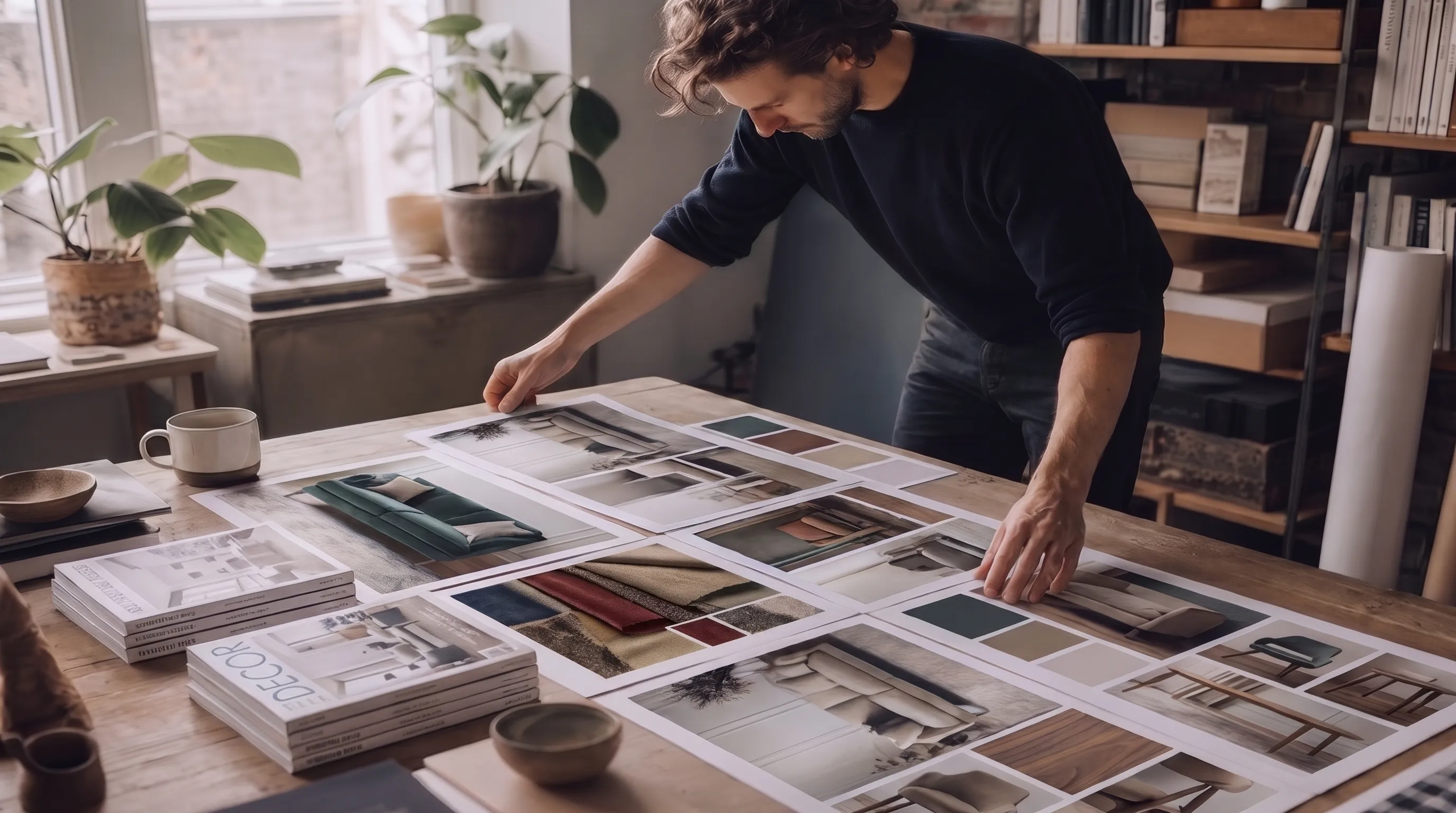
A useful habit: save screenshots and colour samples from each summer preview into one folder as they appear, rather than trying to recall them from memory in September — by the time the fairs officially open, that folder becomes a ready moodboard to bring to a designer or workshop instead of a vague "something about texture and natural tones."
The difference between a seasonal trend and a decade-long one
Not every "trend of the season" survives to the next year — some trend-forum language exists mainly for press coverage. A simple filter: watch whether the same emphasis repeats across several different fairs over two or three years, not just one event’s press kit.
This is exactly how interest in texture and handwork was confirmed in recent years — it echoed not on one fair but across Maison&Objet, London, and the spring Salone del Mobile in Milan, which sets the year’s tone. Independent events agreeing is a far stronger signal than one striking phrase on one stand.
What this means for anyone ordering furniture right now
For bespoke furniture, summer previews are no reason to delay a purchase until autumn "confirms" a trend — custom-made pieces are not tied to one season’s collection in the first place, since material and form are agreed for a specific interior rather than picked off this year’s shelf.
The one case where waiting for autumn genuinely makes sense is wanting the exact new material or finish just previewed, before it ships to suppliers. Otherwise, the conversation with a workshop about the desired result can start in summer, alongside reading the previews, not after them.
Otherwise, summer previews are best treated not as a shopping calendar but as free visual literacy — the more real material samples and colour pairings pass before your eyes in a season, the more confidently you can state your own brief.
Comment from a KALLEN HOME workshop craftsman
"We follow the fairs to track where materials and hardware are heading, not to copy shapes. We read Maison&Objet’s trend forums more closely than installations — that is usually where you see what will actually go into production," says the workshop team.
Frequently asked questions
When does the autumn Maison&Objet take place?
The autumn session traditionally takes place in September in Paris, at Paris Nord Villepinte.
How does London Design Festival differ in format from Maison&Objet?
Maison&Objet is one exhibition centre with commercial stands; London Design Festival spreads across the city, including museums and galleries, with an emphasis on experimental design.
Should I wait for autumn collections before buying?
There is no need — our furniture is made for a specific project rather than tied to seasonal collections.
Does KALLEN HOME publish fair round-ups?
Yes, in the "World of furniture" section and on the Telegram channel.
How long between a trend being shown and reaching the market?
Usually one to two seasons for commercial collections; experimental London Design Festival pieces may never reach mass production at all.
How to tell a lasting trend from a one-fair phrase?
Check whether the same emphasis repeats across several different events over two or three years, not just one press kit.