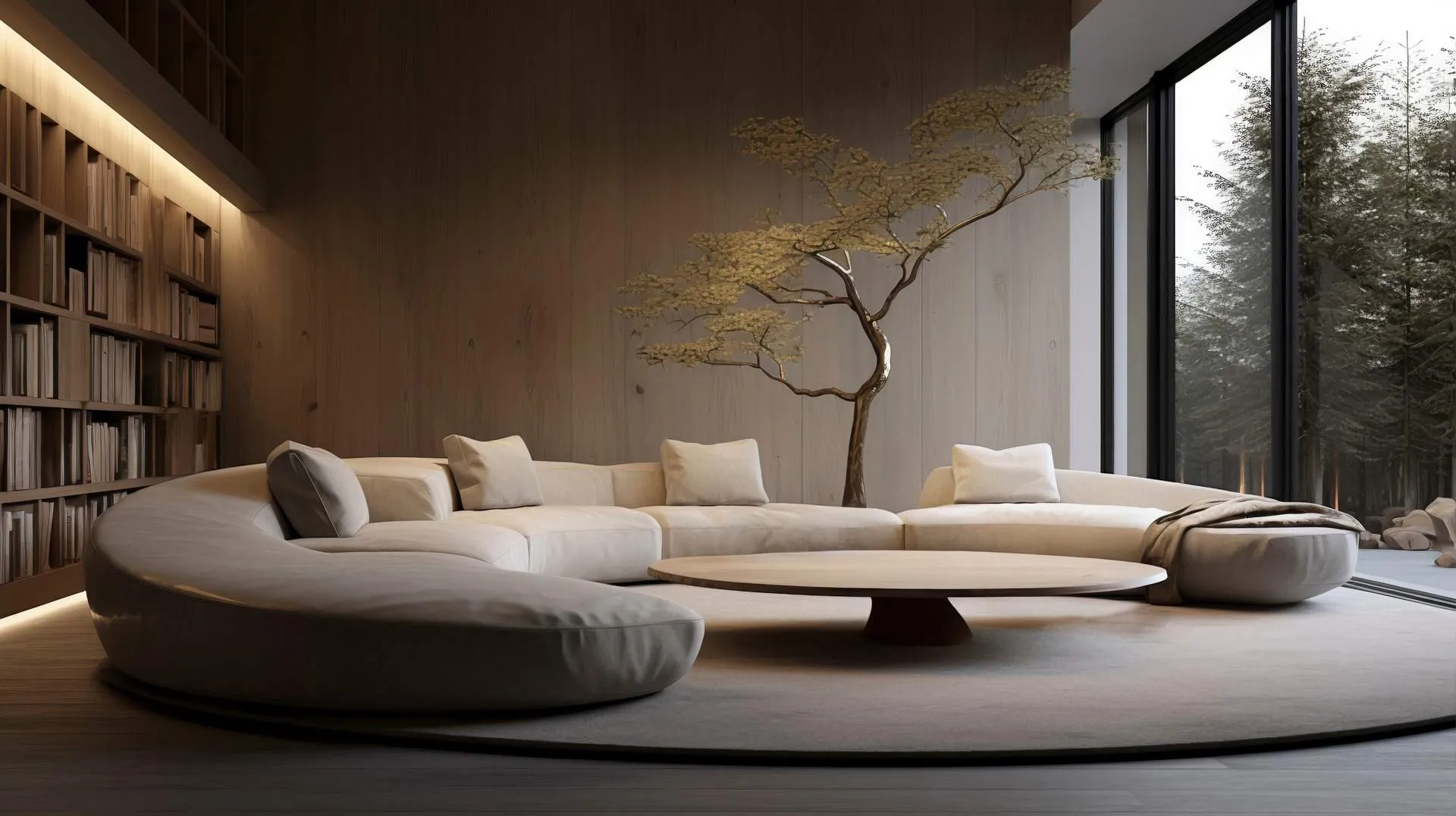
September opens with autumn Maison&Objet and the London Design Festival — two events different enough in format that comparing them directly misses the point, and that difference is exactly what matters for trend-watching.
Two events that cannot fairly be compared as equals
Maison&Objet is a trade fair in one building with fixed boundaries and a paid professional entry. The London Design Festival is a city-wide event with no single venue or ticket — dozens of locations across London, many free to the public. Comparing them on one scale is a mistake; they are two different tools for the same job.
Maison&Objet: numbers and thirty years of history
Maison&Objet was founded in Paris in 1994–95 and marked its 30th anniversary in January 2024 — not a fair built around current fashion, but an institution with nearly a generation of history. It runs twice yearly at Paris Nord Villepinte, drawing 3,000+ exhibiting brands and 70,000+ trade visitors per session.
The trade-fair format shapes what gets shown: mostly sale-ready collections meant for real buyer orders in coming months, not experimental prototypes unlikely to reach a shop floor — making Maison&Objet a strong source for directions already commercially vetted across several major brands.
- Maison&Objet — founded 1994–95, Paris Nord Villepinte, 3,000+ brands, 70,000+ visitors per session
- London Design Festival — founded 2003, city-wide, 2,000+ design businesses yearly
- Maison&Objet — paid trade entry; London Design Festival — many venues free to the public
- Maison&Objet shows sale-ready collections; London Design Festival shows experimental, independent work
London Design Festival: numbers and two-plus decades of history
The London Design Festival was founded in 2003 by Ben Evans and Sir John Sorrell; the first edition ran 20–28 September that year with 90 speakers across 60+ events — far smaller than today. By 2009 it had grown unwieldy enough that organisers introduced "design districts" just so visitors could navigate the city; there are now 11–13 depending on the year, with 2,000+ design businesses participating annually.
The format of a city-wide festival with no single curator produces a fundamentally different kind of material — independent studios, design-school graduates and experimental projects show work that has not yet passed through a major manufacturer’s filter, sometimes unpolished, sometimes exactly where an idea surfaces a year or two before big brands adopt and adapt it.
Why format matters more than the event’s name
This format gap translates directly into different value for different readers. Someone choosing furniture for the next few months benefits more from Maison&Objet — what shows there will actually go on sale. Someone tracking the industry’s direction two or three years out benefits more from London, where raw ideas surface before becoming mainstream.
- Need furniture soon — Maison&Objet: commercially ready collections
- Curious about direction 2–3 years out — London Design Festival: raw, unadapted ideas
- Care about one specific brand — check which fair it traditionally attends
- Want a quick combined orientation — wait for the joint October round-up
How the two events’ calendar actually falls in September
Both events traditionally fall in the first half of September, days apart — Maison&Objet usually opens the month, the nine-day London Design Festival runs roughly mid-month. Many European buyers visit both on one trip, which is why the press reports on them jointly.
What these fairs have shown in past years, for scale
For scale: London started in 2003 with 90 speakers across 60-odd events and grew enough by 2009 to need design districts just for navigation — now 2,000+ design businesses participate yearly. Maison&Objet, by contrast, was structured as one fair in one building from the start, growing in pavilions and themed sections rather than districts.
What usually gets discussed after September
Based on past years, the post-event conversation shifts toward materials and craftsmanship quality rather than bold new shapes — a focus that aligns well with made-to-order production, where changing shape every season is neither possible nor needed.
Why not every fair idea reaches a catalogue
An idea from the London Design Festival typically takes one to two years to reach a mass catalogue, if it ever does — many experimental pieces stay one-off studio work because they cannot meet material cost, timeline or manufacturability requirements at scale. That is a normal filter, not a failed idea.
For bespoke furniture this filter works a bit differently from mass production — a bold idea can be taken on sooner, since there is no production line to retool, just a workshop able to reproduce it by hand on one piece. Ideas too niche for mass-market right now may already be available through a custom order.
The cost-of-participation gap — another reason the fairs differ in character
A Maison&Objet stand costs real money — space rental, build-out, sample logistics — and that cost itself filters out exhibitors unsure of commercial readiness. London Design Festival’s entry barrier is far lower: some venues are free or minimal cost for a small studio, with a shopfront or public space becoming an exhibition point for a few days. This cost gap is part of why London skews rawer.
A practical tip: where to start preparing right now
Anyone planning an order for the autumn-winter season and wanting to factor in fresh trends is better off not waiting for October round-ups, but settling the material and general direction now, leaving only the fabric shade flexible — shades are what fairs most often refine, not the choice between, say, velvet and wool. The order can go in during September and the final colour settled once round-ups appear.
Parallel venues forgotten in the shadow of the two main ones
Alongside the two headline events, the same weeks see smaller but relevant gatherings — the London Design Fair in Shoreditch, 100% Design, and independent studio open days. For anyone actually in London, open studios often give a more honest picture of materials and process than the big curated shows, since they show work in progress, not a final presentation.
For a reader not travelling to either city, these parallel events only matter as source material for the trade press and designers who later recap them — the gap between "being there" and "reading the round-up later" is mostly speed, not completeness, if one waits a month or so for considered write-ups.
A week or two between being on the fair floor and a round-up appearing almost never matters for a furniture decision meant to last years — rushing to conclusions for a few days’ head start usually costs more in analysis quality than it saves in time.
That is not a reason to ignore September entirely until the final piece — rather a reason to separate two reading modes: quick floor notes are fine for general curiosity, while a decision shaping an interior for years deserves the fuller, time-tested picture.
Put simply: reading about the fairs in September is entertainment and staying informed; deciding on an actual fabric or finish for your own home is better done no earlier than October, once it is clear which directions held and which stayed one studio’s isolated, pretty gesture.
That short few-week delay rarely costs more than the risk of ordering a one-season fashionable detail that turns out, a year later, to have been a fluke rather than part of a direction confirmed across several independent autumn venues.
That is a reasonable place to stop preparing for September: mark both events’ dates, set aside an hour or so for October’s round-ups, and hold off on furniture decisions until that fuller picture is in.
The rest is a matter of watching, not urgency.
Why follow fairs at all, if furniture is made bespoke
It might seem bespoke production is immune to runway fairs — the client picks shape and material, not a seasonal catalogue. In practice, fairs shape what fabric and hardware suppliers will actually stock in the next six months — what becomes physically available in a showroom rather than a special rare-material order.
There is a feedback loop too, rarely mentioned: fabric and hardware mills watch what bespoke studios in different countries order, which shapes what they bring to the next fair. Custom production does not just receive trends from the top — it also nudges demand that shows up in next season’s range, especially for niche, non-mass materials.
Reading the two events together, not separately
The most reliable check is agreement, not trust in one venue — if the same material or shape direction shows up at both commercial Maison&Objet and experimental London, that is a far stronger signal than one studio’s statement at one fair. A mismatch is informative too: it usually means a London idea has not yet cleared mass-market demand and may stay niche this season.
What is worth checking yourself, not via social-media recaps
Short social-media posts from a fair almost always show the most photogenic stand, not the season’s most representative direction — photogenic and commercially durable correlate weakly. For a decision that matters, waiting for a detailed round-up from several independent sources beats chasing the most-liked photo on opening day.
A note from a KALLEN HOME designer
"We read Paris and London as a pair, not separately — a direction confirmed in both the commercial and experimental format usually reaches our fabrics and finishes next season. If it only shows in London and nowhere else, we just note it and wait a year," says a KALLEN HOME designer.
Frequently asked questions
Will there be a results round-up on the site?
Yes, a detailed breakdown will come out in the "World of furniture" section in October, after both events close.
Do KALLEN HOME representatives attend the fairs in person?
We follow the news and participants’ catalogs to track where materials and hardware are heading.
Do these trends influence the KALLEN HOME collection directly?
Indirectly — we take them into account when choosing new fabrics and wood finishes, rather than copying shapes.
What is the fundamental difference between the two events?
Maison&Objet is a one-venue trade fair with sale-ready collections; the London Design Festival is a city-wide event with experimental, independent design.
Which of the two events is older?
Maison&Objet — founded in 1994–95, versus the London Design Festival in 2003.