A custom furniture quote is made of four main parts — frame, filling, fabric, configuration complexity — plus a few less obvious lines rarely explained out loud.
Why to read a quote line by line, not just the total
The bottom line alone says little about whether a price is fair — two sofas at the same price can be built completely differently inside, and two at different prices might differ by just one parameter. Understanding a quote’s structure is not about arguing every line, but about knowing what the money actually buys and where there is room to save without losing quality where it matters.
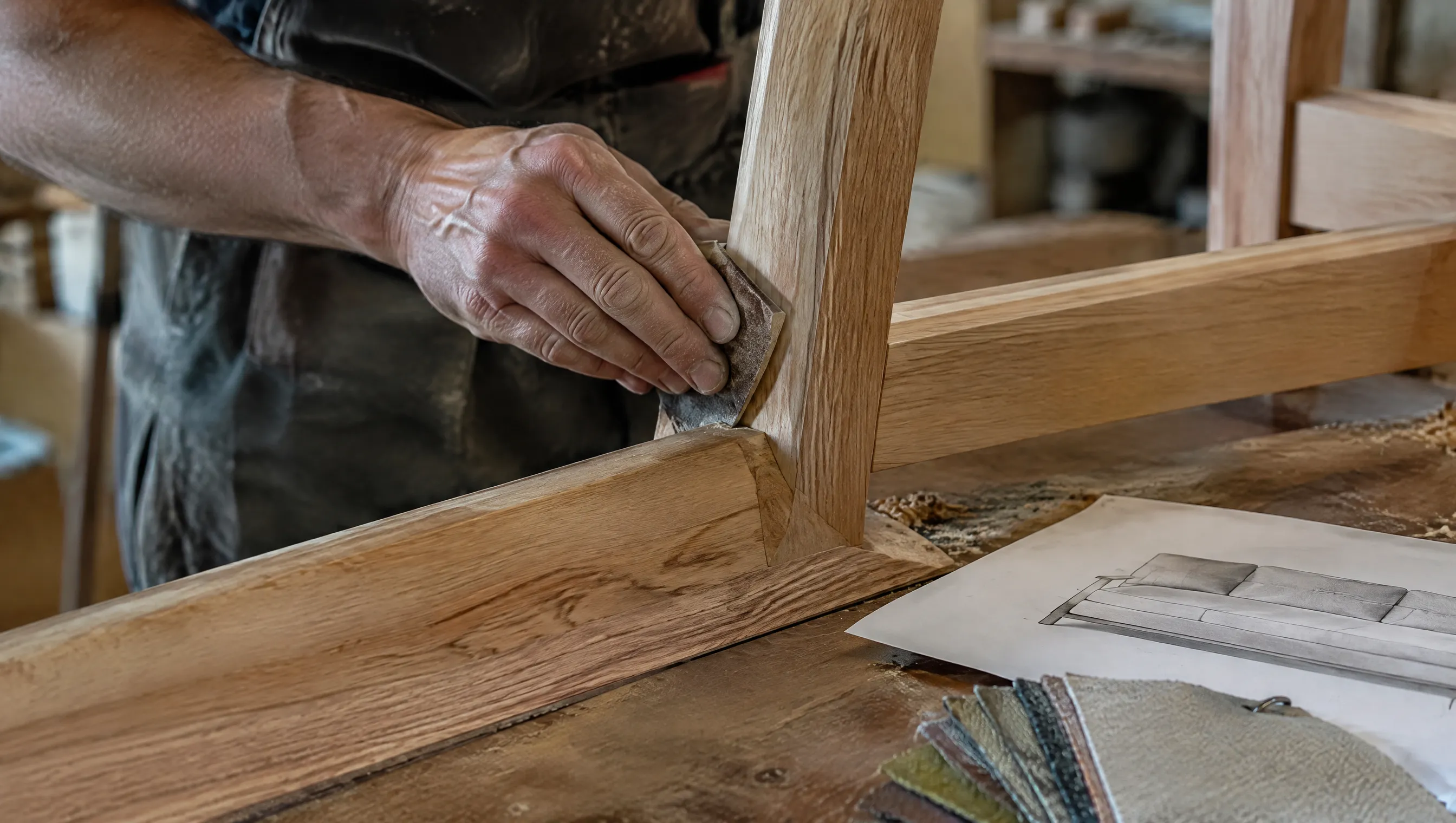
The frame: solid wood and plywood versus simpler options
A frame built from solid wood and birch plywood costs more up front, but determines a 10–15 year lifespan — the base of the quote, not the place to cut cost. In money terms, the frame usually takes 25–35% of a mid-size sofa’s total quote, and it is the most stable line by share — barely affected by chosen fabric or colour, unlike the rest of the calculation.
Cheaper alternatives — chipboard, MDF, low-grade plywood — cut frame cost noticeably, sometimes 30–40%, but shorten lifespan proportionally: such materials hold fasteners worse under years of load and more often need repair or full replacement within a few years, not a decade.
Filling matched to how it will be used
Multi-layer foam of varying density is matched to how a piece will be used — daily lounging versus occasional guests — and the daily-use fill typically costs 15–25% more from denser, pricier foam layers. Filling usually takes 15–20% of the total quote — less than the frame, but it decides how the sofa feels in year one and how much it sags by year five.
Fabric and shape complexity are variables, not fixed costs
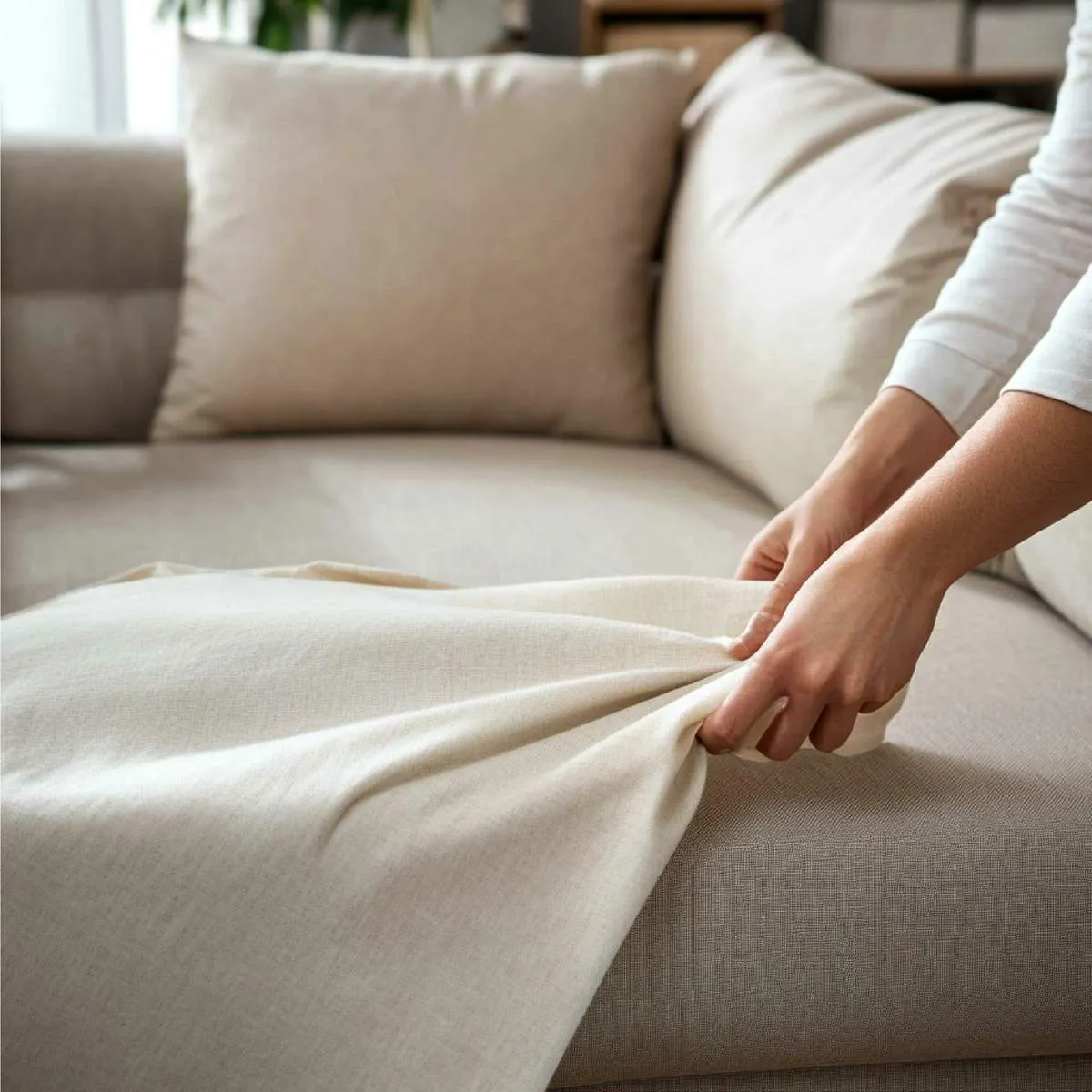
Fabric and the number of curves or modular sections usually explain the price gap between similar-looking models — the most flexible part of a quote, running 20% to 40% of the total depending on choice. Fabric price within one category — velvet, say — can span threefold between base and premium collections at comparable durability, which is exactly where it is easiest to save deliberately or overspend by accident.
A complex shape — modular sections, rounded armrests, non-standard geometry — increases fabric cutting waste and hand-work time, and that markup is usually transparently calculated by metres and hours, not set arbitrarily: a workshop can show exactly how many extra metres and hours each specific shape detail adds.
- Frame — 25–35% of the quote, the most stable share, not the place to save
- Filling — 15–20%, depends on foam layer density for the specific use case
- Fabric — 20–40%, the most flexible part, up to threefold price spread within one category
- Shape complexity — the markup is calculated by extra fabric metres and labour hours, not set arbitrarily
Hidden lines rarely explained out loud
Beyond the four main parts, a quote often includes lines a workshop does not always volunteer unless asked: hardware (legs, transforming mechanisms, fixings), delivery and carrying upstairs, transport packaging, and sometimes a fee for a large fabric swatch. Individually small, these can add up to 5–15% beyond the "model price" a client initially had in mind.
Why two sofas that look alike in photos cost differently
A photo shows neither plywood grade in the frame, nor yarn composition in the fabric, nor foam layer count in the seat — so eyeballing two similarly shaped sofas says almost nothing about the price gap. A fair comparison means matching specific parameters — fabric Martindale rating, frame wood and plywood type, filling density — not just the price tag.
Where to save deliberately, and where not to
Sensible savings almost always come through fabric and decorative details, not frame and filling: a blend instead of pure natural fibre, simpler armrests without extra curves, a standard size instead of a custom one — all cut cost without touching lifespan. Saving on frame or filling density lowers price more sharply but comes back as a shorter lifespan and faster loss of shape — such "savings" end up pricier per year of actual use.
Deposit and payment schedule — a separate part of the quote, not a bank condition
A typical custom-furniture scheme is a 30–50% deposit upfront to buy materials for that specific project, with the balance due on completion or before delivery. Not an arbitrary requirement but a reflection that material is bought specifically for the order, not pulled from ready stock — a cancellation after fabric and wood purchase leaves the workshop with material hard to resell without a loss.
It is worth asking in advance what happens to the deposit if an order is cancelled at different stages — before material purchase, after purchase but before work starts, or mid-assembly — refund terms usually differ at each stage, and a good workshop writes this into the contract rather than leaving it verbal.
VAT, discounts and the "all-in" price
When comparing quotes from different workshops, check whether the price already includes taxes and mandatory fees, or is an interim figure something gets added to later — the gap between the "paper price" and the "price to pay" sometimes reaches 10–20% if, say, out-of-city delivery is missing from the first figure. Seasonal discounts on custom furniture exist less often than in mass retail, simply because unit cost does not depend on clearing collection stock — a discount here usually means filling the workshop’s low season, not offloading inventory.
How to compare quotes from two different workshops
Comparing two workshops’ bottom lines directly is nearly useless without matching the line items: one may fold delivery into the total, another list it separately after; one may use one plywood grade, another a cheaper equivalent under the same "solid wood and plywood" label. The sensible practice is asking both for an identical spec — same size, same fabric durability category, same filling density — and only then comparing totals as genuinely comparable.
- Check whether the total includes delivery, carrying upstairs and packaging, or these are separate lines
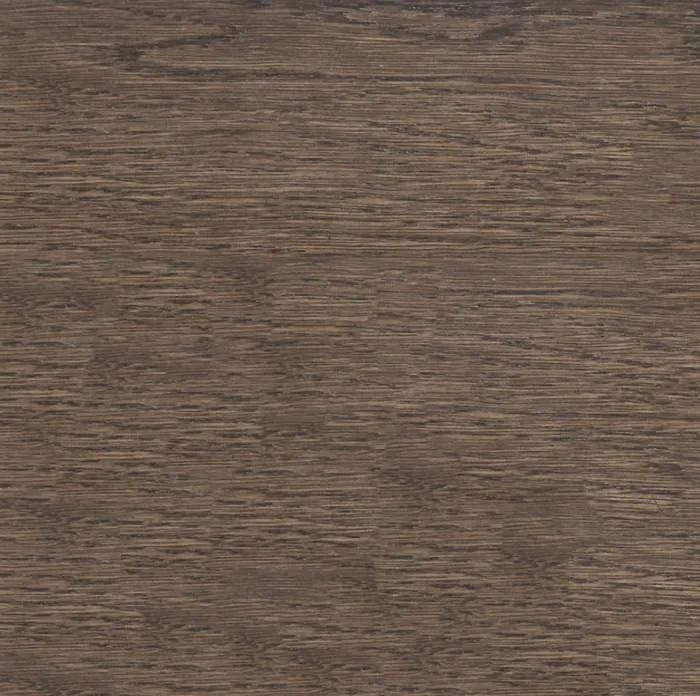
- Ask for the specific wood species and plywood grade, not just the word "solid wood"
- Compare fabric by Martindale rating and yarn composition, not just the collection name
- Confirm the payment schedule and deposit refund terms at each stage of the order
Why a quote sometimes changes mid-project
A quote agreed at the start is usually fixed and does not change without a separate conversation — but legitimate reasons for revision exist: the client changes fabric or size after sketch approval, or the chosen fabric runs out at the supplier and only a similar one at a different price remains available. Good practice is documenting any quote change in writing with a reason, not just announcing a new total with no context.
How to get a quote you can actually trust
A good quote is an itemised document, not a single number: frame material and wood species, filling layer density and composition, fabric name and abrasion rating, a separate line for shape complexity and one for delivery. If a workshop refuses to break a quote down this way or insists on one unexplained total, that is worth questioning regardless of the figure itself.
A note from a KALLEN HOME technologist
"We deliberately show the quote line by line, not one number — it shows the frame and filling take a fixed share regardless of fabric choice, so the client can decide knowingly where to adjust budget: simpler fabric but not filling density, or the reverse," says a KALLEN HOME technologist.
By his account, a transparent quote also saves negotiation time — instead of repeatedly revisiting one lump figure, the client sees immediately which specific swap — fabric, armrest shape, foam density — delivers the needed budget cut, and the decision happens in one conversation, not several blind iterations.
A worked example: one sofa, three budgets
Take a hypothetical 220 cm straight sofa with the same solid-wood-and-plywood frame. Base fabric at 25,000–30,000 Martindale cycles and average-use filling gives a first, baseline quote. Swapping only to a premium collection of the same weave type can raise the total 15–25% with no other line touched — pure fabric effect, easy to verify by asking for two quotes with different fabrics and everything else equal.
Adding modularity — turning a straight sofa into a corner one with an extra section — raises the quote through additional frame, filling and fabric for the new section, proportional to its size, not a flat "complexity" markup. It helps to ask for a breakdown of just the added section rather than treat the price jump as an opaque surcharge.
How a sofa quote differs from a chair or table quote
Quote structure — the share of frame, filling, fabric — differs by furniture category. For a sofa, fabric is the heaviest variable simply because the upholstered area is larger. A table with no upholstery is structured completely differently: almost the whole quote is tabletop material (wood, stone, porcelain stoneware) and the base, with no filling in the usual sense at all. A chair’s proportions sit closer to a sofa’s, just at a smaller absolute scale.
When an individual craftsman’s rate enters the quote
For genuinely unusual tasks — a shape the workshop has not made before, or an unfamiliar material — a quote sometimes adds a separate coefficient for developing a process that will not repeat on future similar orders there. A legitimate cost line, but it should be named explicitly, not buried inside a general "complexity" markup impossible to verify.
Delivery and lift-up: the line often forgotten until the last moment
Delivery and floor lift-up is a separate line depending not on the furniture but on the specific building — a freight lift, stairwell width, a walk-up floor with no lift at all. A large corner sofa that will not fit a standard lift whole sometimes needs hoisting through a window or balcony by professional riggers, a service priced well above ordinary delivery — worth confirming before ordering, not on the day the sofa arrives at the entrance.
The final quote — not a secret, but a tool for conversation
The main practical point of this whole breakdown is simple: an itemised quote does not make custom furniture pricier or cheaper by itself — it turns the price conversation from an emotional "that is expensive" or "that is cheap" into a concrete, checkable list of decisions, each made knowingly rather than blindly.
Learn more about custom furniture
Frequently asked questions
What mainly makes up the price of custom furniture?
Frame material (25–35%), filling (15–20%), upholstery fabric (20–40%) and configuration complexity, plus hardware and delivery.
Why is the frame the most important part of the quote?
It determines the lifespan 10–15 years ahead and takes the most stable share of the quote regardless of fabric.
Can a quote be obtained before the final sketch is approved?
Yes, a preliminary quote is prepared at the brief and first-sketch stage, before any material is cut.
Where is it sensible to save in a quote, and where not?
Fabric and decorative shape details are sensible places to save; frame and filling density are not — that shortens lifespan.
Why can two similarly shaped sofas cost differently?
The gap usually lies in parameters invisible in a photo — plywood density, fabric composition, filling layers — not the shape itself.
What deposit is typical for a furniture order?
30–50% upfront to buy materials for that specific order, the balance on completion or before delivery.
Can a quote change after being approved?
Yes, if the client changes fabric or size, or the chosen fabric runs out at the supplier — any change should be documented in writing with a reason.