We filmed the workshop where KALLEN HOME furniture is made — 1,500 sqm, 30+ craftspeople. Here is what the video could not show: how a sofa actually moves through that space.
The video shows the place, this article shows the journey
The video compresses a 2.5-hour walkthrough into a few minutes. What it cannot show is how many hands and decisions sit behind the finished sofa on a pallet. Below is that journey, step by step.
Notice the tape measures and squares appearing at every one of the first five steps, not just the start — an honest reflection that dimensions are rechecked at every stage, not just once at the beginning.
Step 1. The brief becomes a drawing
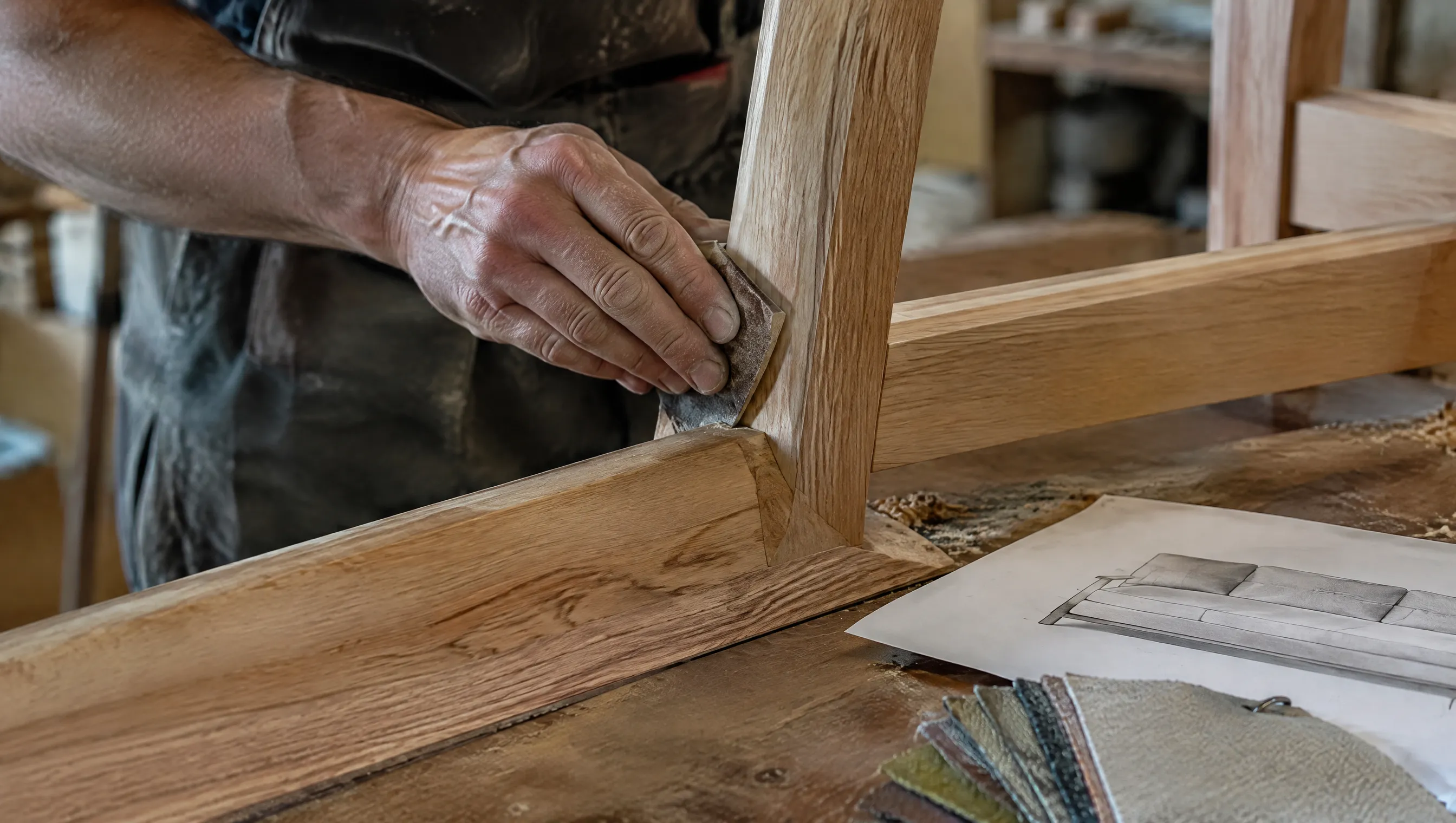
Before a single sheet of plywood is cut, the frame engineer turns the client conversation into a precise technical drawing. Armrest height, seat depth, seam placement — all locked in here.
Step 2. The sawmill section: solid wood and plywood
Solid wood and birch plywood are cut to the drawing — a deliberate pairing: solid wood takes the joint load, multi-layer plywood resists cracking from humidity swings. Every cut piece is tagged with the order number.
Step 3. The joinery: hand-assembling the frame
Corner joints are hand-assembled and glued, not stamped on a line — this is what lets a sketch’s rounded, non-standard shapes be reproduced exactly. Every joint is then hand-checked for play while the glue can still be corrected.
Step 4. Filling: layers of different density
A seat is not one block of foam but several density layers on elastic webbing — firmer below for shape, softer on top for immediate comfort. The combination is matched to how the piece will actually be used.
Step 5. The sewing room: cutting fabric to pattern
In parallel, fabric is cut to individual patterns for each model, accounting for pile and pattern direction so neighbouring panels do not catch light differently. A mistake here is visible in the finished piece.
Step 6. Upholstery: the longest stage, and why it is not faster
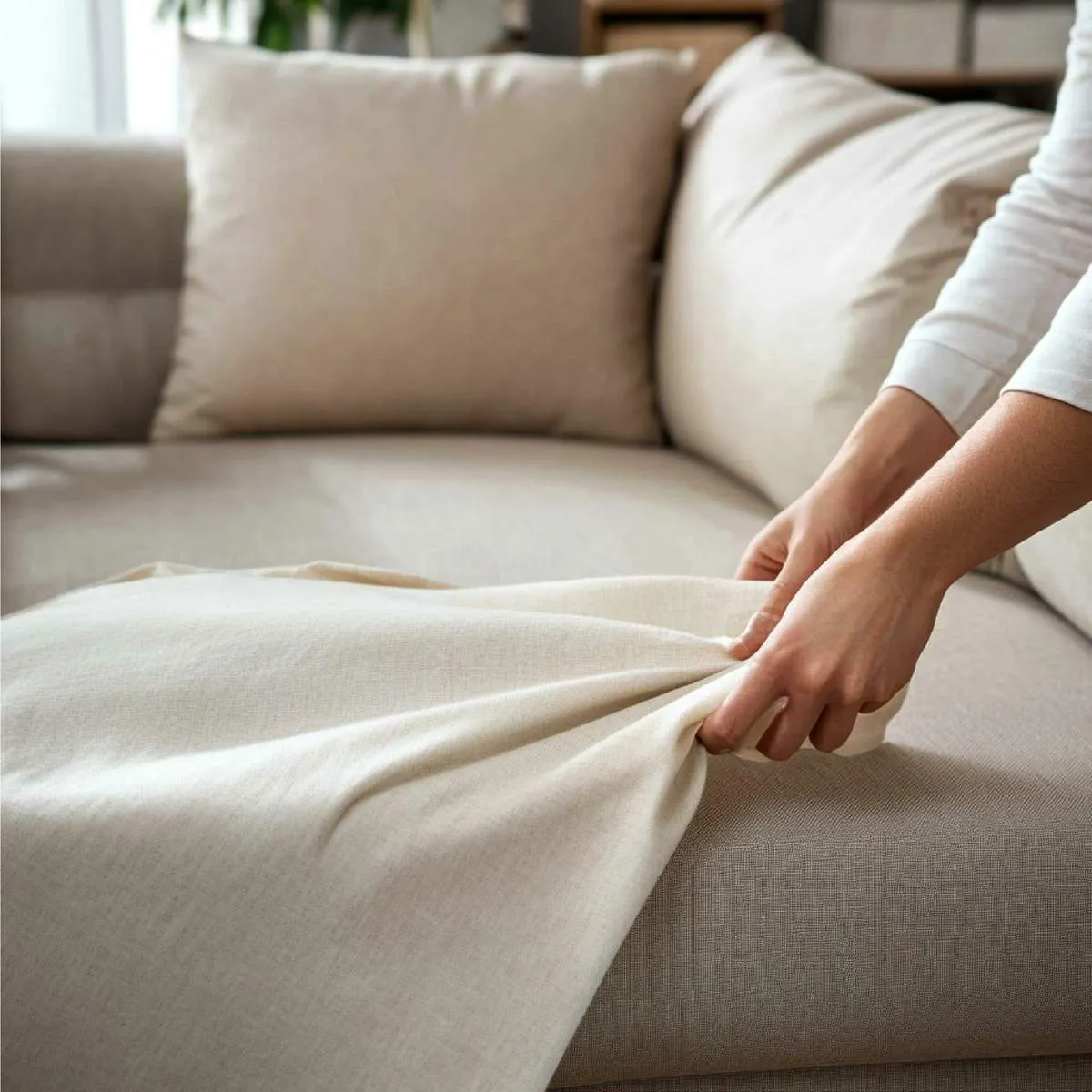
Upholstery is hand-stretched with even tension along every seam — slower than an automated stapler, but the only way to fit fabric precisely to a non-standard frame without creases appearing months later.
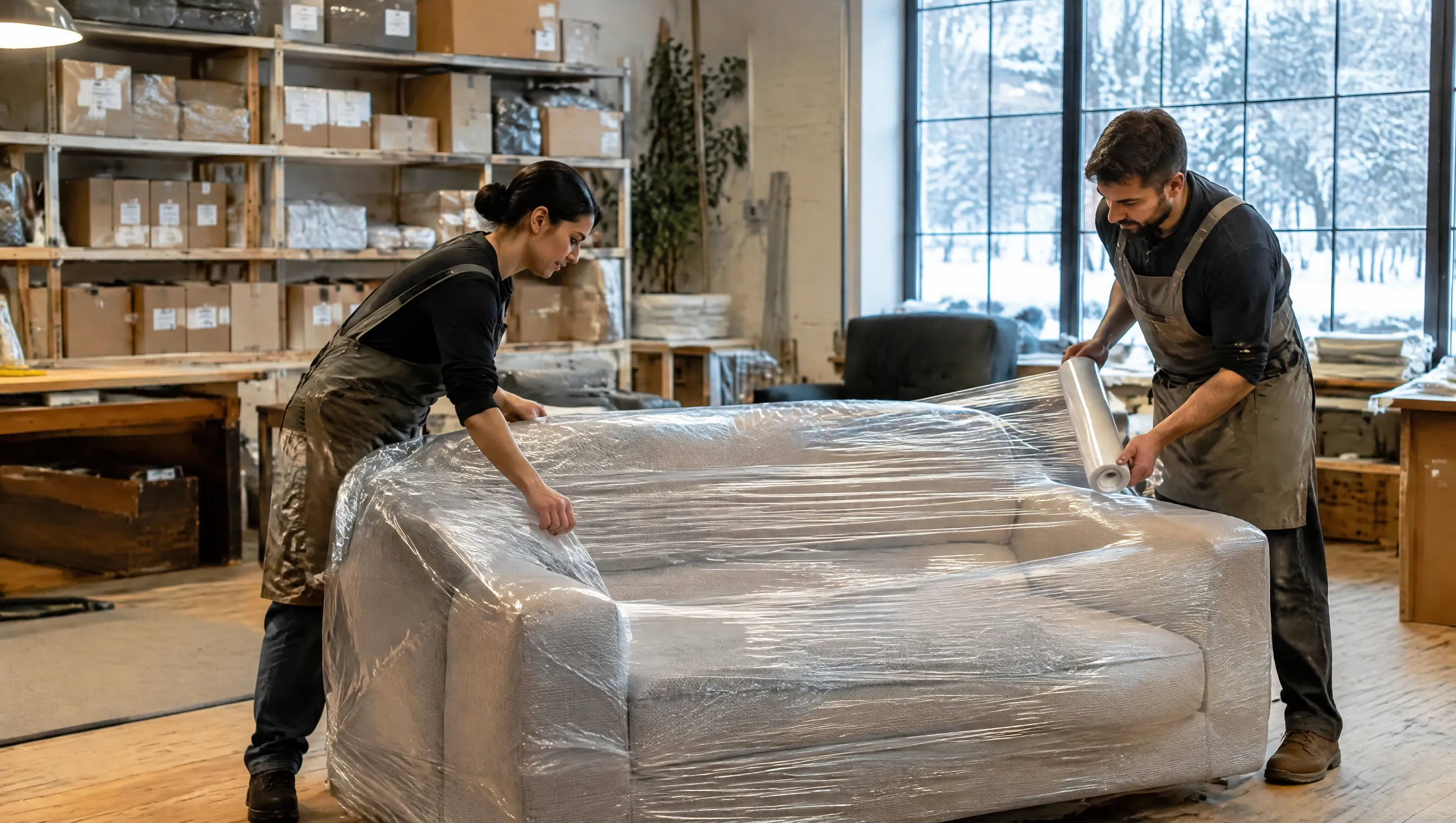
Step 7. Final inspection before packaging
The finished piece is checked under direct and side light, which reveals seam irregularities invisible under normal lighting — the last barrier before it leaves the workshop.
The video also shows a small but crucial detail: paper tags with the order number on every cut piece — the reason a part from one sofa cannot physically end up in a different order on a floor running dozens of pieces at once.
One sofa, different timelines per part
The seven steps do not take equal time. Sketch approval: 3–5 days. Frame cutting and assembly: about a week, up to two for complex shapes. Filling runs almost parallel with fabric cutting. Upholstery, the longest hand stage, takes 1–2 weeks and is where small delays most often appear.
The sewing room is physically separate from the sawmill and joinery areas — not just for noise. Wood dust ruins fabric and clogs sewing-machine needles, so wood and textile zones sit in separate, separately ventilated rooms despite being logically adjacent steps.
Tools that do not look dramatic on camera
The most important tool at every stage is not a machine but a tape measure — constantly checking against the drawing instead of eyeballing it. That habit is what keeps the finished piece within a millimetre of the plan.
What happens when the inspection finds a defect
A defect caught before upholstery is fixed on the spot in minutes. The same defect found after upholstery means undoing the entire cover — days, not minutes. That is why checks happen as early as possible.
Who are these 30+ people
- Frame engineers — turn the brief into a drawing and oversee the project
- Woodworking machinists — cut solid wood and plywood
- Joiners — hand-assemble and glue the frame
- Filling specialists — select and layer the foam
- Seamstresses — cut and sew covers to pattern
- Upholsterers — stretch fabric onto the finished frame
- Quality inspectors — check every piece before packaging
On average one sofa passes through 4–6 of these specialists — not all 30+ at once, but each stage is checked before it hands off to the next, which is what actually catches small defects early.
Why this is slower than a conveyor line — and why it pays off
Mass conveyor production is cheaper to scale — one template, one stapler, hundreds of identical units. Hand assembly takes longer per piece, but it is the only way to reproduce a custom sketch and fit it to one specific client.
The company has operated since 2012, and production has grown into one 1,500 sqm site covering the full cycle. Keeping everything under one roof removes the risk and delay of moving a half-finished piece between separate sites.
What this means for the client in practice
Not abstract "handcraft" marketing, but a concrete option: adjust seat depth by 3 cm for one person’s height, zone two fabrics on one chair, fit a sofa into a niche no mass-produced model would fit — all possible because a person with a drawing, not a fixed template, runs every stage.
What the video does not show
The camera follows a straight route, which looks linear. In reality the workshop runs as parallel processes — one sofa being upholstered while another waits for foam and a third is still being cut — not a single line.
Also off-camera: the conversations at the drawing table, where the engineer and upholsterer work out how to adapt a cutting pattern to a non-standard armrest shape — routine on roughly every second order.
How the workshop prioritises when orders stack up
In peak months, orders are queued strictly by sketch-approval date — not order size or client status — which is the only way to keep timelines predictable for everyone.
A note from KALLEN HOME’s production director
"We deliberately kept the real working pace in this video rather than a polished edit — several orders move through the workshop at once, and tracking which sofa is at which stage is what separates an experienced craftsman from a new one," says the production director.
Why this tour was filmed now
Showing the full workshop was discussed for a while but kept getting postponed. The video exists because several clients separately asked how production actually works and whether they could see it on video if an in-person visit was inconvenient.
The same logic explains why the packaging zone sits farthest from the sawmill — a finished piece in a clean zone should never end up near sawdust seconds before it is wrapped for delivery.
What this gives someone who has already placed an order
For a client who has already ordered, the video is just as useful — knowing exactly which stages the sofa passes through, and how many hands touch it, makes the 5–8 week wait concrete rather than an abstract delay.
The video above runs a few minutes. The real journey it shows takes an actual sofa four to eight weeks — and that stretch of time is exactly what separates a bespoke sofa from one bought ready-made the same day.
Specific questions about one stage — foam layer count for a particular model, handling a client-supplied fabric — are easier answered directly by a manager than by a general workshop video, since details vary model to model.
Frequently asked questions
Where is the KALLEN HOME workshop located?
The production site is located in Moscow and covers about 1,500 sqm.
How many people work on a single order?
On average, a piece passes through 4–6 specialists across different stages, though the site employs more than 30 people in total.
Is it possible to visit the workshop in person?
The showroom operates by appointment — ask a manager about the possibility of visiting the production site.
Why does hand assembly take longer than mass-production factories?
Because each piece’s shape and size are individual, not fixed to one template — manual fitting is needed at every stage, from frame to upholstery.
How many stages does a sofa go through from sketch to packaging?
Seven main stages: drawing, cutting, frame assembly, filling, fabric cutting, upholstery and final inspection.