Three materials, three completely different risks: wood fears dryness, stone fears acid, textiles fear direct sun and improper cleaning. Everything previously written separately, gathered into one note worth keeping handy all year.
Why gather three different topics into one guide
Most furniture-care material is written separately — one piece on wood, one on stone, one on fabric — logical when discussing one material in depth. In practice, though, one living room usually combines all three: a wooden table, a stone console top, a fabric sofa — and searching three separate articles to get the full picture is inconvenient. This guide is exactly that full picture, without each topic’s full depth, but with the essentials of each material in one place.
Wood: the main enemy is not time but dry air
Solid wood lasts decades under one condition — stable humidity at 40–60%. Below 30%, typical in winter near a radiator, wood shrinks and can crack along the growth rings; too high humidity causes slight swelling and warping instead. A humidifier in winter and ordinary ventilation in summer usually solve this fully, no special equipment needed.
Daily wood care is simple — wipe with a slightly damp soft cloth, no alcohol-based or harsh chemical products, which break down the protective oil or lacquer layer. Every two to three years under moderate use, the protective finish is worth refreshing with an oil that soaks into the top layer and restores water resistance.
Stone: marble needs attention, porcelain stoneware almost none
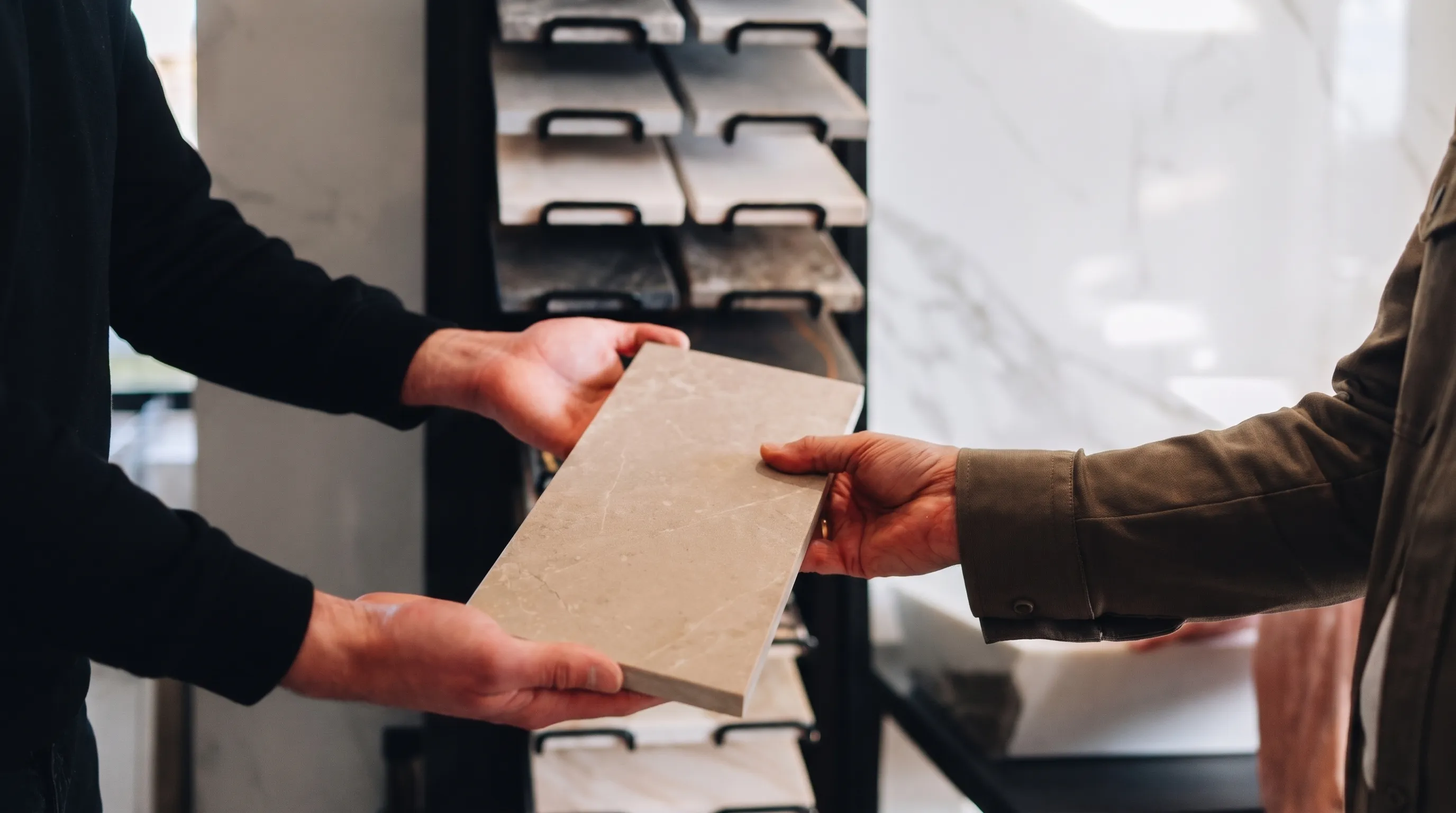
Marble is a porous natural stone that reacts to household acids — wine, lemon juice and vinegar leave dull marks if not wiped immediately. Marble’s sealant is renewed once a year — checking is simple: drip water onto the surface, and if it soaks in within a minute instead of beading, it is time to reapply.
Porcelain stoneware needs almost no attention — high-temperature firing makes the surface nearly impervious to acids and barely scratches even from a knife, though a cutting board is still worth using, not for the top but for the blade. For a daily kitchen with kids, porcelain stoneware is almost always more practical than marble for this exact reason.
Textiles: the rule depends on texture, not one formula
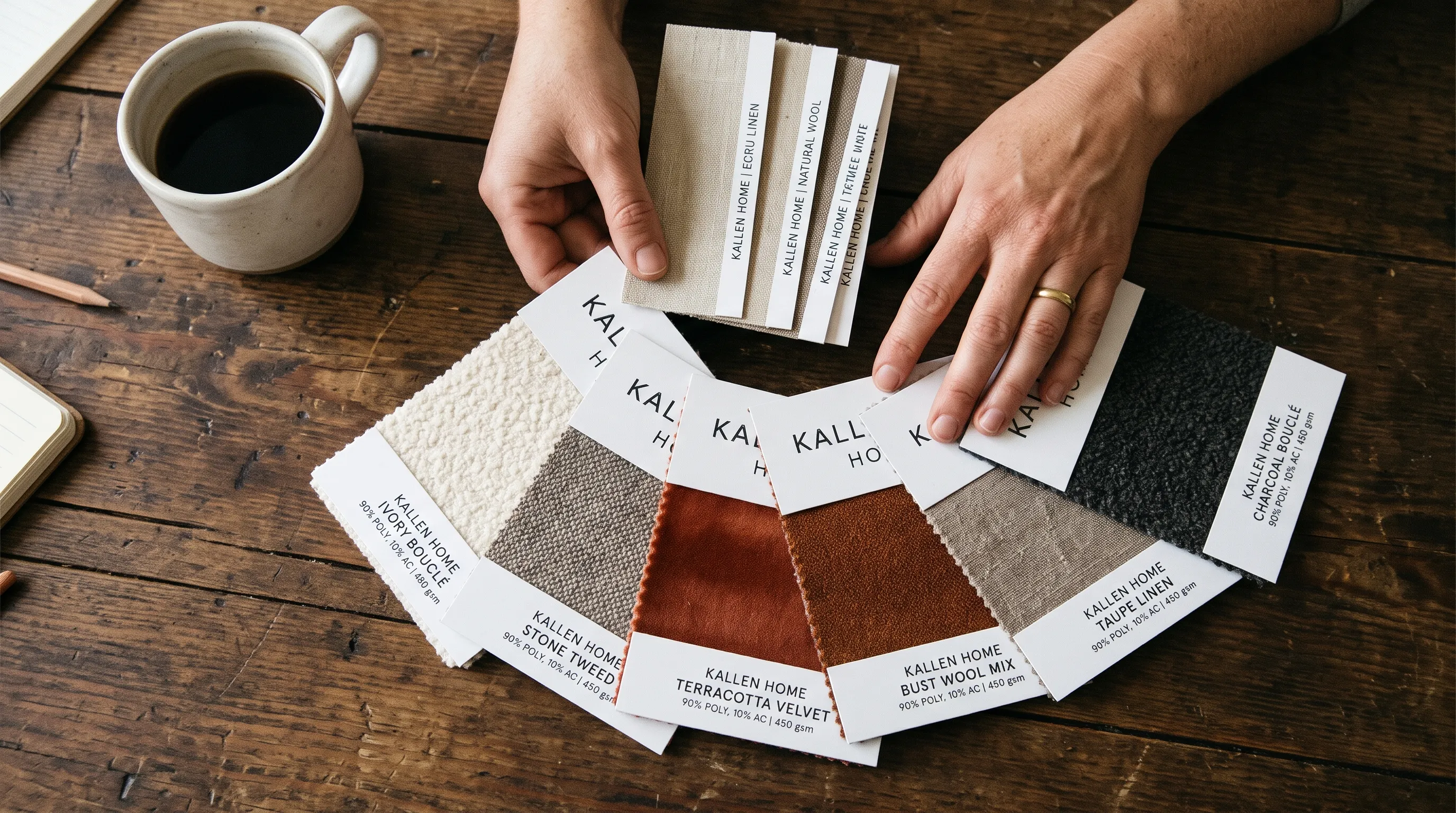
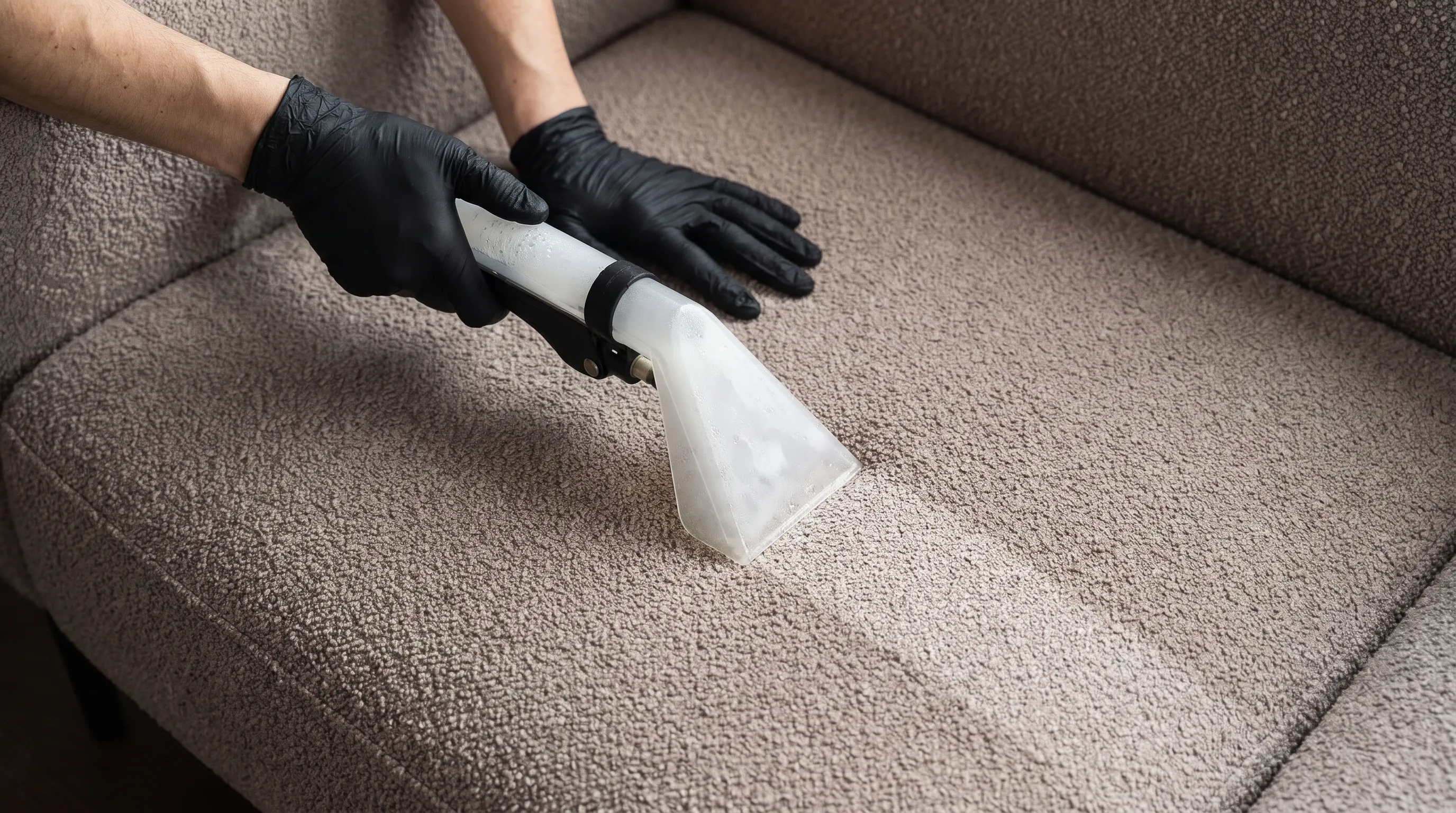
Unlike wood and stone, textiles have no single universal care rule — it shifts with texture. Linen and wool dislike water on a fresh stain — blot, do not rub, or the dye soaks deeper into the porous fibre. Velvet is cleaned with a soft brush along the pile direction, and a steam cleaner is a bad idea for it — hot steam opens the pile and temporarily deforms texture exactly where treated.
Removable covers are washed per the label, usually a delicate cycle under 30°C — hotter washing or aggressive spinning can shrink natural fibres like linen by a few percent in area.
A risk table: what threatens each material most
- Wood — dry winter air near a radiator, and prolonged direct water contact
- Marble — acidic liquids (wine, citrus, vinegar) and skipped sealant renewal
- Porcelain stoneware — almost nothing in household use, except a heavy impact on the edge
- Linen and wool — water and rubbing on a fresh stain, not the stain itself
- Velvet — steam, heavy pressure while cleaning, and years of direct sun
Leather: the fourth material often left out of such guides
Leather upholstery on chairs and sofas is common enough to deserve a place in a general guide, even though it is technically not wood, stone or textile. The main rule for leather is that dryness and direct sunlight threaten it almost as much as wood — without regular feeding with a protective cream, leather loses elasticity over time and can crack, especially at constant-flex points like armrests or the seat edge.
In upkeep, leather is simpler than textile — wiping with a dry or slightly damp cloth and a protective cream twice a year is enough, with none of the special cleaning demanding fabrics like bouclé or wool require.
Metal hardware: a fifth, barely noticed material
Brass and chrome legs, cup holders and frame elements are rarely mentioned in care guides, though they appear in almost every piece of furniture. Brass naturally develops a patina over time — a light, even darkening many people value as part of the look rather than a flaw; if unwanted, brass is polished with a dedicated metal polish, not household wood or stone chemicals that can damage the coating.
How to tell a material has been misidentified
A common practical mistake is confusing marble with porcelain stoneware, or a quality wood imitation with solid wood, then applying the wrong care. A simple stone test: marble feels colder to the touch and has a unique, non-repeating vein pattern, while porcelain’s pattern repeats on close inspection across adjacent tiles. For wood, the test is simpler still — solid wood shows a naturally slightly irregular grain, while quality veneer sometimes mirrors symmetrically across adjacent panels, since it is cut from one sheet.
Care seasonality: what changes in winter and summer for each material
Wood needs the most attention in winter, when heating dries the air — the season to check humidity more often and lean on a humidifier. Textiles need more attention in summer, when the sun sits higher and shines longer through windows — cushion rotation and curtain protection matter most then. Stone is the least seasonal of the three — acid-liquid risk does not change month to month, so its care routine can stay constant year-round.
What to do once damage has already happened
For a fresh stain on stone, a mild baking-soda paste left on for a few hours and rinsed off gently draws out acid or dye from surface pores without abrading the stone itself. For a crack in wood or deep leather wear, home remedies usually do not fully solve it — such damage is better shown to a restoration specialist than masked with a market product that may hide the problem temporarily without fixing it.
One care calendar for all three materials
It is easiest to keep care not as separate rules memorised individually, but as a simple calendar tied to frequency — something weekly, something seasonal, something annual. Easy to pin to a fridge or save in a phone’s notes — no special knowledge required, just regularity.
- Every week: soft-brush velvet and brush pile fabrics, vacuum textiles with an upholstery attachment
- Every month: check whether water still soaks into marble faster than a minute
- Every season: check humidity near wooden furniture, especially in winter with heating on
- Every year: renew marble sealant and, if needed, refresh wood oil
- Every year or two: professional cleaning for heavily used textiles — a living-room sofa, a study chair
A care budget: what it costs per year
It helps to picture furniture care not as an abstract recommendation but as a concrete, small annual cost. Marble sealant, wood oil, a velvet brush and leather cream together cost noticeably less than one restoration visit after damage has already happened — which is exactly why regular, cheap care outperforms rare, expensive fixing.
What can be delegated, and what cannot
Weekly brushing and vacuuming can easily go to anyone who cleans the house regularly, no special skill needed. Annual stone-sealant renewal and assessing wood condition are better handled by the homeowner personally or a specialist in those specific materials — a mistake there costs more than in the weekly routine, and needs knowing exactly what to look for.
Common misconceptions worth debunking separately
One of the most persistent misconceptions is that expensive furniture automatically needs less care than cheap furniture. The opposite is often true — higher-quality materials are often more sensitive precisely because they are natural: real marble needs more attention than porcelain stoneware, real leather needs more attention than a good synthetic substitute. Price reflects material and workmanship quality, not the care burden.
A second common misconception is that fully "no-maintenance" furniture exists at all. Even the most carefree porcelain stoneware benefits from simple wiping, and the toughest synthetic fabric still collects dust over time and needs at least occasional vacuuming — the difference is in frequency and complexity, not the complete absence of care for any one material.
Why a universal "do-it-all" product usually fails
Store products promising care "for any surface" almost always compromise, suiting each material slightly worse than something made specifically for it. A spray safe for lacquered wood can be too harsh for raw stone, and a textile cleaner can leave streaks on a glossy stone top. Three inexpensive specialised products beat one universal one that in theory suits everything and in practice suits nothing fully.
Materials combined in one piece: what to watch for
A separate case is a piece combining two materials — a table with a wood base and marble top, or a chair with wooden legs and fabric upholstery. Each part still needs its own care — never wipe a wood base with the same acidic-component solution used on marble, or vice versa. It makes sense to keep two different products on hand and use each strictly as intended, rather than looking for one pass that cleans the whole piece at once.
A note from a KALLEN HOME technologist
"The most common mistake we see in clients after a few years is using the same household spray on every piece of furniture regardless of material. Wood and stone last decades precisely because they need different approaches, not the same one," says a KALLEN HOME technologist.
By his account, most service inquiries about furniture losing its look trace back not to material quality but to the wrong cleaning product — and almost all would have been prevented by one simple rule: identify the material first, then choose the product for it, not the other way round.
His second piece of advice is keeping a list of the home’s materials and their matching products in one place — a phone note, not memory. After a few years it is easy to forget which tabletop is marble and which is porcelain, especially with several similar-looking surfaces at home, and a short note solves this faster than trying to recall or guess by feel.
The one rule worth remembering above all
If only one idea survives from this whole guide, it is this: the material dictates the care, not the other way round — find out exactly what you are working with first, then choose the product and frequency, rather than forcing the material to fit a universal product already bought off a shelf.
How to store the care products themselves
Stone sealants and wood oils have their own shelf life and lose some effectiveness in an opened tin after a year or so — writing the opening date on the tin with a marker saves guessing whether a product that has sat in a cupboard longer than the furniture it is meant to protect is still trustworthy. Storing them dry, out of direct sun and away from radiators — the same conditions as the furniture itself, not a separate, more complicated rule.
Frequently asked questions
Which material needs the most attention?
Marble — the only one genuinely sensitive to household acids, needing sealant renewal once a year.
Can one product be used for all materials?
No, wood, stone and textiles have different requirements — a universal product risks damaging at least one of them.
How often is professional furniture cleaning needed?
For heavily used furniture, once every year or two; for lightly used pieces, less often.
What about furniture combining two materials at once?
Care for each part with the product suited to it — never apply one material’s product to the other.
Why does porcelain stoneware barely appear in the risk list?
High-temperature firing makes it nearly impervious to acids and very scratch-resistant — almost nothing threatens it in household use.