Four popular upholsteries, and how they age over five years with children, pets and direct sun.
Three questions to answer before the showroom
The right starting question is not which fabric looks best, but who sits on the sofa and how often — a family living room and a once-a-week study sofa are two different technical tasks.
- Who uses the sofa daily — adults, young children, clawed pets?
- Does it sit in direct sun or face north?
- Is it the main sofa or a lightly used guest-room piece?
The answers decide which spec on the fabric passport matters most — occasional use allows choosing by colour, daily use means durability comes first.
A fourth question worth asking: how many years before the next redecoration — five years and fifteen years call for different fabrics and different budgets.
The Martindale test: reading the number on the label
Mills rub a swatch against a wool abrasive until two threads wear through — the cycle count at that point is the fabric’s Martindale rating, printed on its technical passport.
- Under 10,000 cycles — decorative pillows, not seating
- 15,000–20,000 — a lightly used guest room or study
- 30,000+ — a living-room sofa used daily
- 60,000+ — contract furniture for cafés and meeting rooms
Before cutting, the workshop always checks the roll’s passport — density can vary 5–10% between batches of the same fabric, so ask to see the test report, not a salesperson’s word.
Bouclé
Bouclé’s looped weave diffuses light softly and suits rounded shapes, but typically rates 15,000–25,000 cycles — fine for a guest room, risky with cats, since a claw pulls a loop into a long visible thread.
A common workshop compromise: bouclé on the back and cushions, a denser fabric on the seat and armrests — the silhouette stays soft, the sofa lasts longer.
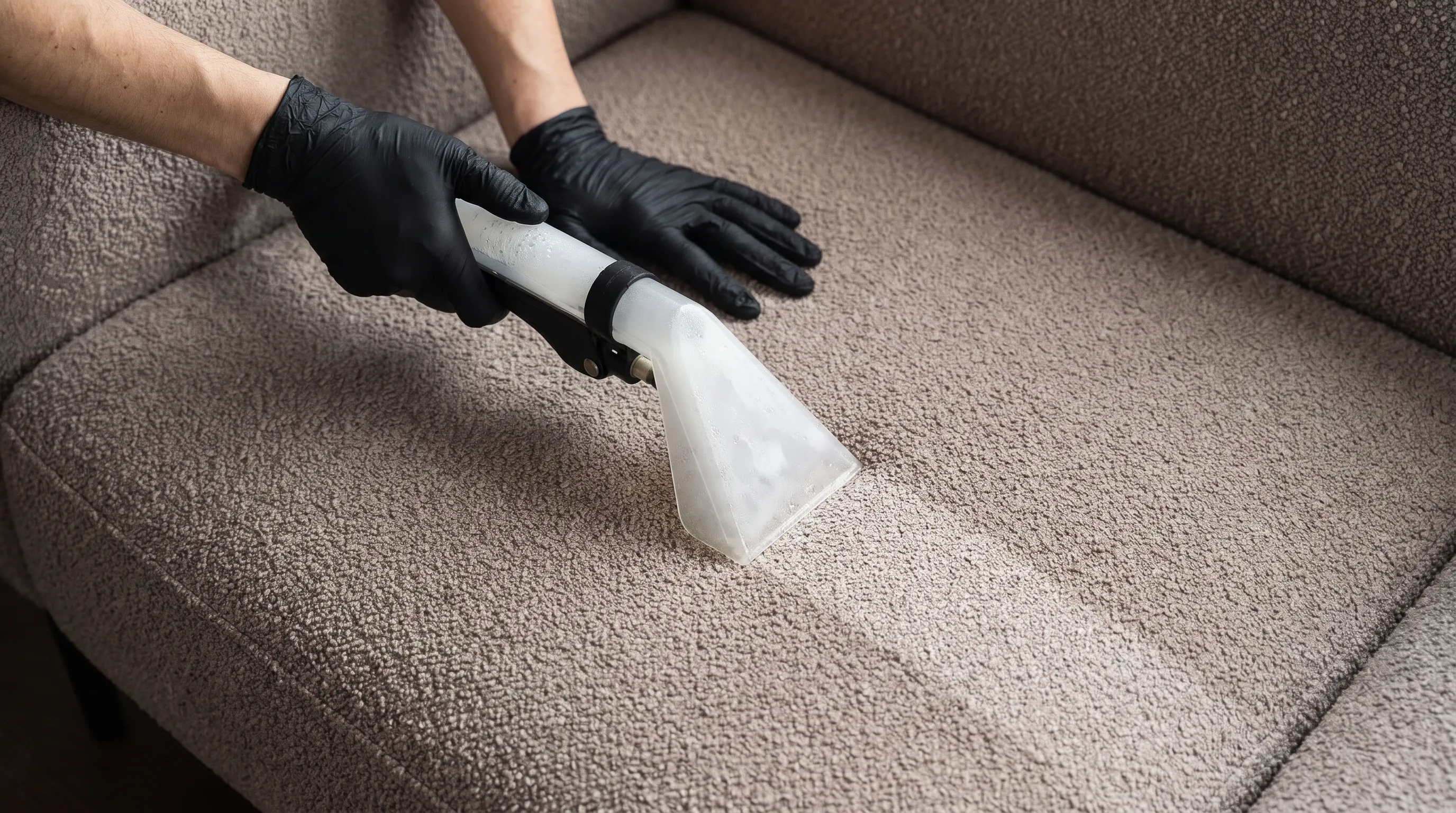
Bouclé needs a soft brush attachment and light pressure, dry-sponge stains rather than wipe them wet, and should never meet a steam cleaner — heat opens the loops and flattens the texture where it was treated.
Linen
Linen creases by nature and softens over time; most sofa linens are blended 50–55% with cotton or viscose to soften the creasing and resist stretching.
Linen suits bright, nature-led interiors — country houses, light summer living rooms — more than dense, dark urban decor, unless matched with similar-toned textiles.
Linen covers should not go in a washing machine — the fibre shrinks unevenly and can distort the sofa’s shape; a clothes brush and damp sponge suffice day to day, with professional cleaning once a year or two.
Velvet
Velvet’s short dense pile gives depth through directional light; quality upholstery velvet spans 20,000–60,000 cycles, which is usually what separates two similar-looking velvet sofas in price.
Its one real downside: handprints and cushion marks show as the pile bends — not damage, just light shifting, but a daily visible effect some people prefer to avoid by choosing a flatter weave instead.
Weekly vacuuming and brushing the pile in one direction keeps colour even; blot spills from the edge inward immediately — rubbing spreads the mark over a wider area.
Wool
Wool is the warmest to the touch and, woven correctly, one of the most durable fibres — it resists pilling and holds shape for 10–15 years, and is naturally slow-burning without added treatment, useful near a fireplace.
Good upholstery wool rates 25,000–40,000+ cycles, usually 20–30% pricier than comparable velvet — a fit for studies, libraries and fireside chairs built to last rather than change often.
Wool’s real enemy is moths, not dirt — a lavender sachet or cedar block in storage works better than strong-smelling mothballs; clean with a natural-bristle brush that lifts dust without flattening the fibre.
With children and pets at home
The riskiest combinations are long pile with claws, loops with claws, and pale colour with young children and markers; the sturdiest are tight twill weaves like herringbone cloth and short stiff-pile blends.
- Herringbone and tight blends — claws slide, not catch
- Flock and microvelour collect pet hair but vacuum off easily
- Pure bouclé and long-pile velvet are safer without pets, or for decorative pieces only
- With young children, a water- and dirt-repellent finish turns a juice spill into a wipe, not a dry-clean trip
Mid-tone colours hide both light dust and dark pet hair better than pure white or charcoal, which show marks quickly either way — not a reason to avoid a favourite colour, just a reason to pair it with the right weave and finish.
Sun and fading
A sofa in direct south- or west-facing sun fades noticeably faster as UV breaks down the dye; deep blues, greens and terracottas fade more visibly than pale tones, so ask separately about light-fastness, not just abrasion rating.
Rotating cushions every month or two spreads any fading evenly instead of concentrating it on one corner.
Mixing fabrics on one sofa
Zoning is standard workshop practice: a durable fabric on the seat and armrests where wear concentrates, the original fabric of choice — bouclé, pale linen — on the back and cushions, so the look survives and so does the sofa.
What drives fabric cost in the final quote
Fabric rarely accounts for less than a quarter of a sofa’s cost, and up to a third on corner or tall-back models; price for similar-looking bouclé can range widely depending on yarn composition and weave density, not just pattern.
Polyester blends usually cost 30–40% less than pure cotton, linen or wool and often outperform pure fibre on durability, trading only some tactile softness — if budget is tight, save on decorative cushions, not the main seat fabric.
Testing a fabric swatch at home before ordering
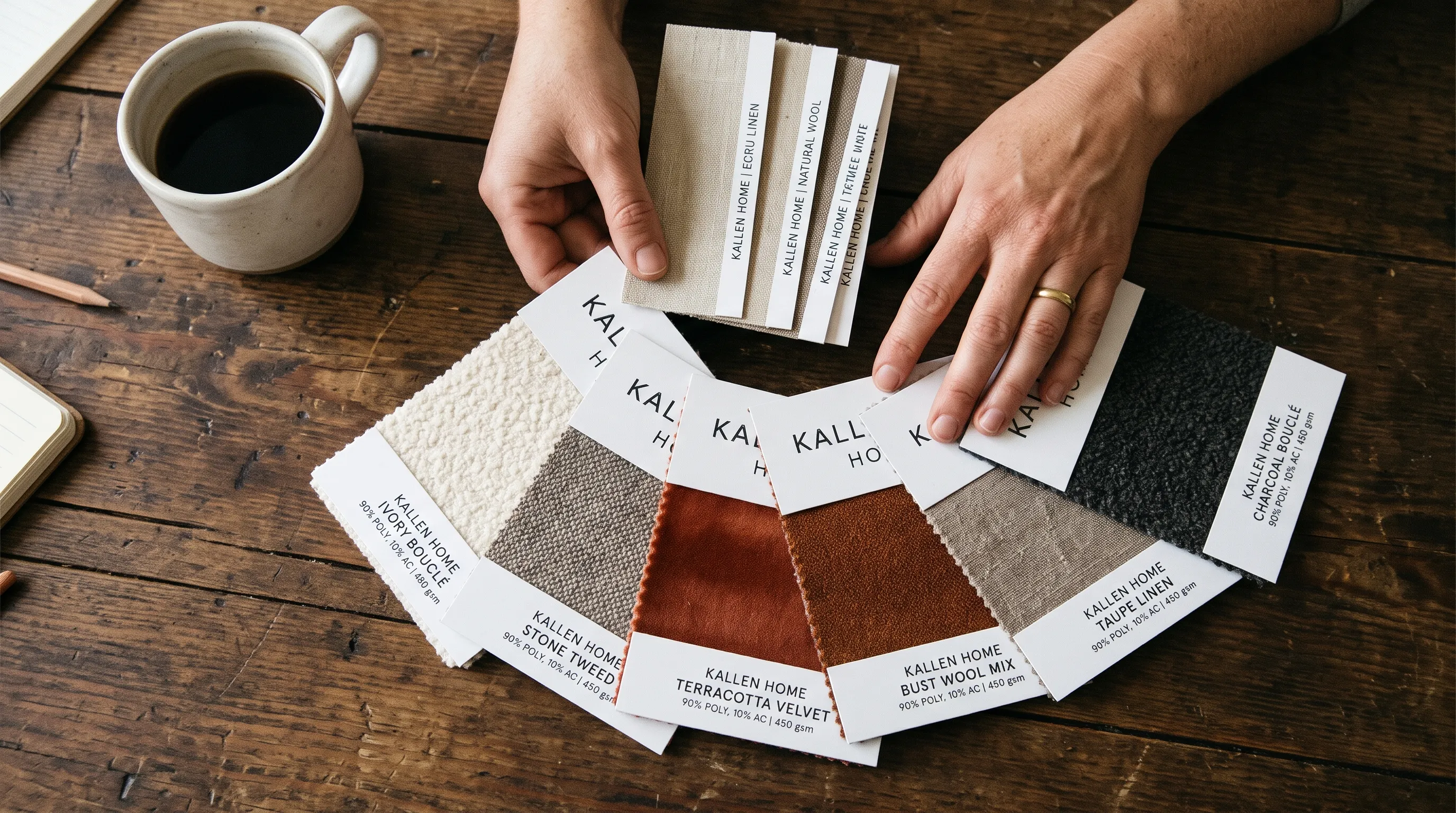
Any reputable mill sends free or low-cost 10×10 cm swatches — worth taking home and viewing by the actual window where the sofa will stand, since daylight and evening light shift deep blues and greens more than showroom lighting suggests.
Rubbing the swatch between fingers twenty or thirty times mimics years of contact with clothing and reveals pilling or loop-pulling faster than reading a spec sheet; leaving a piece on the floor in a walkway for a week shows how it handles real traffic.
What to ask before ordering
- Is there an abrasion test report for this specific batch, not just the fabric line
- Was a protective finish applied, and which one
- Will one roll cover the whole sofa, or might shade vary slightly between batches
- What warranty applies to the upholstery itself, separate from the frame
If the choice still comes down to two fabrics, the honest answer to the opening question — who actually sits here daily — settles it better than price or trend.
How the KALLEN HOME workshop decides
"We rarely argue about colour — we argue about zoning. With a cat at home, we put a dense fabric on the seat and armrests and keep the bouclé on the back; over three years, those sofas need far less reupholstery," says the production team.
Frequently asked questions
Which fabric is most durable for daily use?
Dense wool or herringbone weave rated 30,000+ Martindale cycles show the least visible wear over five years.
Can a linen cover be machine-washed?
No — remove covers should be hand-washed gently or dry-cleaned; a machine wash deepens creasing and can shrink the fabric.
What if the fabric has already faded in the sun?
If only one section faded, reupholstering that section or redistributing cushions is usually enough — no need to replace the whole sofa.
How much fabric does reupholstering a corner sofa need?
Typically 18–25 linear metres at a standard 140 cm roll width, depending on the sofa’s size and cutting layout.
Can fabric cost be cut without hurting quality?
Yes — a blend with 15–20% synthetic fibre instead of pure natural cloth often matches it on durability while costing 30–40% less.