The fastest way to refresh an interior is through textiles and movable pieces — covers, cushions, poufs that are easy to swap or move without touching framed furniture. A guide to what to change first, and what to leave alone.
The three-tier rule: easy, moderate, hard to change
Before a seasonal refresh, it helps to sort a room into three tiers by how easy something is to change. Tier one: anything removable by hand in a minute — cushion covers, throws, light curtains. Tier two: effort but no tools — moving a pouf, rehanging a picture. Tier three: needs a craftsman or special tool — reupholstering a sofa, repainting walls. A sensible refresh almost always starts at tier one and rarely reaches tier three, because tier one gives a comparable visual effect for a fraction of the cost and time.
Start with what can be removed
Removable cushion covers and throws are the easiest thing to swap for a new season — the cheapest way to change a room’s mood in a single day. If the sofa was ordered with removable covers or cushions, this refresh option is already built in and worth using before considering anything bigger.
The next most accessible layer is window textiles. A new voile or curtain shade changes a whole room’s light character within an hour of hanging it, and the effect is bigger than expected — windows decide what light fills a room all day, and light changes how even untouched furniture reads.
A pouf as mobile furniture
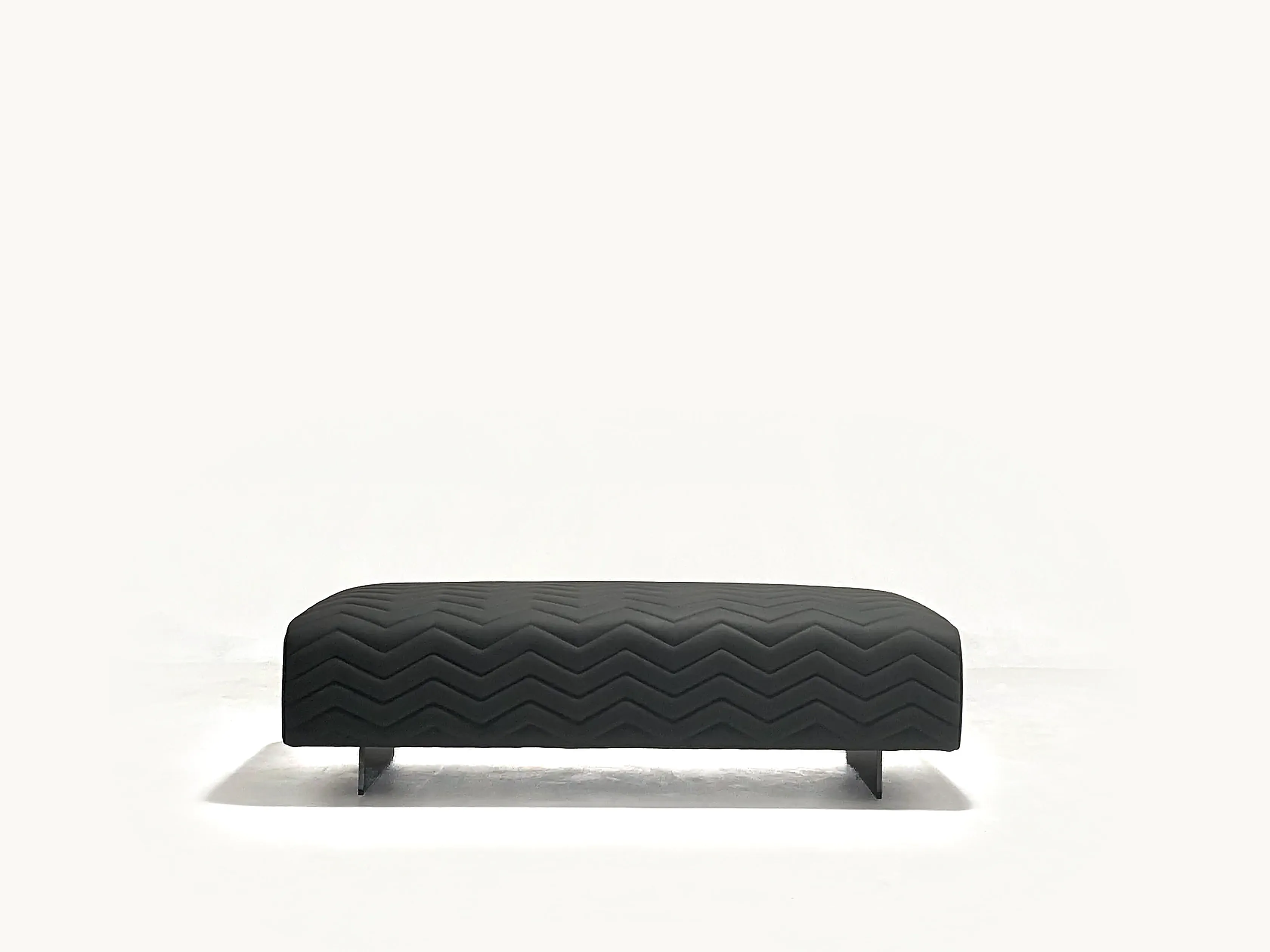
A pouf is easy to move to the window, to the sofa, or use as extra seating for guests — unlike a sofa, it is not fixed to one spot. It is one of the few visually substantial pieces that can be moved literally every week with no consequence to the piece or the floor beneath it.
A second often-underrated mobile piece is a small side table on casters or light legs — movable between sofa, chair and bedroom depending on where it is needed today, and that flexibility alone creates a sense of a home being lived in rather than a static showroom arrangement.
A one-day refresh sequence
- Remove and wash all removable cushion covers and throws first, then handle the rest while they dry
- Rearrange mobile pieces — poufs, stools, coffee tables — before deciding anything about textiles
- Swap decorative cushions between rooms — a free way to refresh two zones at once
- Wipe down and rearrange decor objects — something that stood in a corner for months often reads as fresh simply moved
What does not need refreshing
Framed furniture in good condition should be left alone — refreshing the textiles around it changes a room’s feel more than expected, and replacing a sound sofa or chair purely for "freshness" rather than a real size or shape problem rarely justifies the cost.
Checking the frame before deciding takes five minutes: sit and rock gently side to side. If it does not creak or sway, it certainly does not need replacing as part of a seasonal refresh — the whole effect comes from textiles and layout alone.
Rearranging without buying anything: what moving furniture alone can do
A completely free move is swapping two pieces within one room — a chair and a floor lamp, or angling the sofa a few degrees relative to the window. The eye adapts quickly to a layout and stops noticing it; shifting a couple of pieces by 30–50 cm is often enough to make a room read as new, with nothing new actually in it.
Seasonal rotation: a summer and a winter textile set
A useful long-term habit is keeping two sets of covers and throws, summer and winter, swapped by calendar rather than impulse, twice a year. This turns a seasonal refresh into a predictable ritual rather than a spontaneous scramble, and the choice is already made in advance.
A checklist: five questions before deciding what to buy
- Am I tired of one specific piece of furniture, or the room’s overall impression?
- Did I check the frame and filling before deciding furniture is the problem?
- Could textiles and rearranging get a similar effect before spending on something big?
- Am I ready to repeat this refresh twice a year, or do I need a one-time, long-term fix?
- What exactly do I picture when I say "refresh the room" — which single object or detail comes to mind first?
A refresh budget: what each tier actually costs
Tier one — covers, cushions, a throw — usually costs one trip to a textile shop and no craftsman visit. Tier two — a new pouf, rearranging furniture, new curtains — is a separate purchase or a few hours of work, but a modest sum, not a large one. Tier three — reupholstery or replacing framed furniture — is the only tier priced like a real share of a room’s renovation budget, which is exactly why it should only be reached for a genuine need.
The sensible approach is to budget for a specific tier, not an abstract "refresh" — framing the goal as "this room needs a second wind, not a new sofa" cuts the expected budget sharply, and it helps to settle this before a shopping trip, not after spotting something expensive and appealing in a showroom.
How often a seasonal review actually makes sense
Twice a year is a sensible frequency for tier one — seasonal textile swaps, rearranging mobile pieces. More often than that, the novelty effect dilutes because the eye has not forgotten the previous layout. Less often, and a room looks static for years even if everything in it is technically fine.
A common mix-up: room fatigue versus furniture fatigue
Many read "I’m tired of this room" as a signal to buy new furniture, when it is usually a signal to redirect attention within the same room — what the eye lands on first has gone stale, not broken. A simple test: close your eyes, picture the room, name the first object that comes to mind. If it is the sofa or chair, furniture fatigue is likely real; if it is a general sense of greyness or clutter, it is textiles and layout, not framed furniture.
Lighting as a separate, nearly free refresh tier
Between textiles and furniture sits another often-forgotten tier — light sources. Swapping one cool bulb for a warm one, adding a table lamp to a previously dark corner, or simply moving an existing floor lamp closer to a chair changes a room’s mood nearly as much as new textiles, at a fraction of any furniture’s cost. Light also amplifies every other change made, rather than competing with it.
This shows most in the evening, when artificial rather than daylight shapes the whole impression of a room — a warm lamp by the chair and a couple of matching new cushions work stronger together than either alone. A seasonal interior review is worth extending beyond textiles and layout to lighting too — which bulbs to swap, which lamp to move closer to the zone worth highlighting.
A deep clean and a seasonal review are different tasks
It helps to separate the physical deep clean — washing windows, vacuuming under furniture, laundering textiles — from the review this article is about: rethinking a room’s layout and colour. The first is hygienic and necessary regardless of mood; the second is aesthetic and optional. They combine naturally in timing, since textiles come off for washing anyway, but conflating them is a mistake: a spotlessly clean room can look just as tired as before if its layout and colours stay the same.
In practice, the sensible order is physical cleaning first, aesthetic review second — it is easier to see a room with fresh eyes without a layer of dust and clutter, which alone creates a sense of tiredness regardless of furniture layout. Skipping this order and trying to "refresh" a cluttered room with new cushions risks spending money without the expected effect, because the problem was never the colour.
A note from a KALLEN HOME designer
"Clients often write asking to 'refresh the living room' and jump straight to a new sofa. Nine times out of ten the sofa turns out fine, and what they actually want is a fresh feeling in the room — which usually ends with new cushions or a pouf, not a whole furniture set," says a KALLEN HOME designer.
By her observation, that distinction — "tired of this upholstery" versus "want a fresh feeling" — decides what to actually order: the first calls for reupholstery, the second almost always something mobile and inexpensive, easy to undo if the effect does not land. Her personal advice to clients is to try the cheapest, most reversible option first, not the most obvious one.
The main takeaway from talking to dozens of clients about this sounds almost obvious yet is rarely applied: before buying anything new for a room, it helps to honestly ask what specifically is bothering you — colour, shape, layout, or just months of accumulated inattention to detail. The answer to that simple question almost always saves money and time otherwise spent on furniture that does not fix the real problem.
"Before and after" photos — useful beyond social media
The habit of photographing a room before any seasonal refresh is useful not just for a nice post but as a personal decision tool — six months later, facing the next review, it is easy to forget what actually changed last time and how strong the effect was. Over time such photos become a personal catalogue of what worked and what did not, faster to consult than scrolling through other people’s examples online again.
Shoot from the same spot in the room under roughly the same light each time — otherwise the "before and after" comparison gets skewed by lighting differences rather than the actual layout change, and the archive loses its practical value, becoming just a set of random photos impossible to honestly compare.
When to bring in a designer, and when to handle it yourself
For tier one and two — textiles and layout — a designer’s consultation is almost never necessary: this is an area where your own eye and a few hours of time do the job as well as a professional. A designer becomes worth bringing in once the question moves to tier three — reupholstery or replacing a major piece — since a mistake in fabric or proportion there costs real money and time, and getting it right alone on the first try is far from guaranteed.
A borderline case is when someone is not sure which tier their problem belongs to — it feels like a new sofa is needed, but new cushions and relocated light would actually suffice. Here one short consultation purely to diagnose the right tier, not to deliver a finished solution, is worth it and saves a budget that might otherwise go to the wrong fix.
A one-evening seasonal checklist
- Remove, wash and, if needed, replace cushion covers and throws
- Check sofa and chair frames for play and creaking before deciding anything about the frame itself
- Move at least two mobile pieces — a pouf, a side table, a stool — into a new layout
- Reconsider one or two lamps so the light supports the new layout, not the old one
- Photograph the result and compare with a "before" photo — the difference is almost always bigger than it feels in the moment
See the Line pouf in the catalogue
Frequently asked questions
What is the fastest place to start refreshing an interior?
With textiles — cushion covers, throws and curtains, easy to swap or rearrange in a single day.
Can a pouf be ordered to match a specific interior fabric?
Yes, the pouf’s colour and upholstery material are chosen individually to match the room’s other textiles.
Do you need to replace all the furniture to refresh a room?
No, refreshing the textiles and rearranging one or two movable pieces is usually enough.
How do you know a sofa definitely does not need touching?
Sit and rock side to side — if the frame does not creak or sway, it needs neither replacing nor reupholstering.
Is it worth keeping a separate summer and winter textile set?
Yes, it is a useful habit — it turns a refresh into a predictable twice-a-year ritual instead of an impulse purchase.