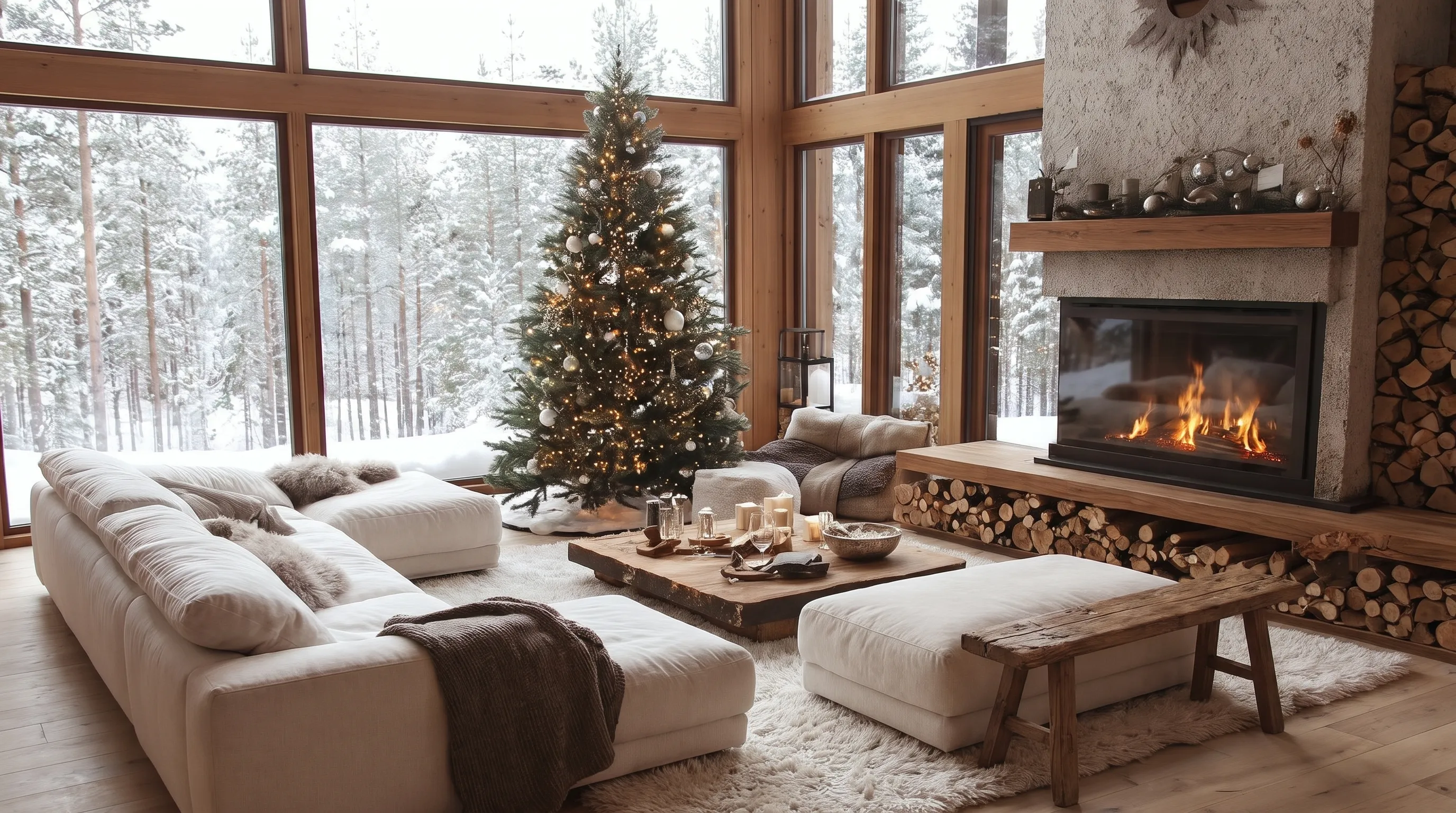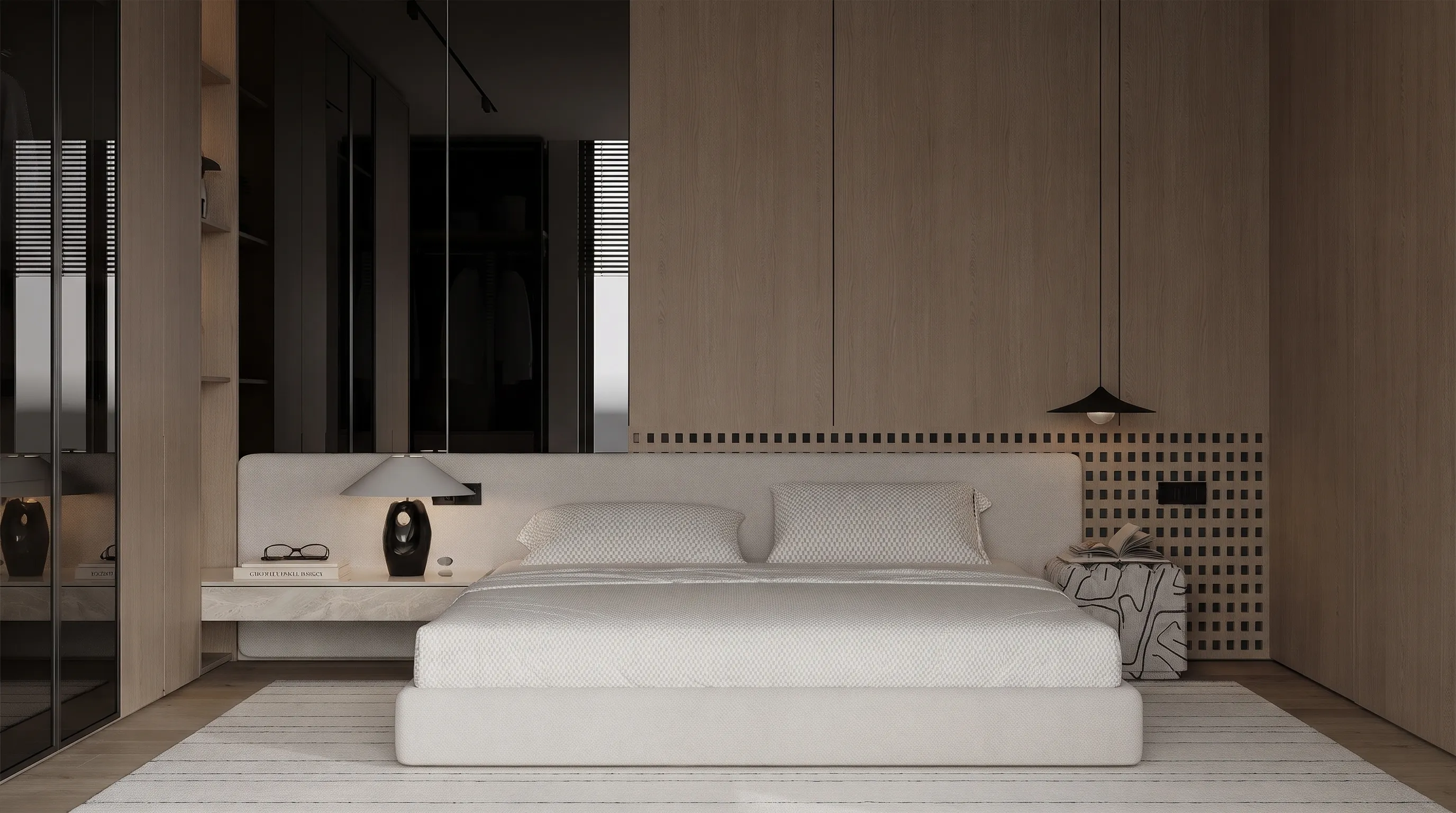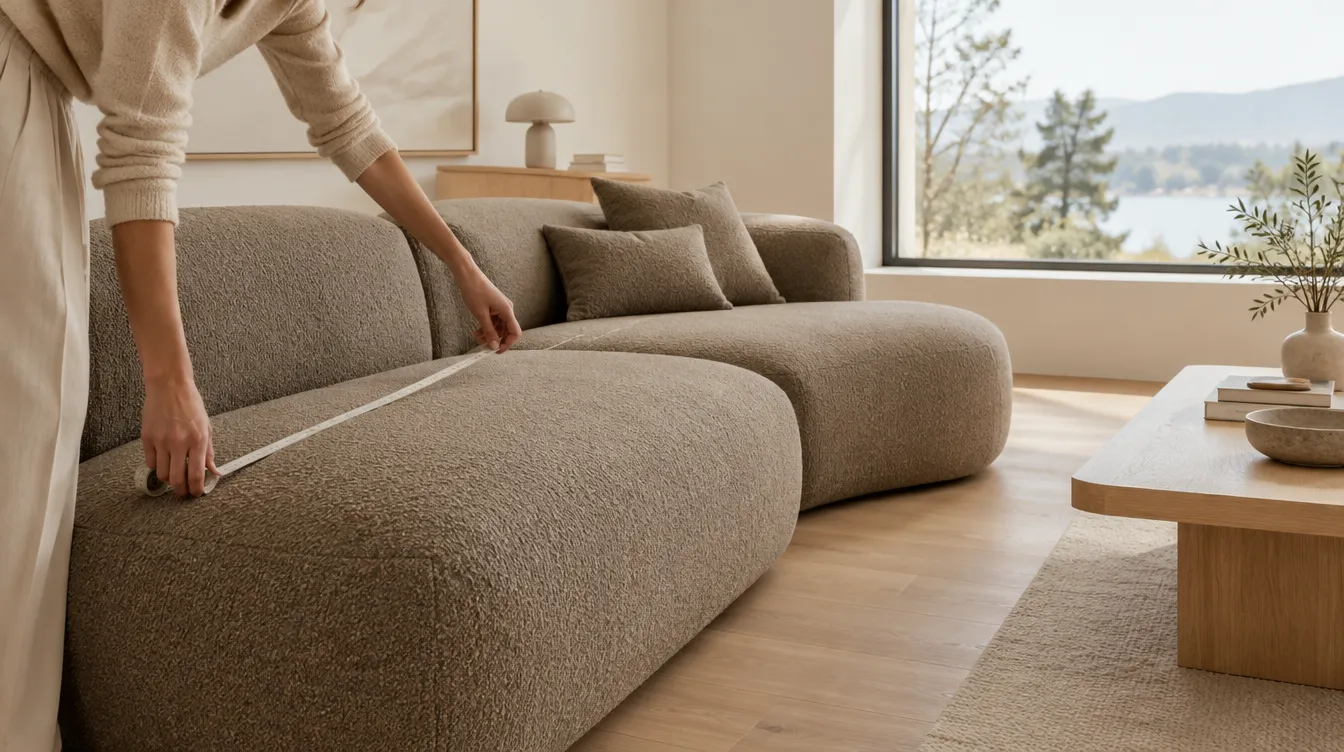
Fireside cosiness comes not from one lucky detail but from five parameters aligning at once — seat depth, back height, light level, texture contrast and safe distance from the fire.
The armchair: depth matters more than shape
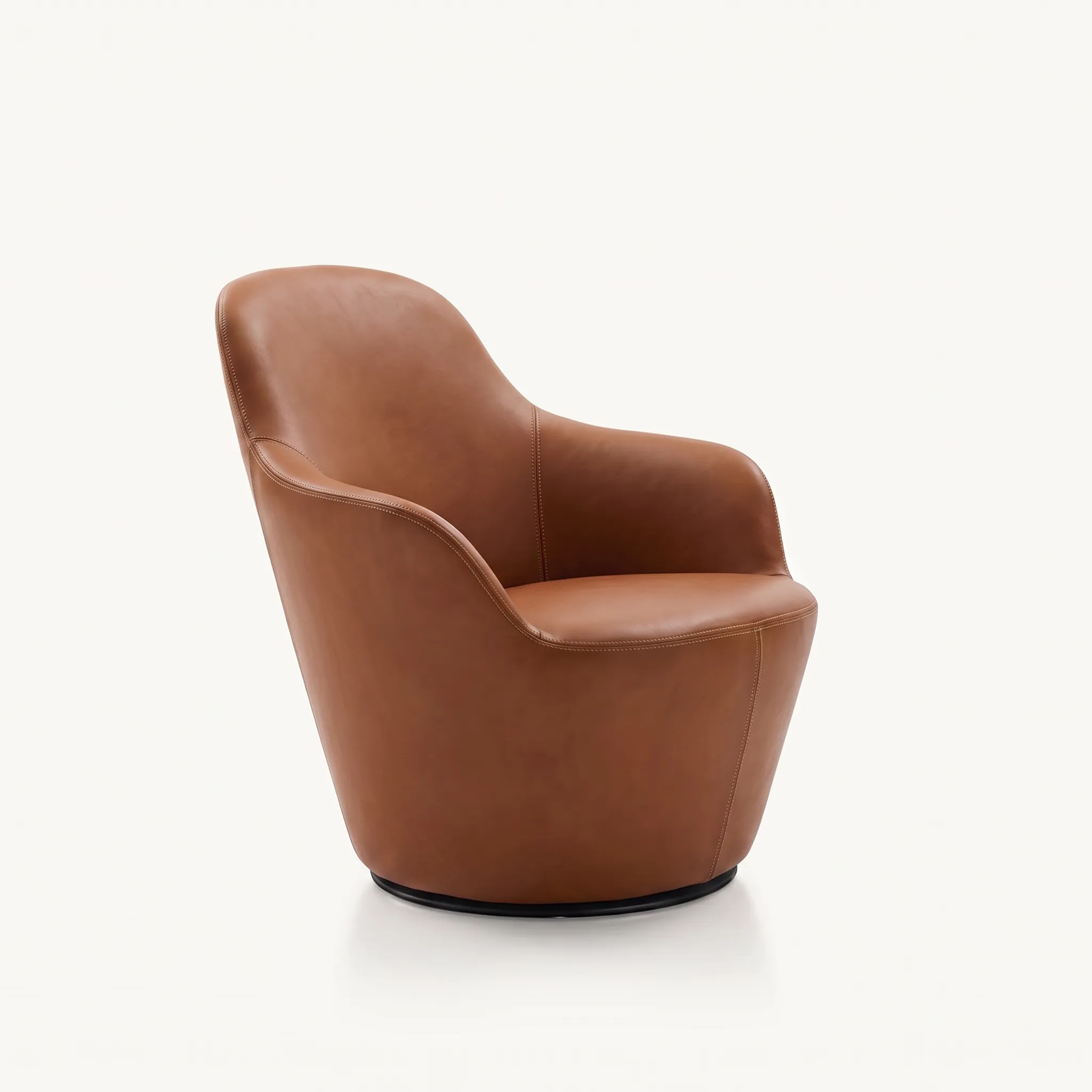
For reading by the fire, a seat depth of 60 cm or more allows tucking the legs up or reclining without the knees hitting the edge — the LAIT model is built for exactly this relaxed position, supporting the whole torso, not just the lower back.
Back height solves a separate problem: a comfortable height covers the seated person’s shoulder blades, usually 75 cm or more above the seat — below that, the head has no support, and even a beautiful chair reads as uncomfortable after half an hour.
Light: warm, low, and never alone
Overhead ceiling light almost always breaks cosiness — even brightness across the whole room removes the shadows that create an evening sense of intimacy. A floor or table lamp at shoulder height works better, giving a directed pool of light instead of general glare.
Colour temperature matters as much as direction — warm light around 2700K reads as evening and relaxing, while cool light at 4000K+ feels closer to daytime office lighting and undoes the effect the whole composition is built for.
- A shoulder-height floor lamp as the main source, not ceiling light
- 2700–3000K colour temperature — warm, not cool white
- A dimmer or multi-brightness lamp to adjust as it gets darker outside
- A second, weaker light source elsewhere in the room, so the chair is not the only lit spot
Textiles in two textures — why contrast works on the eye before the body
A dense wool throw over the chair’s smooth upholstery creates a visual contrast the eye reads as "cosy" before anyone physically touches the fabric — one flat surface and one textured one together suggest layering that a single texture alone, however fine, does not.
The same applies to cushions — one smooth, one textured (bouclé, knit, faux fur) look better together than two identical textures, even in matching colour. Texture variety matters more than colour matching alone.
Safe distance from the fireplace — not an aesthetic question
Distance from upholstered furniture to open flame is set by the specific fireplace’s fire-safety requirements, not by taste — open hearths, glazed closed units and electric fireplaces each have different mandated clearance zones set by the manufacturer or installer, not an interior decorator. Furniture goes in only after that zone is fixed, not by eye.
This matters especially for an upholstered chair with wooden details — unlike stone or metal, fabric and wood finish are sensitive to prolonged heat even without direct flame contact, and standing too close can dry out both upholstery and leg finish over time.
Which fabric copes best with heat from a fireplace
Dense natural fabrics — wool and linen — handle moderate heat noticeably better than synthetics, which can lose elasticity and slightly deform under sustained warmth, while natural fibre resists this slow thermal effect better — a separate, practical reason they appear so often in fireside chairs.
A note from a KALLEN HOME designer
"Clients almost always start with the throw’s colour, and we try to steer the conversation to light first — it decides whether the composition works at all. Even the most expensive fireside chair under ceiling light still reads as office furniture, not an evening reading spot," says a KALLEN HOME designer.
By her account, the most common mistake is arranging textiles before light is settled, not after — light changes colour and texture perception more than any fabric choice, and picking a throw under showroom daylight rather than the room’s actual evening light is a reliable way to be disappointed at home.
Flooring right next to the chair
A cold floor underfoot undermines cosiness almost as much as overhead light — even a great chair falls short if feet rest on cold unheated tile or laminate. A small dense rug just in the chair’s zone, not the whole room, solves this more cheaply than full underfloor heating, and works on the same texture-contrast logic as the throw.
Rug size matters too — a tiny mat under just the chair looks accidental and cropped, while a rug that reaches the side table as well visually ties the whole composition into one zone rather than leaving the chair floating on bare floor.
The side table and small decor — details that hold the scenario
A fireside armchair rarely works alone — a side table just above armrest height, for a cup and a book without reaching across the arm, is almost always needed. Without that surface within reach, the scene reads as "a chair in the corner," not a reading spot.
Small decor on that table — a candle, a few books, a ceramic mug — reinforces the scenario, but it is easy to overdo: three or four pieces of varied height and texture work better than a neat symmetrical arrangement that looks good in a photo but demands constant tidying nobody wants after a workday.
How the composition changes from winter into spring
A fireside setup built for autumn need not stay fixed all winter — as days shorten, turning the lamp on earlier and adding a second, thinner textile layer for evening temperature swings makes sense. In spring, when the fireplace is used less, the same composition lightens easily — the heavy wool throw goes into storage, and the chair and table keep working without the "winter" textile accent.
A common mistake: too symmetrical a composition
Wanting everything "neat and even" often leads to strict symmetry — a chair dead-centre before the fireplace, identical cushions on each side, a perfectly smoothed throw. In practice this reads more like a furniture-shop display than a lived-in room; slight asymmetry — the chair a touch off-axis, a throw tossed rather than perfectly arranged — reads as genuinely lived-in rather than staged.
A second armchair: when it helps, when it is excess
For one person reading alone most evenings, a second armchair often sits empty and turns into a spot for coats or bags, cluttering the zone without real function. If two people genuinely gather there regularly, a second chair is justified — angled slightly toward the first rather than strictly parallel, to keep a sense of conversation rather than two disconnected spots.
Smell and sound — rarely discussed, but part of the scene too
A burning fireplace adds two more sensory channels easy to miss when planning by image alone — the faint smell of wood and the quiet crackle of burning logs. For an electric fireplace without real flame, this is worth compensating separately — a wood-scented candle on the side table, say — or the composition looks right but feels incomplete precisely in the evening, when sight matters less and sound and smell more.
A designer’s note on a common beginner mistake
"Beginners often buy everything at once — chair, throw, rug, lamp — in one shopping trip and arrange it in one evening. In practice, the best fireside compositions come together over a few weeks: choose the chair first, live with it a little, then add light and textiles once it is clear where warmth and softness are actually missing, rather than guessing in advance," notes a KALLEN HOME designer.
Books and storage near the chair
If the chair is meant for reading, a small shelf or rack within arm’s reach prevents the habit of stacking books on the floor by the chair leg — convenient in the moment, but it turns into clutter that undoes the tidy look the whole composition was built for. A low open shelf or even a simple basket solves this without a separate large furniture piece.
Testing the composition in the evening, not during the day
The final check of a finished composition should happen in the evening, under the actual light it will be used in — daylight hides lighting flaws that become obvious at night: harsh shadows, an overly bright spot from a misaimed lamp, an unplanned contrast between a lit chair and a dark corner behind it. Running this test before buying all the textiles is far cheaper than redoing the composition after the money is spent.
Where to start on a limited budget
If budget does not allow assembling everything at once, a sensible buying order is chair, then light, then textiles — not the reverse. The chair is the scene’s structural anchor, hard and costly to change later; light changes the perception of everything else more than any single decor item; textiles are the cheapest, easiest-to-swap part, addable gradually, one throw or cushion at a time.
Takeaway: all five parameters in one list
Building a cosy fireside composition is easier when thinking not in terms of general "nice or not," but five specific parameters: seat depth, back height, light colour temperature and direction, at least two contrasting textile textures, and the fireplace manufacturer’s mandated safe distance. Get all five right, and the result reads as cosy at first glance, with no constant decor fiddling needed around one good chair.
This is easy to test alone: sit in the finished chair one evening with a book for twenty minutes, with no goal but to be there. No urge to get up and adjust the light, a cushion or the throw means the composition works; an urge reveals exactly which of the five parameters still needs fixing — more reliably than any amount of planning on paper.
The check costs twenty minutes and nothing in money, yet it is exactly what separates a composition people actually want to sit in every evening from nicely arranged but non-functional pieces assembled for one photo.
Autumn is a good moment for this check specifically — evenings grow long and dark well before the calendar winter, giving the composition months to prove itself before the cold season demands the most from it.
And if, after all five parameters and the evening test, the chair still has not become the favourite spot in the house, the reason is almost never the chair itself — more often it is one overlooked detail of light or texture, findable through this same list, rather than a reason to replace the furniture entirely in search of a nonexistent perfect model.
An autumn evening by the fire is, in this sense, not a one-off photo moment but a repeating ritual for the whole cold season — exactly why the five parameters deserve one careful pass, not a weekly eyeballed re-guess.
See the LAIT armchair in the catalog
Frequently asked questions
What back height does a fireside armchair need?
A comfortable height covers the seated person’s shoulder blades — usually 75 cm or more above the seat.
Can the armchair be placed close to the fireplace?
The distance is set by the specific fireplace’s fire-safety requirements, not by design taste — check the mandated clearance with the fireplace manufacturer or installer.
Which fabric copes best with heat from a fireplace?
Dense natural fabrics — wool and linen — handle moderate heat noticeably better than synthetics, which can deform over time.
Why does ceiling light hurt the sense of cosiness?
Even brightness across the room removes shadows, and it is light-and-shadow contrast that creates an evening sense of intimacy.
How many light sources does a fireside composition need?
At least two — a main shoulder-height floor lamp and a weaker source elsewhere in the room, so the chair is not the only lit spot.