A table beside a chair or window comes down to three numbers — height relative to the armrest, tabletop diameter, base stability — not looks or price.
Three numbers that decide everything about this piece
A side table is one of the few pieces where looks barely affect usability — the numbers do. A table can be beautiful and genuinely uncomfortable at once if its height or diameter is not matched to the specific chair beside it.
Height: the reference point is the armrest, not a person’s height
A comfortable reading-table height is 3–5 cm above the neighbouring armrest — not a generic catalogue "standard," but a figure relative to the specific chair. Lower, and reaching for a cup means leaning forward awkwardly; higher, and the table physically blocks the armrest.
This rule holds regardless of the chair’s own armrest height, so it makes more sense to measure the specific chair first, rather than find a "standard" table and fit the chair to it.
Diameter: what actually fits at different tabletop sizes
A 40–50 cm tabletop is the minimum comfortable size for a cup, book and phone without crowding. 55–65 cm fits a two-person tea tray or a large-format open book; 70 cm+ starts functioning as a small laptop surface rather than just a drink stand.
- 40–50 cm — cup, book, phone: the comfortable minimum
- 55–65 cm — room for a tray or a large open book
- 70 cm+ — functions as a mini laptop surface
Stability: three legs almost always beat one central column
Three legs are more stable on an uneven floor than one central base — three contact points simply cannot wobble the way a single, even wide, central support can. This matters especially for a table that gets moved around during the day.
A single-leg table has a reverse advantage — it occupies less floor area at its base and does not obstruct the walkway near the chair, a reasonable trade-off for compactness in a genuinely tight corner.
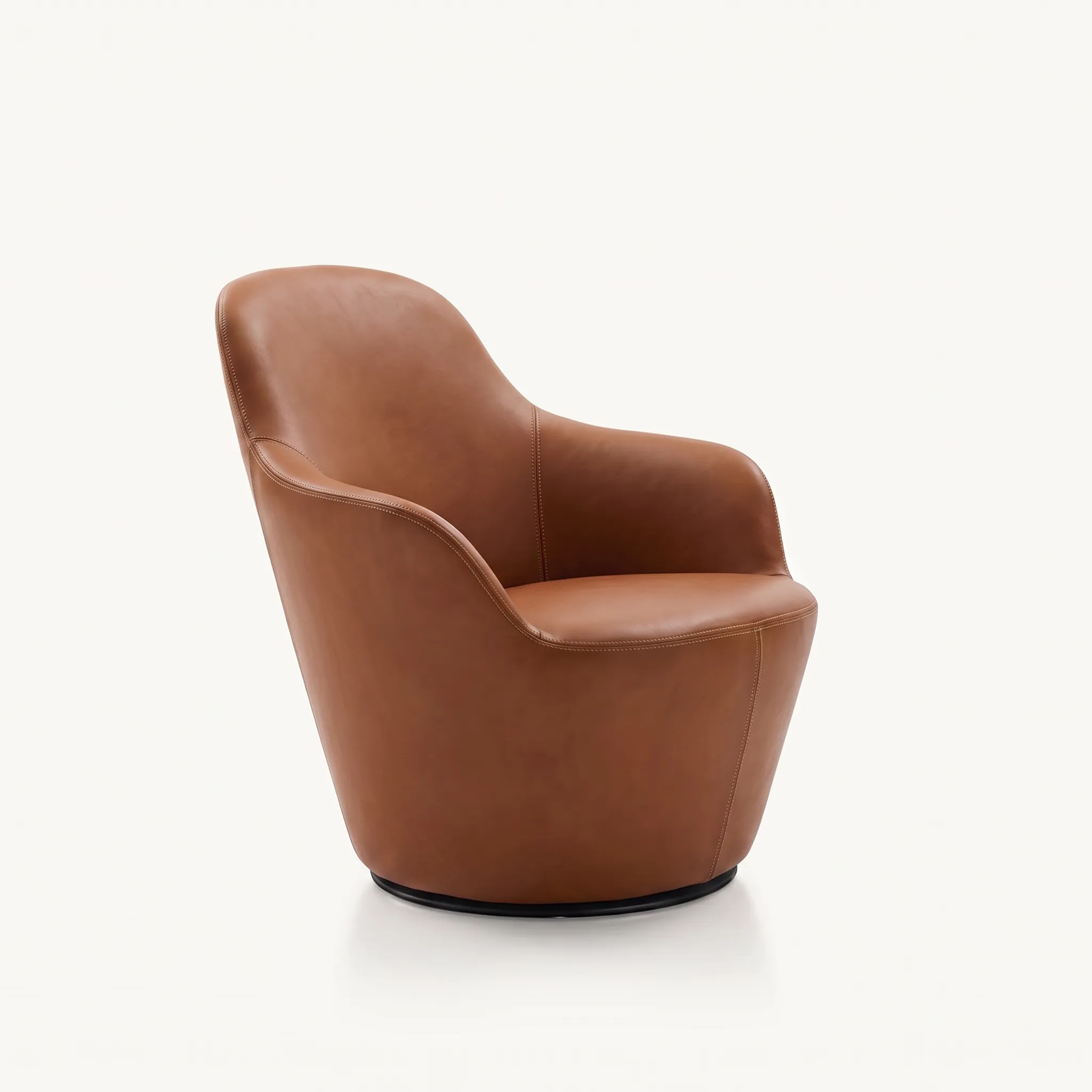
Armrest height differs even between similar-looking chairs
Two similar-looking chairs can differ 5–8 cm in armrest height — an upright classic seat usually sits at 60–65 cm, a deep lounge seat at 55–58 cm. A table perfect for one will be off by that same margin for the other.
A tray instead of a fixed tabletop — when it makes more sense
If space is genuinely tight, an armrest tray or a folding table that stores away is an alternative — easier to move or remove, but less stable for hot drinks and less reliable under a laptop’s weight than a table on its own legs.
A C-shaped table that slides under the armrest
A C-base table slides under the chair so the top sits right above the armrest or lap — convenient for a laptop or breakfast in the chair, but needs a heavier, more stable base, since the top’s forward-shifted weight makes the whole piece less stable than a classic evenly-based table.
How a side table differs from a coffee table in height
A side table beside a chair and a coffee table in front of a sofa solve different problems and so follow different height logic — a coffee table typically sits below seat level, a side table sits at or just above armrest level, because it is used sitting upright, not reclined.
Material for the task: mobility matters more than texture
For a table by the window, wood and metal are more practical than stone — noticeably lighter, easier to shift toward the light in the morning and back for walkway space in the evening. Stone looks striking and sits stably from sheer weight, but that same weight makes it awkward for a piece meant to move daily.
Cables and outlets — a detail remembered too late
If a lamp or phone charger sits near the chair, it is worth planning the cable route before the table is placed, so it does not cross the exact spot a foot catches on getting up — sometimes solved simply by orienting the table away from the walkway side.
Tabletop height and eye contact during conversation
With two chairs sharing one table, its height affects not just cup access but how clearly you see the other person — a table above both armrests partly blocks the lower face when leaning forward, unnoticed in a showroom but felt over a long evening conversation.
Seasonal moving: one table, two spots in the house
A light table on slim legs can move seasonally — to a glazed veranda in summer, back to a fireside chair in winter. Worth checking in advance whether the leg-to-top joint tolerates frequent disassembly, since not every design is built for that from the start.
Window light changes through the day — the table should allow for it
Morning light at an east-facing window and evening light at a west-facing one fall at different angles, and a table fixed in one spot does not always stay in the comfortable reading zone all day — a light table on slim legs solves this without a separate lamp, just by shifting with the chair.
Tabletop edge: this matters more on a side table than a coffee table
A sharp straight edge looks tidy in photos, but on a table your hand reaches toward every evening, a rounded or chamfered edge is more practical — lower risk of knocking a cup with the side of a hand or catching a sleeve. A coffee table, reached for less often and less closely, is less affected by this.
Two small tables instead of one larger one
If a chair needs space for both a drink and a phone with a book, two small tables of different heights — one lower for phone and remote, one at armrest level for the cup — are sometimes more practical than one larger table for both, and each can move independently.
If the chair was bought separately: matching a table to it
When the chair already stands in the room and the table is chosen separately, exact armrest-height match and at least one shared material tone — legs or edge — matter more than matching style exactly, visually pairing two otherwise unrelated pieces.
Stability on a rug — a separate, harder problem
On a hard floor, three slim legs usually beat one central base, but on a thick rug that advantage partly disappears — thin legs sink slightly into the pile and can settle unevenly over time. For a table that will live permanently on a rug, wider feet distributing weight over more pile area work better than thin point-contact legs.
Folding or fixed: which is more practical in practice
A folding table seems obvious for a small room, but in practice it gets folded back less often than expected at purchase time — a fixed, smaller table often proves more practical day to day than a larger folding one that is "supposed to" tuck away.
Floor-to-top height is not the only number worth knowing
Besides final height, under-top clearance matters too — how far a chair leg or armrest edge can slide underneath if the table sits close. Too little clearance means the table cannot get close enough, undoing the benefit of the 3–5 cm height rule.
What the price actually buys in this category
Price spread on a small side table often seems disproportionate to its size, but it reflects fitting precision, not material volume — height tuned to a specific chair, a base engineered for that exact tabletop diameter, a hand-finished edge. On a small object, any imprecision shows more than on a large one.
What to confirm before ordering a side table
- The exact armrest height of the specific chair, not a model average
- Whether under-top clearance is needed for a chair leg or armrest
- Three legs or one central base, depending on the floor it will stand on
- The finished piece’s weight, if the table will be moved often
A note from a KALLEN HOME frame engineer
"The most common mistake is choosing a table from an online photo without measuring the actual chair at home. Five minutes with a tape measure before ordering saves exactly one disappointment after delivery," says a KALLEN HOME frame engineer.
Worth discussing weight with the workshop in advance — a light table is easier to move through the day, but also easier to knock over, especially with an open cup on top. For a family with young children, a slightly heavier base can be worth the trade in mobility.
Another practical nuance — tabletop colour relative to the floor. A table matching the floor tone visually dissolves and barely registers as a separate object, while a contrasting edge reads as a sharp boundary — sometimes the better choice for a tight room is the former.
A separate request category is an outdoor reading table on a terrace or balcony — here untreated wood and metal lose practicality faster than indoors, and it is worth discussing an outdoor-rated finish from the start rather than moving an indoor table out and hoping it holds up.
The second most common note from the workshop concerns last-minute orders, where chair measurements arrive only after the sketch is nearly final — usually revealing the armrest sits a bit higher or lower than remembered, better caught on paper than after delivery.
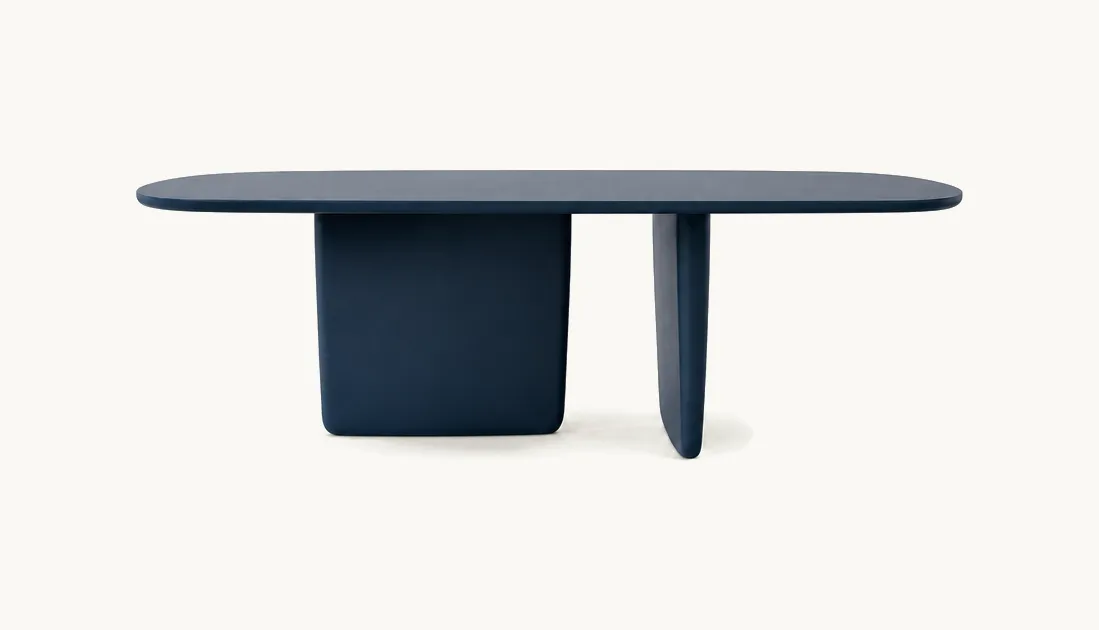
See the Tori table in the catalogue
Frequently asked questions
How high should a table beside a chair be?
3–5 cm above the armrest of the chair beside it, not a generic catalogue standard.
What tabletop diameter is comfortable for a cup and a book?
40–50 cm is enough for a cup, book and phone; 55–65 cm adds room for a tray.
Three legs or one central base — which is more stable?
Three legs are more stable on an uneven floor; one central base saves floor space but is more sensitive to weight shifts.
How does a side table differ from a coffee table in height?
A coffee table sits below sofa seat level; a side table sits at or just above the chair’s armrest.
Can a table be custom-made to a non-standard size?
Yes, the height and tabletop diameter are agreed individually to match the specific chair.