Leather wins on upkeep and durability, textile on warmth and acoustics — the real answer depends on exactly how the study gets used.
Before choosing a material, answer two questions
The leather-vs-textile question usually starts from looks, but two practical questions matter more first: how many hours a day the chair is actually used, and whether the room holds stable temperature and humidity year-round.
The second question matters more than it seems — leather is far more sensitive to dry air from a radiator or air conditioner than most fabrics, so a room with unstable climate is not the best place for leather, however well it suits everything else.
Leather is not one material — three types, three levels of practicality
Three leather types by finish matter more than leather-vs-textile in general: aniline has no protective pigment layer, the most refined to the touch but most vulnerable to stains and scratches; semi-aniline adds a thin protective layer, more light-resistant and practical; pigmented leather has the thickest protective coat and resists moisture and dirt best, at some cost to texture.
- Aniline — most texture and softness, least practical, needs care from day one
- Semi-aniline — a compromise: noticeably more light- and stain-resistant
- Pigmented — most practical for daily use, but less tactile character
A work chair usually calls for something other than aniline
For a chair used daily, semi-aniline or pigmented leather is the more sensible call than pure aniline — they hold up against elbows, paper and the occasional spilled coffee. Aniline suits lighter-use or more ceremonial settings.
Thickness, and what happens to leather over the years
Natural upholstery leather usually runs 1–1.2 mm for lighter areas up to 1.4–1.6 mm for load-bearing zones like a seat; faux leather varies even more sharply — a 0.5 mm layer holds up to 50,000 abrasion cycles, a thin 0.3 mm layer only around 15,000.
Leather cracks mainly from lost elasticity due to dry air and direct heat, not age itself — a chair kept near a heater or in direct sun for years loses flexibility far faster than one in stable 40–60% humidity.
Textile: the warmth and acoustics leather cannot match
Leather feels noticeably colder on first contact, especially in winter — dense and poreless, it quickly takes on room temperature rather than retaining warmth. Wool or dense velvet feels comfortable immediately, with no "cold start."
In a study with a hard floor — parquet or stone, no rug — textile upholstery also dampens some reflected sound that otherwise creates a slight echo on calls. Leather is acoustically neutral in comparison.
Lifespan: comparable, for different reasons
Quality leather 1.2–1.4 mm thick lasts 10–15 years with regular care and stable climate, comparable to dense textile rated 30,000+ Martindale cycles — leather’s limiting factor is usually climate and care, textile’s is direct sun and mechanical wear at contact points.
Smell and patina — something textile cannot replicate
Natural leather has its own distinct smell for the first months, fading over time, and aniline or semi-aniline leather develops a soft patina at contact points — seen by many as character, not flaw. Textile has no equivalent middle stage between looking new and showing wear.
Colour also behaves differently over time
Pigmented leather holds colour for its whole lifespan, since the pigment layer carries the colour rather than the fibre itself. Aniline leather, unprotected, lightens slowly in sun and darkens at contact points. Textile only shifts where direct sun actually reaches it.
Claws and the chair: leather beats most fabrics
With a cat or dog at home, leather — especially pigmented — handles accidental claw contact better than bouclé or velvet, since there is no loop or pile to catch, though a deep scratch on leather stays visible permanently, unlike a temporary mark on velvet.
What is cheaper over five to seven years
A leather chair usually costs 20–35% more upfront than the same silhouette in dense textile, but lower maintenance over 7–10 years often brings total ownership cost in line or even lower — textile sometimes needs a professional clean or local reupholstery in that span, leather with regular cream often needs none.
If the study also hosts meetings and guests
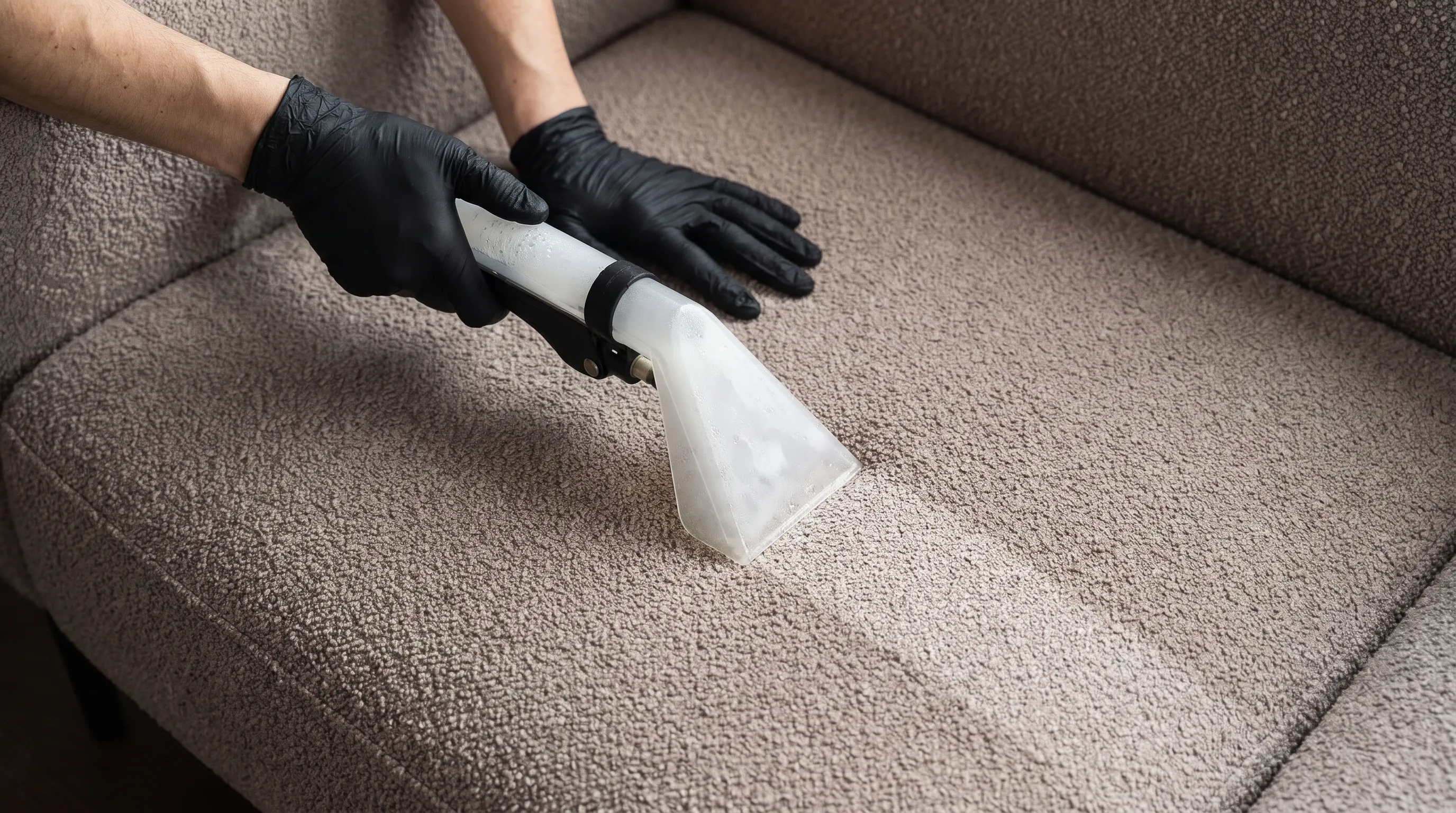
For a chair that also sees guests or business visitors, pigmented leather is often more practical than any textile — it holds odours less and can be wiped presentable in a minute, where fabric sometimes needs professional cleaning in advance.
A note from a KALLEN HOME upholstery technologist
"For a daily work chair we almost always recommend semi-aniline or pigmented leather, not pure aniline — too demanding for daily load. We suggest textile to clients who work from home in slippers and value warmth over easy cleaning," notes the production team.
The chair’s shape decides which material is easier to cut
On sculptural, heavily rounded chairs or those with channel tufting, leather needs noticeably more precise cutting than textile — it stretches less, and a sharp curve with an imprecise pattern piece can bunch or stretch unevenly. Textile is more forgiving here, which partly explains why the most complex chair shapes often launch in fabric first.
Faux leather: an honest compromise, not a cheap fake
Quality faux leather is a practical category of its own — lighter, 40–60% cheaper, free of the smell some find strong in new natural leather. Its limit: even the best 0.5 mm faux leather, rated up to 50,000 abrasion cycles, ages differently — the polymer layer can eventually crack or delaminate, while natural leather simply darkens and softens under the same load.
Zoning: leather on the seat, fabric on the back
As with fabrics, a chair can mix materials by zone — leather on the seat and armrests for practicality, textile on the back and sides for warmth against the spine. This is rarer in mass-produced furniture precisely because it needs individual pattern work for two materials on one frame — a natural advantage of bespoke production.
What a manufacturer’s warranty actually tells you
A chair’s upholstery warranty — leather or textile — usually covers manufacturing defects, not natural wear from use. Leather cracking from nearby heating after a year is not a warranty case, even within the warranty period. It confirms no factory defect at purchase, not a promise of longevity — actual conditions of use decide that.
Tactile memory: why the hands judge this, not the eyes
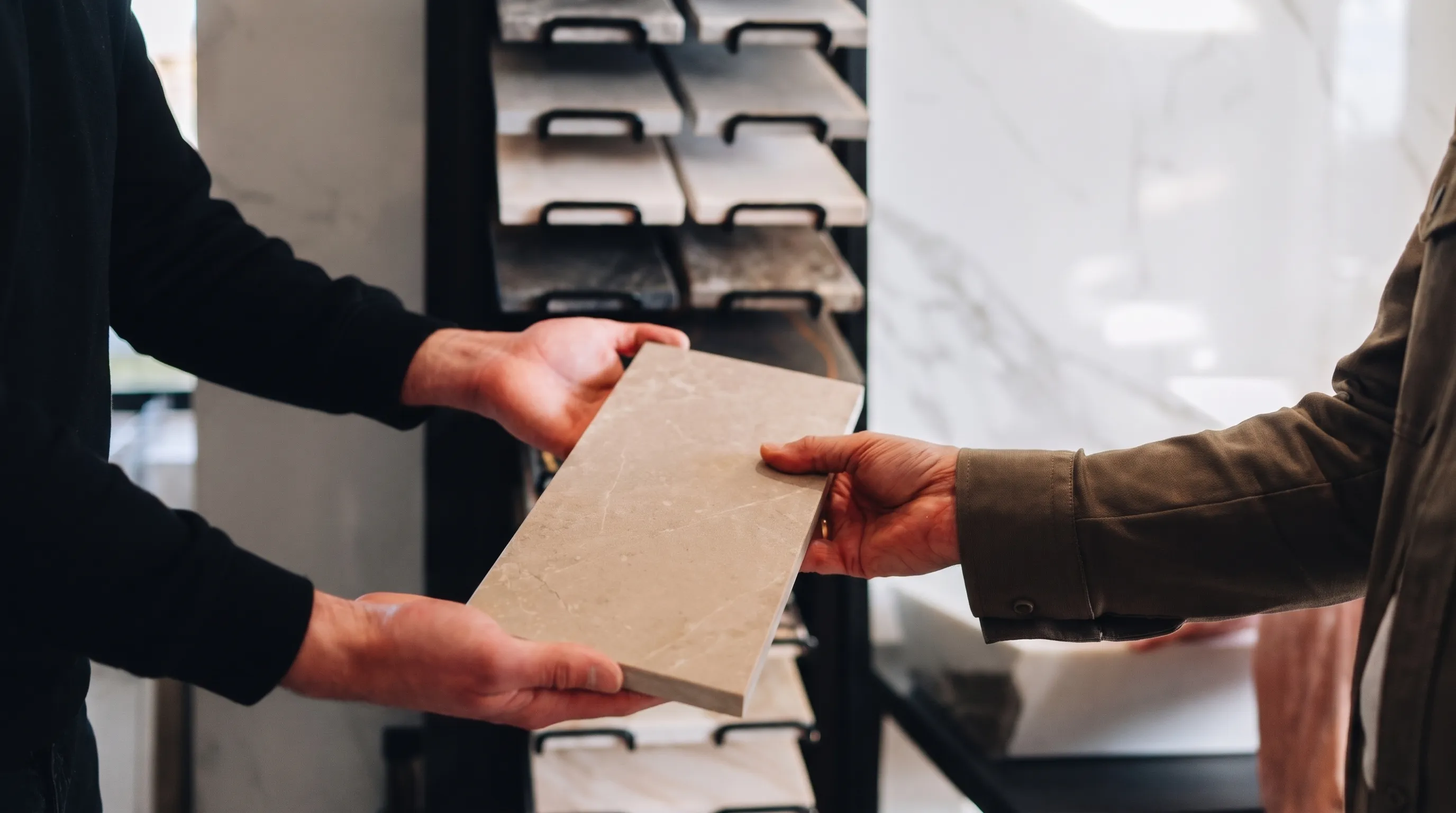
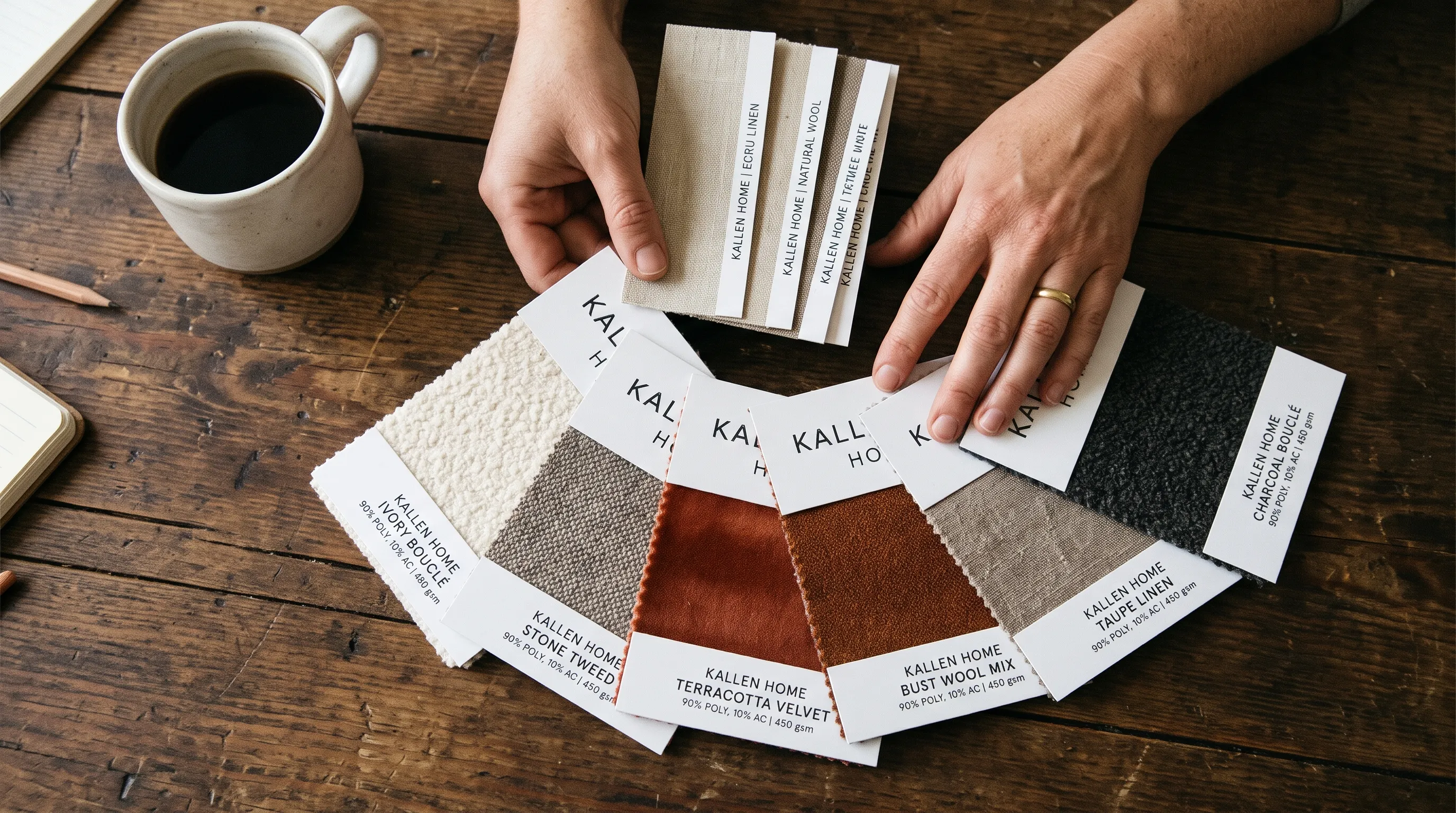
A catalogue photo conveys colour and shape, but not the key difference between leather and textile — the feel of first contact. Many clients who decided from a photo change their mind after a minute with a hand on a showroom sample.
Two different studies, two different right answers
A study used eight hours a day with a laptop and papers, and one that serves as a quiet evening reading spot, are formally the same room category but different load scenarios — the first usually favours leather or a zoned solution, the second almost always favours textile, where warmth matters more than daily-friction resistance.
What to ask the workshop before ordering
- Which exact leather type is offered — aniline, semi-aniline or pigmented
- Can the chair be zoned: leather on the seat and armrests, textile on the back
- What warranty covers the upholstery separately from the frame, and its limits
- Does the proposed material actually suit the room’s real climate
A short summary by scenario
Heavy daily use, stable climate, low-maintenance priority — lean leather. Moderate use, warmth and acoustics matter, cleaning is not a concern — lean textile, especially wool or dense velvet.
In practice, many clients arrive with "I want leather" or "I want fabric" already decided before any talk of use scenario — and that is fine, tactile preference has every right to be the deciding factor. This breakdown exists not to override that choice, but so it does not turn into a surprise a year later over climate or load nobody thought through in advance.
If the choice still hangs between two close options after all this, one last simple question helps: what would bother you more — a cold armrest for a few seconds on a winter evening, or a coffee stain that never fully washes out. That almost naive question often settles it faster than any spec comparison.
Worth mentioning a rare but real third path too: a chair with partial material swap, where the seat and armrests get leather and the sides and back get textile — cheaper and easier to update later without redoing the whole piece.
One last practical note: the decision need not be permanent. Reupholstering a chair in a different material is a routine service, not a last resort — if the study’s use changes in a few years, leather can become textile or back again, without buying a new chair.
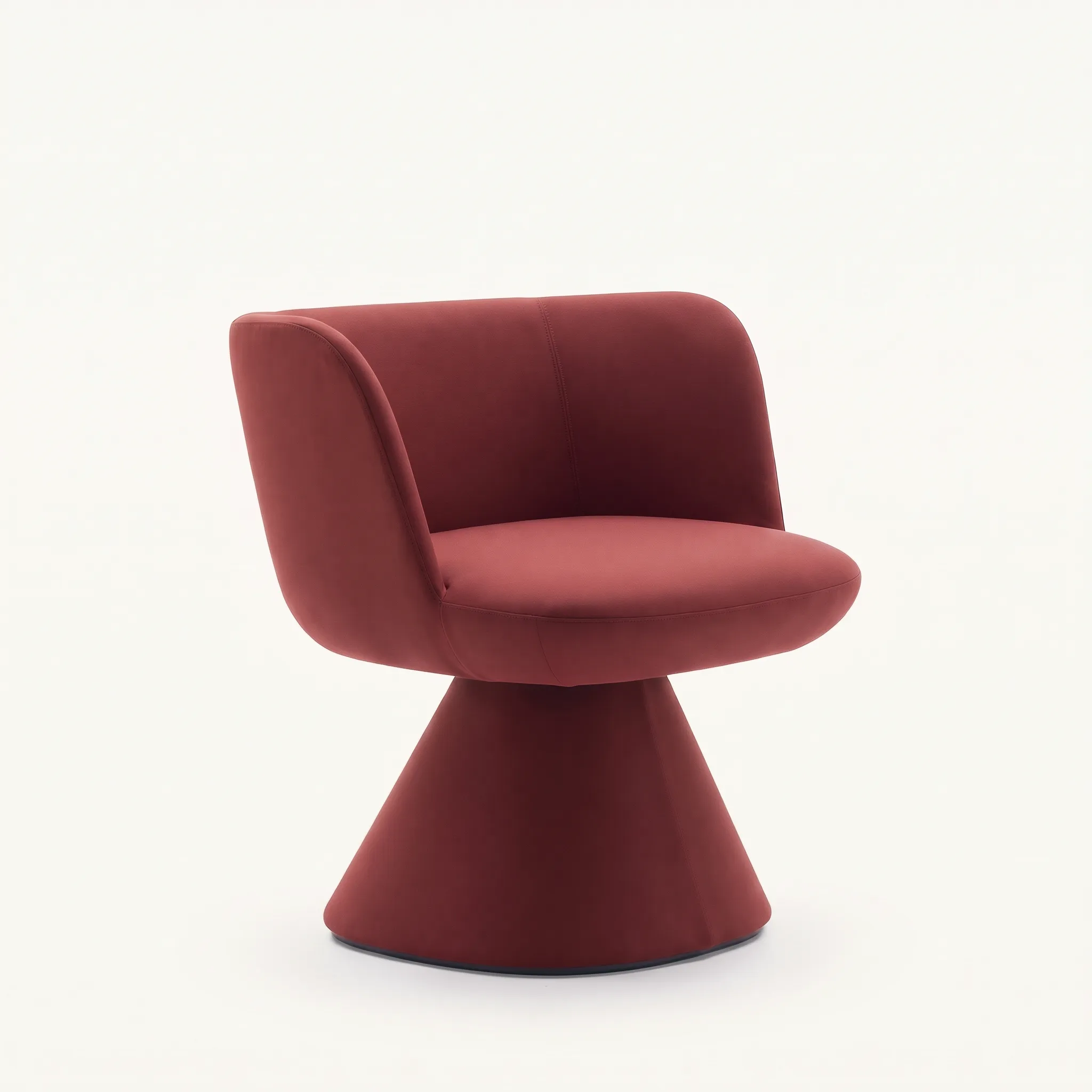
See the Monako armchair in the catalogue
Frequently asked questions
Which is easier to maintain: leather or textile?
Leather, especially semi-aniline or pigmented — it only needs wiping and periodic conditioning cream.
Which leather is most practical for daily use?
Semi-aniline or pigmented — both have a protective layer that pure aniline lacks.
Why does leather crack over time?
Usually from dry air and direct heat from a radiator or the sun, not the leather’s age itself.
Why do people still choose textile despite the extra upkeep?
Because of immediate warmth to the touch, a wider colour range, and better acoustics on a hard floor.
Does leather suit a study with uneven heating?
Not ideal — sharp humidity swings and dry air speed up leather losing elasticity; textile is the safer choice here.