The same fibre property makes linen the best summer fabric and the weakest winter one — here is why, and what to do about it room by room.
One fibre property drives linen’s behaviour in every season
Linen fibre is hollow and conducts heat well — these two facts explain almost everything people notice about it in both summer and winter.
In summer this combination works in linen’s favour — no clinginess, fast moisture release. In winter the same combination works against it, pulling heat from the body on contact.
Summer: what "breathing" actually means
Linen can absorb up to 20% of its own weight in moisture while staying dry to the touch longer than cotton, thanks to a hollow channel running through the fibre.
In a hot, unair-conditioned room, linen genuinely feels cooler than dense velvet or bouclé after 10–15 minutes of contact — one of the few fabric traits that is physical, not just aesthetic.
Winter: the same property works against linen
In a cool room, a linen sofa feels colder than wool or velvet at the same air temperature — linen simply conducts heat faster than wool’s crimped fibre, which traps warm air.
If the sofa stands in a room that runs cool in winter, pure linen will feel briefly uncomfortable on contact each time — reason to blend the fabric or compensate with a throw, not to avoid linen altogether.
- Linen-viscose blends (30–50%) conduct heat less and feel warmer
- A wool throw over the seat fully offsets the cold first touch
- Underfloor heating solves it without changing the fabric
- Keep pure linen for rooms with steady year-round heating
Creasing changes seasonally along with air humidity
Linen creases more sharply in dry winter heating air, since the fibre loses some of its own moisture and turns brittle at the folds; a 50/50 cotton blend stays more even year-round.
Static electricity: another seasonal difference
Winter heating dries indoor air and synthetic fabrics build up noticeable static; linen, like most natural fibres, barely charges up even in dry winter conditions.
This matters more in homes with carpeting and underfloor heating, where static builds up from several surfaces at once — a sofa that resists it adds comfort even if it sounds minor on paper.
By contrast, polyester upholstery in the same room can deliver a noticeable static shock on the nearest door handle right after standing up — small details that add up to how "cosy" a room feels in winter.
Pets notice the difference too — cats and dogs often avoid fabrics prone to static and settle more readily on linen and other natural fibres on winter evenings.
Colour and dye also behave differently by season
Naturally toned or lightly dyed linen handles seasonal humidity swings more calmly than deep-dyed linen, where intense dye slightly stiffens the fibre and creases show more at the folds, especially in dry winter air.
How this differs from a general sofa-fabric guide
A separate guide compares linen, bouclé, velvet and wool for choosing by use case; this article focuses narrowly on how the same linen behaves across the seasons in the same room.
Seasonal fabric behaviour is a matter of fibre physics that can be calculated in advance, not a matter of taste discovered the hard way after the first cold winter.
In practice this takes a minute or two at the brief stage and saves one unpleasant surprise — a first cold evening on the new sofa, easily mistaken for a fabric fault when it is simply ordinary, predictable fibre behaviour.
What happens if the season is ignored when choosing
The most common winter complaint about pure linen is not fabric damage but simple discomfort that makes people use the sofa less — a loss of purpose that is easier to avoid at the fabric-choice stage than fix later.
The opposite also happens — a heavy winter fabric in an unair-conditioned summer house feels unpleasantly warm exactly where coolness was wanted. Both cases are solved the same way: discuss the room’s real month-by-month climate before ordering, not after.
Fabric weight also shapes seasonal behaviour
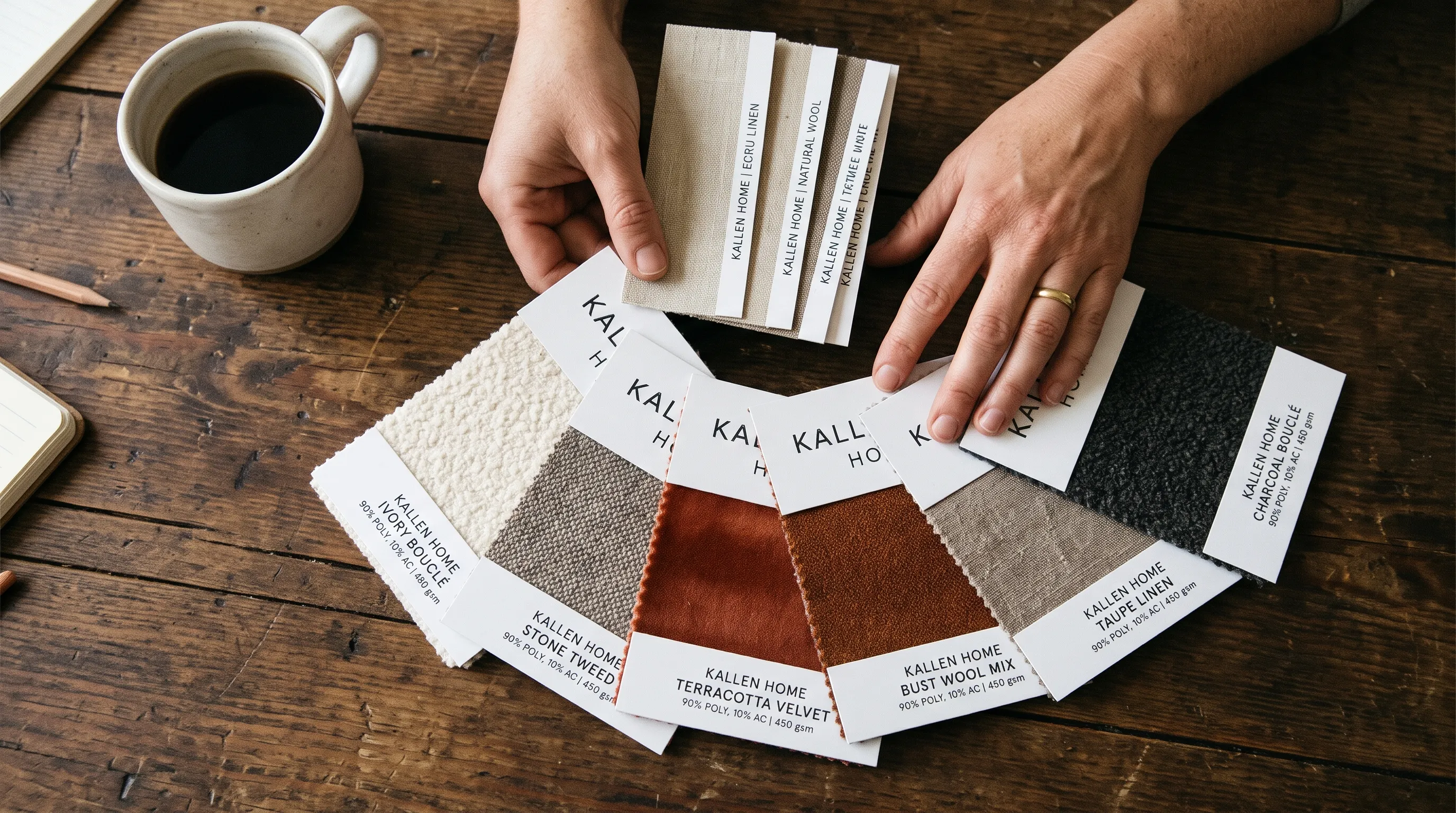
Light linen cloth (160–200 gsm) breathes best for summer; heavier cloth (280–320 gsm) loses some airiness but feels noticeably warmer in winter.
Three heating scenarios, three different recommendations
A flat with steady central heating is the calmest scenario for pure linen; a house with a boiler switched down overnight sees a 3–5 degree daily swing that linen will register as cold at the low points.
A room without regular winter heating is the one case where pure linen is not recommended at all — a cotton-heavy blend or a seasonal cover swap works better.
Seasonal care: what changes between summer and winter
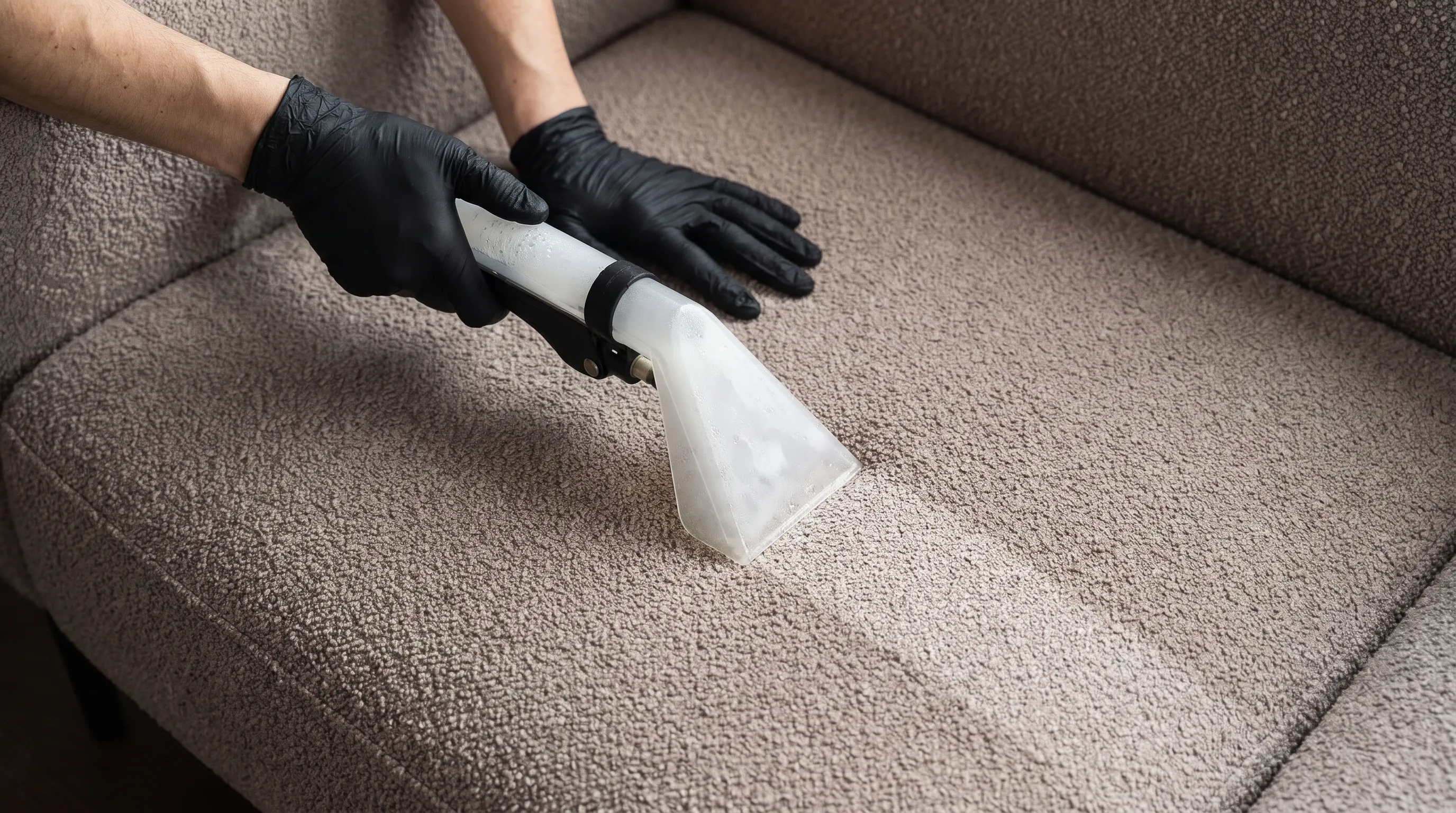
Care steps stay similar year-round, but priorities shift: sun and perspiration protection matter most in summer, dryness protection matters most in winter.
- Summer: shield from direct sun with voile or curtains — UV lightens linen
- Summer: wash covers more often — linen dries fast and holds shape
- Winter: keep indoor humidity at 40–60% to reduce brittleness at folds
- Winter: keep the sofa away from direct radiator heat
Which room in the house suits a linen sofa
Linen works best in rooms with fairly stable year-round warmth; rooms with sharp seasonal swings do better with a blend or a seasonal cover change.
Window orientation adds another layer: a south-facing room gets solar warmth even in winter, partly offsetting linen’s cool feel, while a north-facing room stays cool year-round and amplifies it — at the same thermometer reading, the sofa feels different.
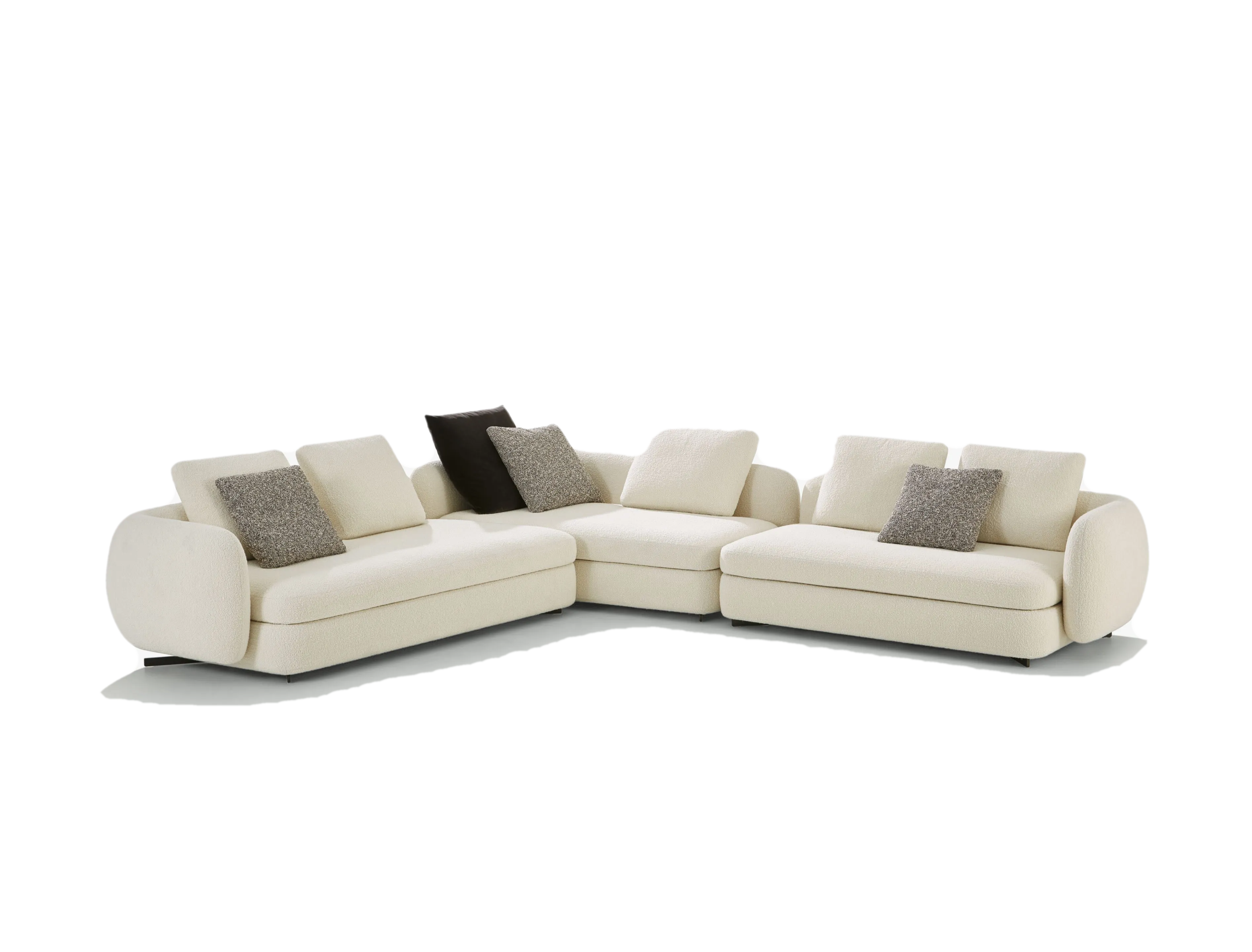
The SAN sofa, and why linen is often chosen for it
The SAN sofa’s low, slightly reclined back and exposed wooden legs suit a light fabric visually — dense velvet or wool would look heavier than intended, while linen keeps the silhouette light.
This is a separate reason linen suits SAN more than a heavy, deep-seated sofa — shape, not just room climate, drives the fabric choice.
Deciding for your own room
With stable year-round heating and mainly summer use, pure linen needs no compromise; with irregular heating or heavy winter use, a 30%+ cotton or viscose blend is the safer call.
A KALLEN HOME upholstery technologist’s view
"We offer pure linen to clients who consciously want a lived-in look and are ready to switch throws by season. For a room with temperature swings, a blended fabric is the more honest recommendation from the start," notes the production team.
By their observation, clients who end up with pure linen on the main sofa usually tried a blend first and confirmed their room’s year-round climate before committing.
On paper, pure linen versus a 30%-viscose blend looks like a minor spec-sheet difference. A year in, in one specific room, it is felt every evening — which is why this conversation belongs before the order, not after the first cold November.
See the SAN sofa in the catalog
Frequently asked questions
Does linen shrink after washing?
Linen covers should be washed gently at low temperature — shrinkage is minimal if this is followed.
Does linen fade in sunlight?
Like most natural fabrics, linen lightens under prolonged direct sun — for sunny rooms we recommend treated fabrics or heavier curtains.
Does linen work in a home with children?
Yes, linen forgives minor marks, but fruit-juice stains should be treated right away — the fibre is porous and absorbs quickly.
Why does linen feel cold in winter even in a warm room?
Linen conducts heat faster than wool or velvet and draws it from the body on contact — the sensation fades in seconds but repeats every time you sit down.
What linen weight suits a house with uneven heating?
A heavier 280–320 gsm cloth, or a cotton/viscose blend, handles swings far better than light pure linen.
Does linen build up static in winter?
Almost not at all — unlike synthetics, linen barely builds static even in dry heated air.
Can pure linen be used with underfloor heating nearby?
Yes — it is actually one of the best scenarios for pure linen, since underfloor heating offsets the cold first touch without changing the fabric.