In summer, dark, dense upholstery makes a room feel visually and physically warmer — light cotton, linen or light-toned blends add a sense of coolness without replacing the furniture itself. Here is why it works and how to choose a summer fabric without mistakes.
Why dark colour is physically warmer to the touch
Dark pigment absorbs more light energy than pale pigment, and some of that energy converts to heat right at the fabric surface — dark upholstery in the sun genuinely heats up more, not just looks warmer to the eye. The difference is most noticeable where a sofa catches direct sun for part of the day, and barely felt in a shaded corner.
The visual effect works separately from the physical one — saturated dark tones create a sense of density and weight that reads a room as more closed-in and warm even without touching the fabric, a perception that forms in the first seconds of looking at the room, long before anyone sits down to check the temperature by hand.
Cotton, linen and blends: what actually breathes
Cotton and linen fibre let air and moisture pass through well, thanks to their own structure — cotton through fibre crimp, linen through a hollow internal channel — making them more comfortable to sit on in heat than dense synthetic pile of similar look. A blend with 60–70%+ natural fibre keeps most of this property, trading a little breathability for practicality and crease resistance.
Herringbone-style weave fabric — coarser, more open in structure — also suits summer well through its weave rather than fibre composition: even a synthetic herringbone lets more air through than a smooth dense fabric of the same material, simply because its threads sit looser and thicker.
- Cotton — breathes well, affordable, but creases and shows wear without a finish
- Linen and linen blends — the coolest feel, with creasing as part of the character
- Herringbone weave — open structure breathes regardless of fibre, practical for daily use
- Dense velvet and chenille — visually warmer and less breathable, better suited to the cooler season
A sofa with a light silhouette: colour is not the only lever
Models with a low back, open legs and a visible floor gap underneath look visually lighter than heavy floor-length ones — in summer that reads as fresher, since air and light pass under the sofa instead of hitting a solid closed base. This works year-round, but the effect feels stronger in summer, reinforcing the sense of space and cool together with light fabric.
Removable covers: a practical compromise for seasonal change
For those not ready to reupholster the whole sofa, a removable summer cover in light fabric solves the same problem for less money and time — it comes off for cleaning or gentle washing at season’s end, while the denser winter version goes back on with no touch to frame or filling. A sensible middle step for anyone unsure about a permanent fabric change.
What happens to dense fabric in summer if it is not changed
Dense winter upholstery does not physically suffer from summer heat in ordinary room conditions — the risk is more subjective discomfort on a long hot-day sit than real material damage. A seasonal fabric change is a comfort and perception question, not a necessity for the sofa’s preservation — delaying it harms nothing, just comfort on hot days.
Combining several summer fabrics in one room
It makes sense not to limit a whole set to one material — the main sofa can stay in a more practical cotton blend, while cushions and a throw go in pure linen, which needs more care but gives the most expressive texture exactly where it is easiest to swap or wash separately from a large piece.
A note from a KALLEN HOME designer
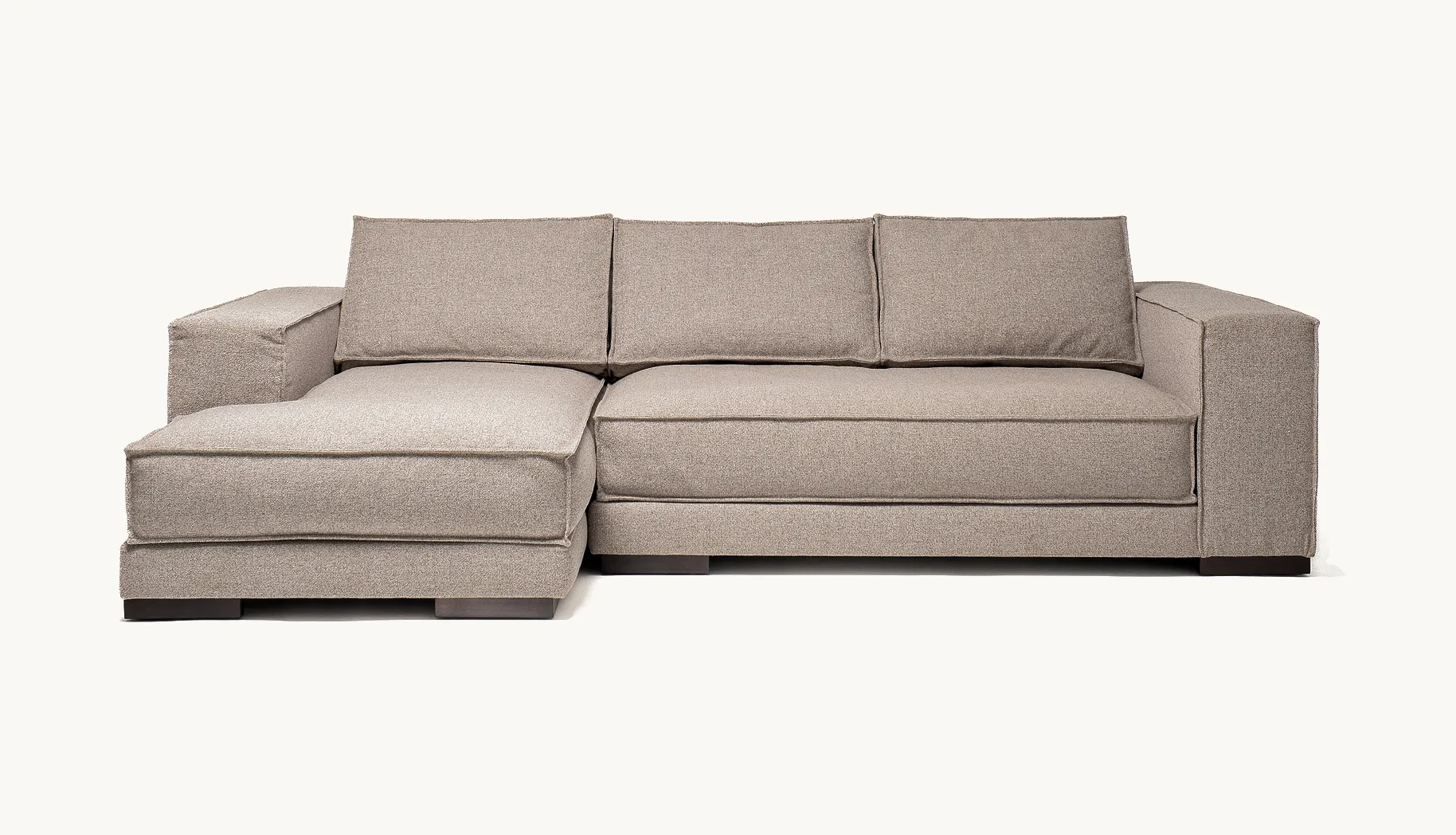
"In summer, clients more often ask for light colour than literally cool-feeling material — reasonable, since perceived room temperature is maybe 80% visual. The MIAMI sofa with sectional removable covers suits this well — swap to summer fabric with no frame work," says a KALLEN HOME designer.
By her account, the second common request is making the summer and winter versions feel like two different pieces, not just "the same sofa but paler" — achieved by changing texture along with colour, adding contrast with the room’s other summer textiles.
A sun-facing room changes the calculation
In a south- or west-facing living room, a light fabric solves two problems at once — visual coolness and less visible fading, since the gap between a faded and original light shade contrasts less than on a dark, saturated one. In such a room it makes sense to choose a higher light-fastness fabric upfront, not just by cool-touch feel, or one summer season can reveal two effects at once: the desired coolness and an unwanted fade patch on the most lit section.
What fabric weight summer upholstery actually needs
How light a fabric feels and how dense it actually is are different, easily confused parameters — a visually airy cotton on a daily-use sofa still needs a Martindale rating of at least 25,000–30,000 cycles, or lightness turns into fast seat wear. The sensible approach is a summer-appropriate blend with enough yarn density, not simply the thinnest, most breathable cloth regardless of lifespan.
An example: one sofa, two seasonal looks
The MIAMI sofa with sectional covers shows the perception gap clearly — in dense winter textile in navy or graphite, the room reads tight and intimate; in light summer cotton of the same cut, fresh and spacious, though the piece’s geometry and size never change. The whole difference comes from colour and texture of upholstery, confirming the article’s main point: a room’s summer coolness is primarily a fabric question, not a furniture-replacement one.
How a light fabric differs from a simply colourless one
It is tempting to reduce "summer fabric" to any white or beige cloth, but what matters is not just lightness but warmth of tone — a cold, bluish-tinted white works visually differently from a warm milky or sand shade of the same lightness: the first can read sterile, even unpleasantly clinical, while the second keeps a lived-in feel. When choosing a summer fabric, it is worth checking not just reflected-light percentage but undertone — warm or cool — since that decides whether a room feels fresh or just empty.
How a fabric switch costs against a new sofa
A removable summer cover for an existing sofa usually costs 10–20% of a comparably sized new sofa, full reupholstery 40–60%, depending on shape complexity and chosen fabric. That budget gap is the main argument for a seasonal textile swap over buying a separate "summer" sofa that then needs storing nine months a year.
How light fabric holds up with children and pets
The main worry about light summer upholstery is not coolness but stains, and that worry is only partly justified. Light fabric does show marks more visibly than dark, but with a water- and dirt-repellent finish, the practical gap between light and dark cotton of the same composition nearly disappears — a spill wipes off before it soaks in, regardless of how visible it would be on a pale background. For a family with children, the sensible move is ordering treated light fabric, not abandoning the light summer palette out of a hypothetical risk.
A DIY cover versus one ordered from a workshop
Some try sewing a summer cover themselves or through a general tailor not specialised in upholstery, and almost always end up with a cover that either puckers on the frame’s complex curves or sits too loose and slides with every sit. A proper upholstery cover is cut to measurements taken from the specific frame, with zip or Velcro placement exactly where the cover will be removed often for washing — a difference invisible in a photo but felt every day of use.
How to store winter textiles while using summer ones
Dense winter covers or cushions removed for summer should be stored fully dry in a breathable material — a cloth bag or a box with holes, not a sealed vacuum bag with no ventilation. Airtight packing saves space but creates conditions for a musty smell and, in rare cases, mould on dense fabric if even minimal moisture remained in the fibre after the last wash before storage.
When summer textiles need replacing, not just seasonal storage
A removable cotton or linen summer cover under active seasonal use and regular washing usually lasts 3–5 years before the fibre noticeably thins and loses resilience — a normal lifespan for this kind of textile, not a sign of poor fabric. The cue that a cover needs replacing, not just washing for the new season, is visible thinning held up to light at the highest-contact points, usually the seat and armrests.
Bottom line: light fabric as the cheapest way to refresh a room
Of all the ways to refresh a living room for summer — new furniture, replanning, renovation — changing upholstery tone and texture remains the fastest and cheapest by effort-to-cost ratio, precisely because it affects physical and visual temperature perception at once. Before considering costlier options, it is worth checking this lever first — often it alone is enough to make a room feel different with not a single new piece of furniture.
A short checklist before ordering summer fabric
- Confirm real density and abrasion rating, not just how light the fabric looks
- Check the room’s window orientation and pick a higher light-fastness fabric if needed
- Decide between a separate removable cover or zoning — practical fabric on the seat, decorative on cushions
- Compare the budget for a cover, reupholstery and new furniture before the final decision
The question of summer upholstery colour and texture often seems secondary next to choosing the sofa itself, though it decides how comfortable hot evenings in that room will feel for the next several months. A decision made once deliberately, not on a last-minute whim before ordering, serves not one summer but several years running, if the fabric is chosen with durability to spare.
The MILAN sofa as an example of a light summer silhouette
The MILAN model, with thin open legs and a low back, is often chosen for a summer living room not just for its fabric but for the body’s own geometry — a narrow profile and visible floor gap work well together with light cotton or linen blend, reinforcing the overall sense of lightness. The same frame in dense dark upholstery would look noticeably heavier, confirming the article’s whole point: the cool, spacious effect is built jointly by fabric and form, not either alone.
If this whole breakdown boils down to one recommendation for anyone choosing fabric right now — check real density and wear resistance on the liked swatch first, then check the colour undertone under daylight and evening light in your own room, and only then settle texture and zoning questions. In that order, not the reverse, the decision rarely needs revisiting after ordering.
A nearby balcony or terrace: one more reason for light upholstery
If a living room opens onto a balcony or terrace through a sliding door in summer, light upholstery also helps visually merge indoor and outdoor space — a dark, bulky sofa right at the opening reads as a border between "inside" and "outside," while a light silhouette barely creates that border, and the room reads as an extension of the terrace rather than a separate closed volume.
See the Miami sofa in the catalogue
Frequently asked questions
Which upholstery is more practical for a summer living room?
Cotton, linen and light-toned blends with good breathability, plus herringbone weave for its open structure.
Why does dark upholstery feel heavier in summer?
Dark pigment absorbs more light and physically heats up more in the sun, while also visually "weighing down" a room regardless of temperature.
Can a sofa’s upholstery be changed just for the summer season?
Yes, a removable light-fabric cover solves this without reupholstery or touching the frame.
Does dense fabric harm sofas in summer?
No, it is a comfort and perception question, not a material-safety one — dense fabric does not degrade from ordinary indoor summer heat.
Can several summer fabrics be combined in one living room?
Yes, it is sensible to keep the main sofa in practical cotton blend, with decorative textiles in more demanding pure linen.