Marble is porous and acid-sensitive, so the real decision is not colour or veining but which type of stone to choose and how seriously to treat sealing and coasters.
Porosity matters more than the shade
Marble is natural stone with microscopic pores that let liquid penetrate the structure rather than sit on the surface. Light and dark marble are similarly porous — the difference is visibility, not resistance: marks show far less on dark stone.
Carrara and Calacatta: two different characters, not one marble
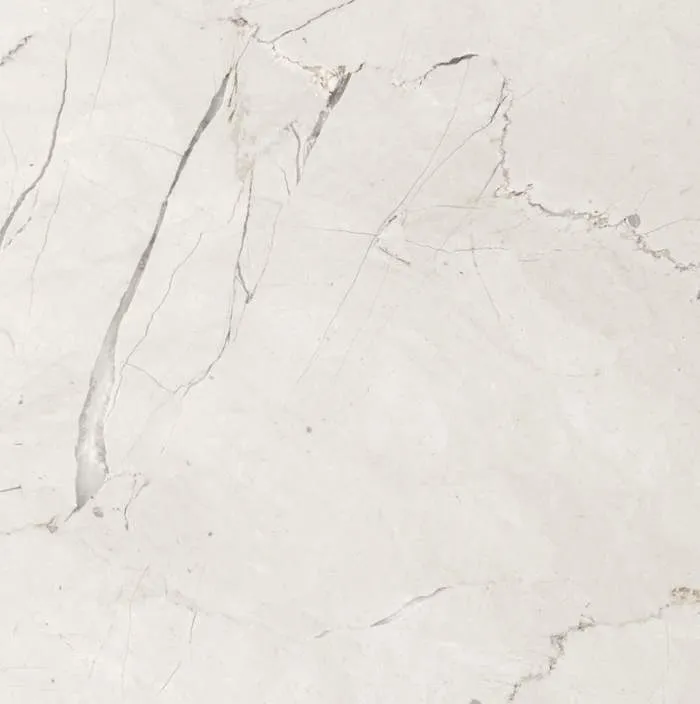
"Marble" for a tabletop usually means one of two very different stones. Carrara is the famous white Italian marble with a calm, even grey-veined pattern, moderately porous and more forgiving. Calacatta, rarer and pricier, has bold, dramatic veining but is noticeably more porous and softer, needing more careful protection.
- Carrara — calm, even pattern, moderate porosity, more forgiving to care for
- Calacatta — bold dramatic veining, higher porosity and softer stone, needs more attention
- Quartzite — looks similar but is noticeably harder and less porous, a sensible alternative for heavy kitchen use
A sealant is neither a one-time fix nor absolute protection
The sealant is renewed once a year — drip water on the surface, and if it soaks in within a minute, reapply. It is a five-minute fix, but even sealed marble can still scratch, stain or chip under strong enough impact — sealant reduces risk, it does not eliminate it.
This distinction is worth stating plainly: sealed marble is not porcelain stoneware needing almost no attention — it is a stone for which sealant buys reaction time, not full immunity.
What actually corrodes marble — a concrete list
Mild acids corrode marble’s surface and leave dull marks after even a few minutes of contact. Wine, lemon juice and vinegar are the obvious threats, but tea and coffee carry enough acid to damage a polished surface with regular contact too.
The three-coaster rule — and a fourth point people forget
With wine, lemon juice or vinegar regularly on the table, coasters are mandatory and spills need wiping right away. A fourth, less obvious point: hot dishware without a trivet does not corrode chemically, but a sharp local temperature swing can create micro-cracks that later collect dirt.
If higher durability matters — the alternative
For a dining table in heavy daily use, especially with children, quartzite is a sensible alternative — similar in look, noticeably harder and less porous, needing sealant less often and tolerating household acids better.
Slab thickness: what it changes besides weight
Marble tops usually run 20 or 30 mm thick — thinner is lighter and cheaper but can flex or crack under load on a long table without extra framing. Thicker costs more in raw stone but needs no reinforcement and reads as more substantial at the edge — arguably the first visual cue of an expensive stone, noticed before the veining.
Lead time: stone is rarely the longest stage
Cutting and polishing a marble slab to order usually takes a stone workshop 2–3 weeks, running in parallel with the base’s production rather than after it, so the total timeline barely differs from a wooden-top table. Delays almost always come from scheduling mismatch between the two workshops, not the stone itself.
Re-polishing is possible — a rare advantage of stone
Unlike most tabletop materials, worn or dulled marble can be re-ground and re-polished, essentially refreshing the surface — wood allows this too but removes noticeable material, while laminate surfaces cannot be refreshed at all. Visible wear after 10–15 years means one visit from a stone specialist, not the end of the tabletop’s life.
Marble on a metal base: a question of weight and mounting
A visually slim metal base is not always rated for a stone top’s weight, especially a 30 mm slab on a large diameter. Worth confirming the specific base is engineered for stone, not just a lighter wood or glass top of the same design — mounting points differ at the drawing stage.
Veining as a natural pattern: why no two slabs repeat
Unlike porcelain stoneware, where veining is printed and can literally repeat on neighbouring tiles, every natural marble slab is a unique cross-section formed over millions of years — a catalogue photo can only guide the general character, not guarantee an exact match.
Matte and glossy finishes behave differently
A glossy polish reflects light more dramatically, but any micro-scratch or mark stands out against the shine. A matte finish forgives small flaws better, at some cost to the stone’s dramatic shine.
Seasonal care: what the stone reacts to and what it does not
Unlike wood, marble barely reacts to indoor humidity or seasonal temperature swings — stable across normal household conditions. The one seasonal exception: a tabletop near intense direct summer sun, where sealant moisture evaporates faster, worth checking more often than once a year.
Edge profile changes how thick the slab reads
A straight 90-degree edge honestly shows the slab’s real thickness, usually 20 or 30 mm; a chamfered edge visually thins it, while a rounded (bullnose) edge makes the table read as heavier at the same actual thickness. A chamfer suits a compact table, a bullnose adds visual weight to a formal dining table.
Underfloor or under-table heating near marble — a rare but real question
Moderate underfloor heating does not damage marble itself, but a constant heat source underneath speeds up sealant moisture loss more than normal room temperature — the same effect as direct sun, just year-round rather than seasonal. With heating nearby, check the sealant twice a year, not once.
Delivery and installation: why a slab is carried flat, not on edge
A finished marble slab is moved strictly flat on a rigid frame — unlike wood or glass, stone tolerates point-bending poorly, and carrying it on edge or supported only at the corners risks cracking along an invisible internal vein. A good workshop prices this into delivery as its own line item, not a formality.
Domestic processing versus imported stone: where the price gap comes from
The price gap between domestic-stone and imported-Italian marble tops often comes from where the processing happens, not just the stone itself — local cutting and polishing is cheaper and faster than importing a finished slab. Choosing Carrara does not necessarily mean waiting for a slab shipped from Italy.
Dining table or coffee table — requirements differ
The dining-versus-coffee distinction also affects sealant choice — a dining table in daily contact with food calls for a food-safety-certified sealant, while a living-room coffee table can be sealed purely for water and dirt resistance.
Leg and overall table height should also match purpose — a marble coffee table usually sits lower, around 40–45 cm, to visually lighten the heavy slab, while a dining table holds the standard 75 cm regardless of top material.
A marble dining table meets household acids daily — sauces, wine, citrus — so sealant and coasters matter every day. A living-room coffee table sees drinks less often and briefly, so a more porous Calacatta is a lower-risk choice there than on a dining table, where calmer Carrara makes more sense.
Can marble and wood be combined in one tabletop
A combined top — marble inset within a wooden frame or border — is chosen more often for coffee tables than dining tables. It reduces both weight and cost compared with a solid stone slab, and the wood edge absorbs impact that would otherwise hit the stone’s more fragile border directly.
Pairing marble with a wood or metal base
Choosing a base under a marble top is a matter of physics, not just style — wood’s own give absorbs some of the stone’s weight and usually needs simpler mounting engineering than a slim metal base, where every support point is calculated for that specific slab’s weight.
What to ask the workshop before ordering a marble top
- Which specific marble type is offered — Carrara, Calacatta or other — and its real porosity
- Is a food-safety-certified sealant needed for a dining table
- Is the chosen base actually engineered for this slab’s thickness and weight
- How long the stone workshop will realistically need to cut and polish the slab
A note from a KALLEN HOME stone specialist
"People choose marble by a photo of the veining and forget to ask which specific stone it is — Carrara and Calacatta need very different levels of attention. We always ask how the table will actually be used before suggesting a specific stone," says a KALLEN HOME stone specialist.
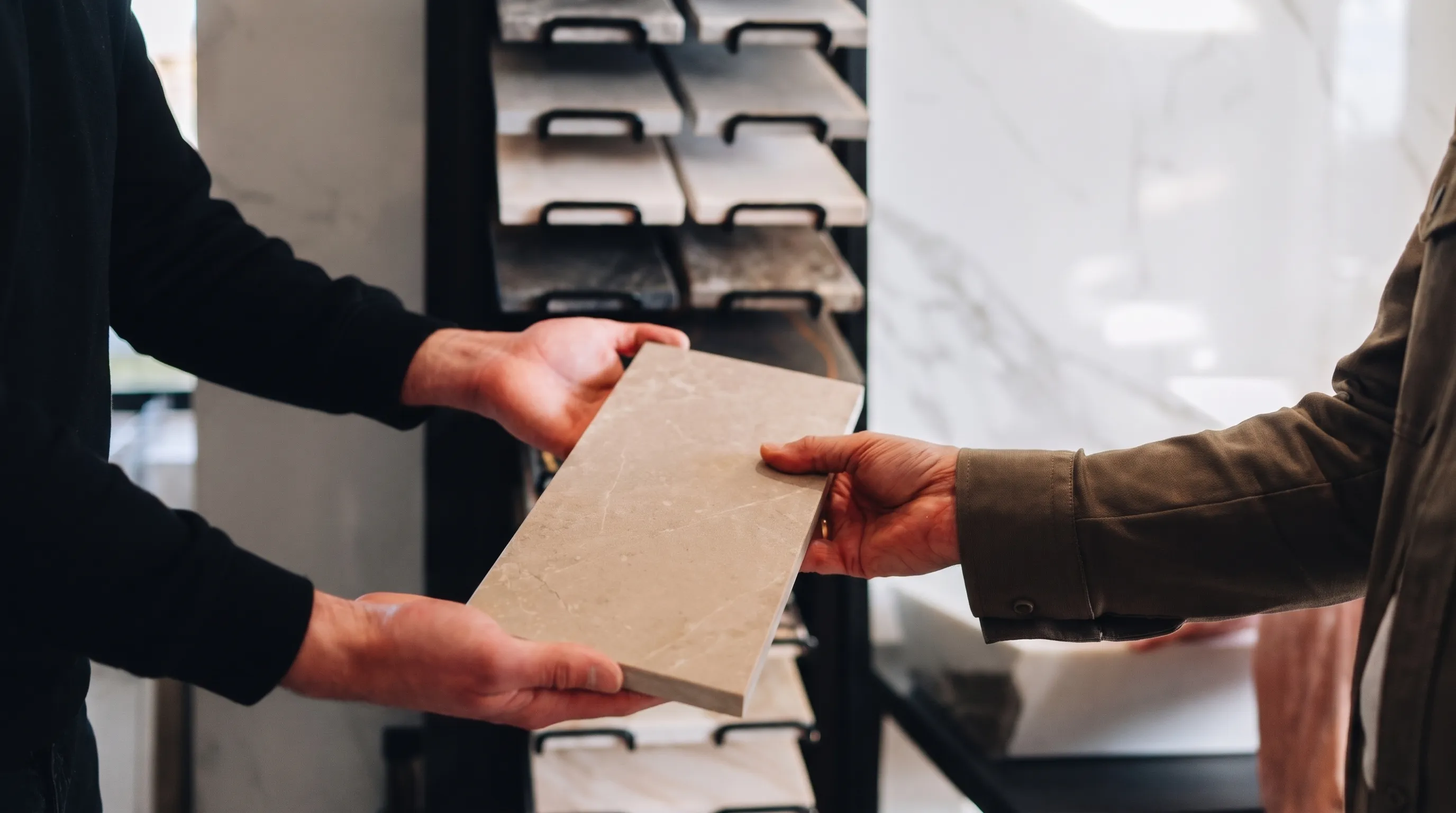
The workshop also advises not skipping a sample test right by the actual window or lamp that will light the table in the evening — veining reads differently under different light, and a showroom decision can look surprisingly different at home.
They also note that clients who have already lived with a marble surface before — even just a windowsill or bathroom counter — almost never come back with complaints about "unexpected" stains, since they already handle the new table within the material’s known limits.
By his observation, most complaints about marble after a year or two trace not to the stone’s quality but to nobody asking at order time how often a wine glass would land on the table without a coaster — a one-minute question that sets expectations correctly from the start.
Frequently asked questions
How often does marble sealant need renewing?
Once a year, or sooner if water stops beading on the surface, especially near intense sun.
Which marble shows stains less — light or dark?
Porosity is the same, but marks are visually less noticeable on dark stone.
How does Carrara differ from Calacatta?
Carrara has a calmer pattern and moderate porosity; Calacatta is more dramatic but more porous and softer, needing more careful care.
Does sealant fully protect marble from damage?
No, sealant reduces stain risk but does not rule out scratches or chips from strong mechanical impact.
What to choose instead of marble for a heavily used daily table?
Quartzite — similar in look, noticeably harder, less porous, needs sealant less often.