A living room changes on a time scale, not a money scale: a day for textiles, one to three weeks for upholstery, six to eight weeks for new furniture. Here is what actually belongs on the autumn to-do list.
Three speeds of refreshing — and why telling them apart matters
The most common mistake preparing a living room for the business season is mixing three different time scales in one list — a one-day cushion swap, a one-to-three-week reupholstery, and a five-to-eight-week furniture order. Without separating them by timeline, it is easy to plan the impossible, or skip a fast, cheap task just because a slow one sits next to it on the list.
- One day: cushions, a throw, curtains, decor rearrangement — no craftsman needed
- One to three weeks: sofa or chair reupholstery, if the frame is sound
- Five to eight weeks: new made-to-order furniture, if shape or size no longer fits
One accent piece instead of a full replacement
If the sofa frame is in good shape, a new cover or reupholstering costs noticeably less than a new model and takes less time than expected — most of that time is fabric sourcing and delivery, not the craftsman’s work itself. Reupholstering one large piece reads as a bigger refresh than scattering small changes across the flat.
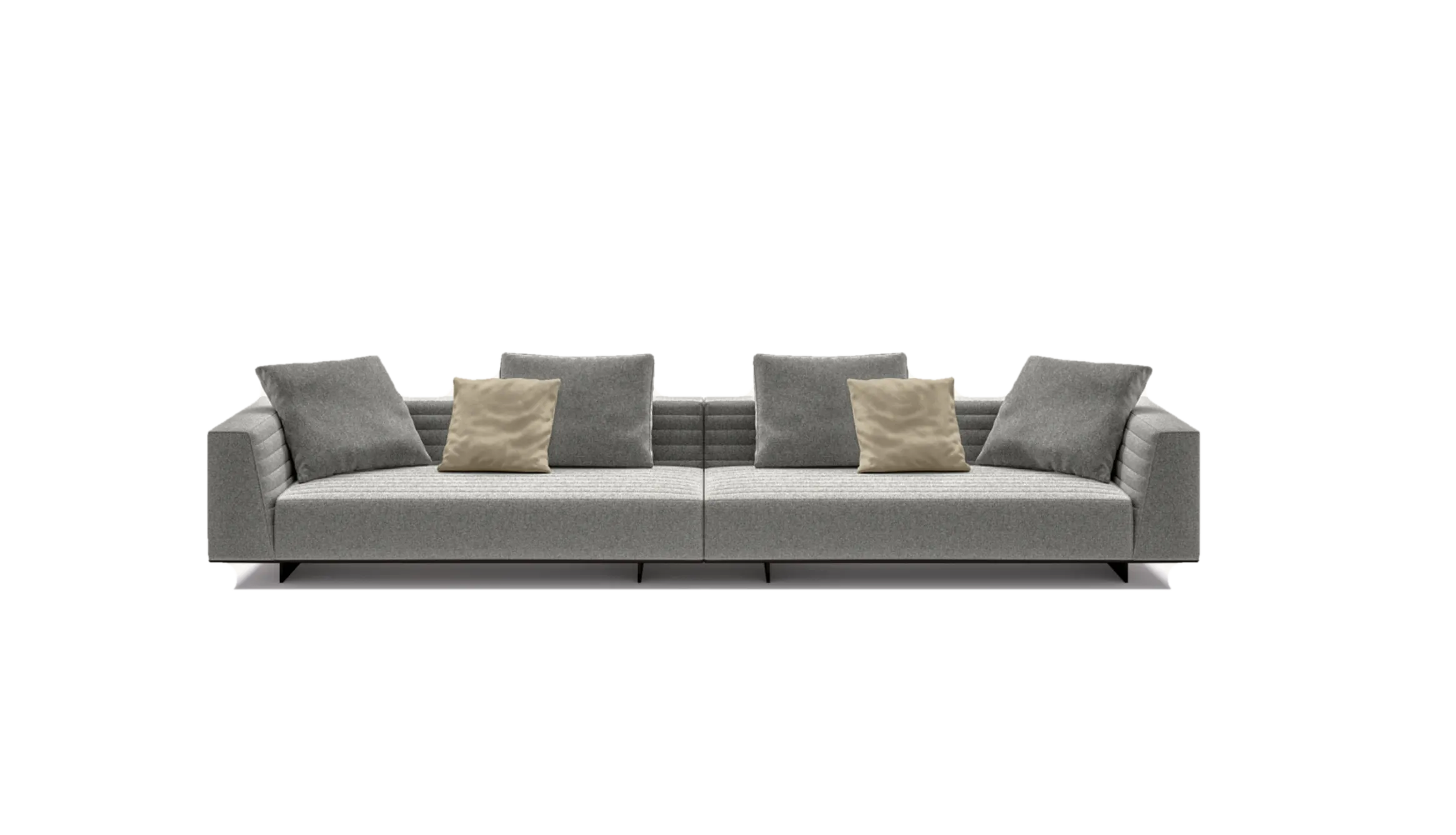
The ROGER sofa as a base for an autumn refresh
The ROGER model’s classic proportions — straight armrests, moderate back height, no strongly trend-bound silhouette detail — allow the upholstery to change every few years without losing the overall look, unlike more sculptural forms where a new fabric can fight the shape itself.
Why the business season specifically stresses a living room
After the summer lull, September and October usually bring back a function the room needed less often in summer — hosting colleagues, business meetings at home, evenings after work when the room needs to look put-together, not "on holiday." It is less about a colour trend than about the room being seen by more than family again.
What else works quickly
Swapping cushions and a throw for an autumn-echoing colour takes a day and refreshes the room almost as much as a new piece — especially if that colour repeats in at least one other detail, not just sits isolated on the sofa.
Rearranging existing furniture is another same-day move often forgotten: if a coffee table or chair was shifted toward a window or balcony for a different summer use of the room, moving it back changes the room’s feel without a single new purchase.
The colour logic of an autumn refresh
Autumn typically favours deeper, warmer tones than summer — not as a strict rule, but because they hold up better under the shorter daylight and longer artificial-light hours ahead. The same tone looks put-together under a lamp as it does in daylight, unlike very pale summer shades that can read flat by evening.
Checklist: what genuinely speeds up a one-to-three-week refresh
- Choose in-stock fabric, not a custom order — saves up to two weeks
- Start with the single most visible piece, not scattered small details
- Ask the workshop for the real timeline for your specific model and fabric
- Decide on colour and fabric in one showroom visit — approval often eats more time than the work itself
Splitting the budget instead of spending it all at once
If the budget does not cover both a big reupholstery and new textiles at once, splitting by time works better than splitting by object — textiles first for an immediate, cheap effect, reupholstery a month or two later. A half-measure, like cheaply redoing only half a sofa "for now," rarely looks finished and often needs redoing anyway.
Light’s role in a room feeling business-ready
With shorter autumn daylight, a room that looked put-together in daylight can feel flat under one overhead lamp by evening — exactly when after-work meetings happen. Adding one or two warm eye-level light sources does more for a "business-ready" feel than reupholstery, since evening light, not daylight, is what guests actually see.
What to combine with an already-planned refresh
If reupholstery is already planned, it is worth asking the workshop about the filling’s condition in the same visit — often the cheapest time to refresh sagging foam layers, since the cover is already off for the fabric change anyway.
A checklist for one showroom visit
- Bring room photos in both daylight and evening light — fabric colour reads differently at night
- Ask what fabric is in stock right now, not just in the collection catalogue
- Ask about the filling’s condition if the sofa has not been reupholstered in 5+ years
- Settle cushion and throw colour in the same visit to avoid two separate orders
What can be skipped entirely this autumn
If the frame is sound and the shape still suits, replacing the furniture entirely for an "autumn refresh" is almost always overkill — reupholstery and textiles achieve the same put-together, seasonal feel far faster and cheaper. Full replacement makes sense only when the room’s actual use changes, not just its colour.
The same goes for rearranging large furniture: the urge to move everything "for a fresh look" before the business season often creates more hassle than benefit if the old layout genuinely worked — good walkways, right light, a sofa visible from the entrance. Change the layout only for a specific reason, not just an autumn urge to change something.
How to tell it is not the textiles but the furniture itself
A simple test: strip away cushions, throws and decor, and look at the sofa and chairs on their own. If they still look tidy and fresh and only the colour feels tired, reupholstery is likely enough. If sagging, worn armrests or a loose frame show through even without decor, that is technical wear, not a seasonal refresh — no amount of cushions fixes that.
The real cost of doing nothing
There is a rarely stated option: do nothing until the next big renovation. For a room used only by the family, that is a perfectly fine strategy with no hidden cost. But if the living room regularly hosts business meetings — the exact situation this article addresses — "doing nothing" has its own cost, not financial but reputational: the first impression formed in the few seconds before a conversation even starts.
A final timing reference for autumn
If a meeting or gathering needs the room already refreshed, a sensible timing rule is: decide on textiles and small decor no later than a week ahead, and arrange reupholstery no later than three to four weeks ahead, with margin for a possible fabric delay. Planning that margin in advance keeps the refresh a choice, not a last-minute scramble.
What guests actually notice, versus what only the hosts do
Hosts often assume full reupholstery is what matters most, but designers observe that guests in a business setting notice overall tidiness and light first, not the exact fabric shade — a crisp throw, hidden cables, even warm light without harsh shadows shape the first impression faster than new upholstery a guest never saw "before."
A short summary for the skim-readers
If one practical action should come out of this article today, it is not a call to the workshop but five minutes looking at the room without cushions and decor, honestly placing the situation into one of the three speeds — a day, a few weeks, or six to eight. The rest of the decision follows on its own.
And last: even if the choice lands on the fastest, cheapest option — textiles alone — that is not a compromise or an "unfinished job." For a living room resuming its guest-hosting role after summer, well-chosen textiles and tidy details often solve exactly the problem any refresh, however large, was meant to solve in the first place.
The main thing is not to put off even the smallest of these steps until a meeting is set for tomorrow: all three refresh speeds work well on a plan and badly in last-evening panic mode.
It is almost always easier to allow a little more time than looks necessary on paper, and to treat that margin as a personal choice rather than an imposed deadline — then both the textile swap and the reupholstery happen calmly, without the rushed feel that otherwise seeps into the room itself, even when everything technically got done in time.
The business season returns to the living room every year at roughly the same time, so a short ritual built once — check the textiles, judge the fabric without decor, sort the light — saves time not just this autumn but every one after, turning from a one-off scramble into an unremarkable part of getting ready for the season.
This turns refreshing the living room from a question of "how much to spend" into a question of "how much time is there before the event" — a far simpler question that almost always has a clear, calm answer.
Everything else gets settled on the spot, in a conversation with the workshop and with your own schedule for the coming weeks.
A note from a KALLEN HOME designer
"In September, people more often ask us what can be done in two weeks than ask for a new sofa — and nine times out of ten, the answer is reupholstery in in-stock fabric plus new textiles, not a new piece of furniture. That is an honest answer to what people actually want: a refreshed feel for the season, not furniture for its own sake," says a KALLEN HOME designer.
See the ROGER sofa in the catalog
Frequently asked questions
How much does reupholstering a sofa in new fabric cost?
The cost depends on the model’s size and chosen fabric — calculated individually, but usually 40–60% of a comparable new sofa.
How long does reupholstering take?
Usually one to three weeks depending on the model’s complexity and fabric stock availability.
Can the colour be changed without replacing the frame?
Yes, if the frame and filling are in good condition, only the upholstery is changed.
What can be refreshed in a day with no craftsman?
Cushions, a throw, curtains and rearranging existing furniture — often enough for a noticeable seasonal effect.
How to shorten reupholstery to the minimum?
Choose fabric already in stock instead of a custom-order collection, and confirm the choice in one showroom visit.