For a study armchair, wool wins not on one durability number but on the combination of resilient fibre and tight weave — that combination decides whether armrests pill within a year.
Why wool springs back, and other fibres do not
Wool fibre has a natural crimp — microscopic coils along its length that act like tiny springs, returning to shape after use far more fully than straight plant fibres like linen or cotton.
This matters more in an armchair than a sofa — an armchair repeats the same seating angle on the same armrests for years, while a sofa sees varied weight and posture from different people.
Abrasion and pilling are two different tests, not one
A common mistake is asking only for the Martindale abrasion number. Pilling resistance is a separate test, ISO 12945-2, graded 1 to 5 — a fabric can pass 70,000–80,000 abrasion cycles and still pill badly within months if the yarn is prone to it.
- Under 15,000 Martindale cycles — rarely used furniture, not a daily armchair
- 25,000–40,000 — a daily-use study armchair
- 70,000+ — premium contract-grade, usually more than a home needs
- Pilling (ISO 12945-2) — ask for grade 4 or higher, the contract minimum for hand-touched upholstery
What specifically lowers wool’s pilling risk
Pilling risk depends on fibre length and yarn twist, not the fact of being wool — long-staple wool with a tight twist and a dense weave resists pilling far better than short-staple wool in a loose, weakly twisted yarn.
For a study armchair with constant armrest contact, this detail of composition matters more than the word "wool" on the price tag — two chairs both labelled wool can age very differently.
Static and warmth — what you actually feel in a study every day
Wool builds up far less static than synthetics thanks to its fibre structure and residual moisture — in a dry, heated winter study, that means no static shock on the door handle after standing up.
Wool conducts heat less than linen or cotton, so the chair never feels cold on contact even in a cool room — the opposite of what happens with linen in the same conditions.
Why an armchair, not an everyday sofa
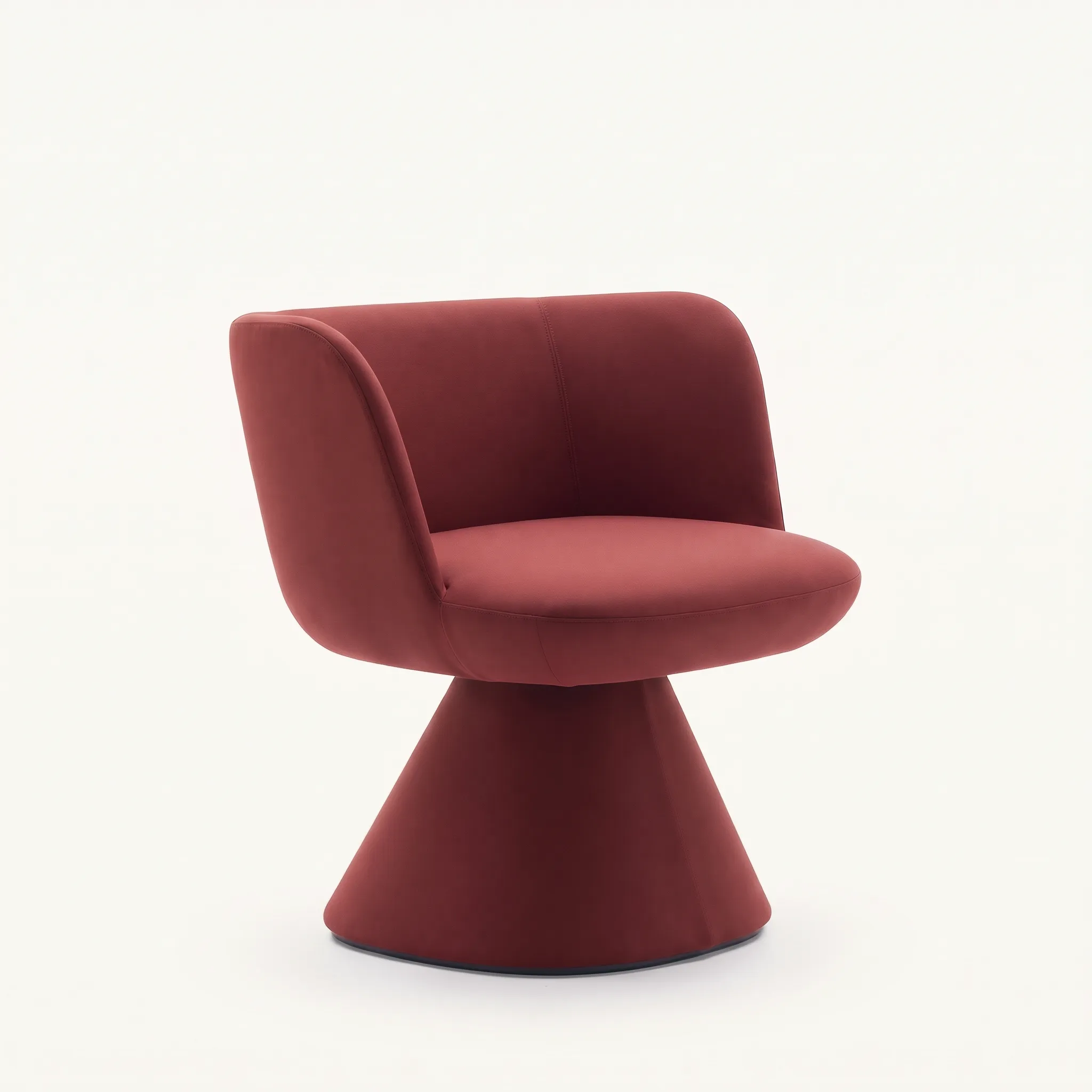
The MONACO armchair in wool suits a study or library — low-traffic rooms where warmth and longevity matter more than surviving children jumping or pet claws; a family living-room sofa is a different brief, covered in a separate fabric guide.
Care: know this before the stain, not after
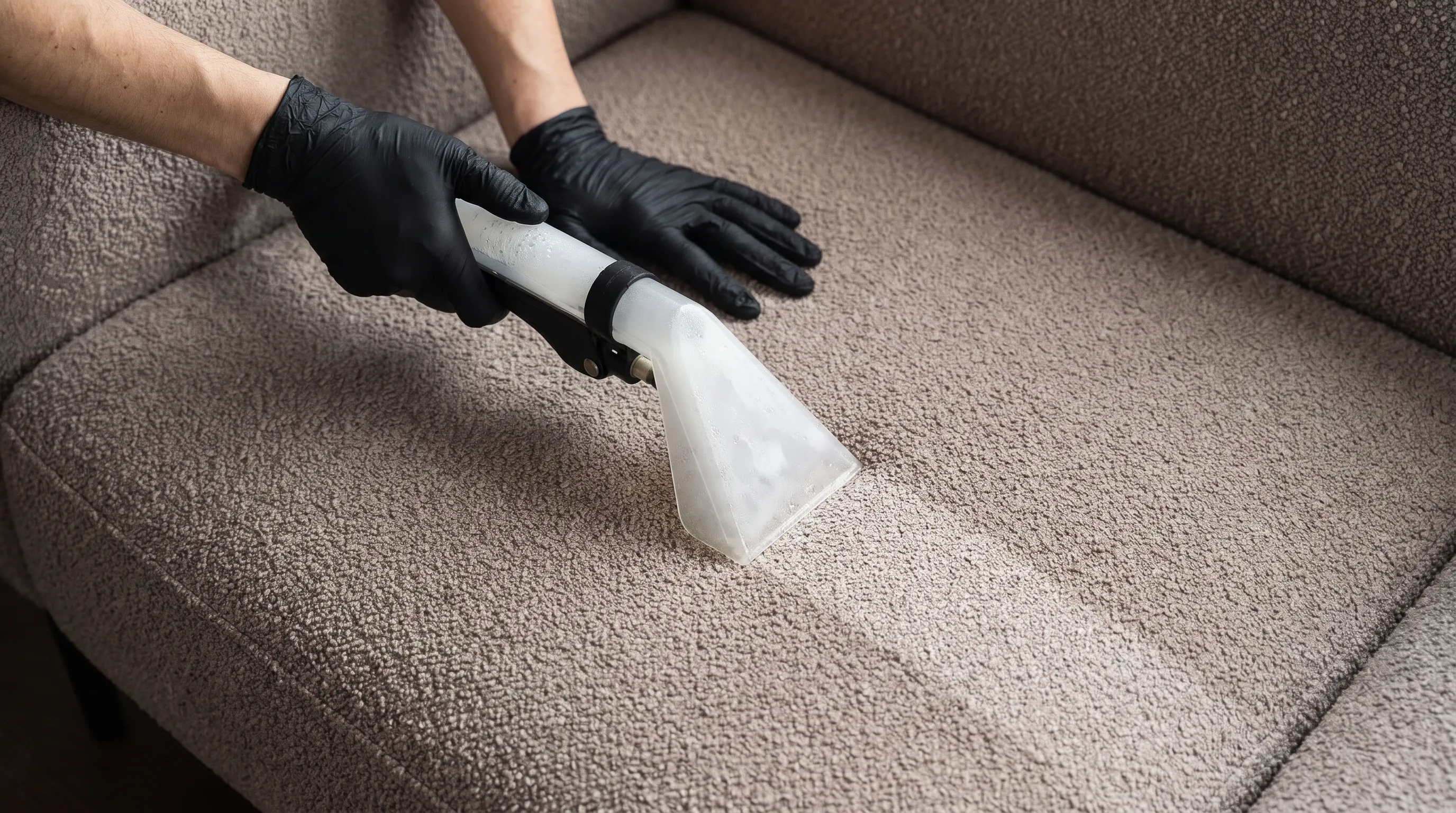
Wool dislikes aggressive dry cleaning and direct water on stains — blot fresh stains from the edge inward; difficult, old stains need professional cleaning with products formulated for protein fibre specifically.
- Vacuum with a soft brush attachment every one to two weeks, light pressure
- Blot fresh stains dry, never rub with a wet cloth
- Store spare cushions with lavender or cedar — moth protection, not decoration
- Professional cleaning for protein fibre once every year or two
What wool adds to the armchair’s price
Wool upholstery usually costs 20–40% more than comparable velvet — not just raw material, but the cost of spinning and weaving long-staple, tightly twisted yarn densely enough to resist pilling.
A KALLEN HOME upholstery technologist’s view
"Wool is for those willing to pay upfront for upholstery that lasts and resists pilling. For a daily study armchair that is a sensible premium — for a sofa children jump on, we almost always recommend something else," notes the production team.
By their observation, disappointment in wool usually comes from choosing a cheap short-staple, loosely twisted version while expecting the results of a dense long-staple one — which is why the full fabric passport matters, not one abrasion number.
Pure wool or a synthetic blend
A 100% wool fabric is not always the best study choice — adding 10–20% polyamide or polyester to the yarn noticeably raises abrasion resistance and lowers cost, with almost no change to look or feel. This is engineering, not a downgrade.
The line where a blend stops "feeling" like wool usually starts around 40–50% synthetic content. For a study armchair, a sensible target is up to 20–30% synthetic — enough gain in price and durability without losing wool’s character.
Fabric weight in grams per square metre — another passport figure
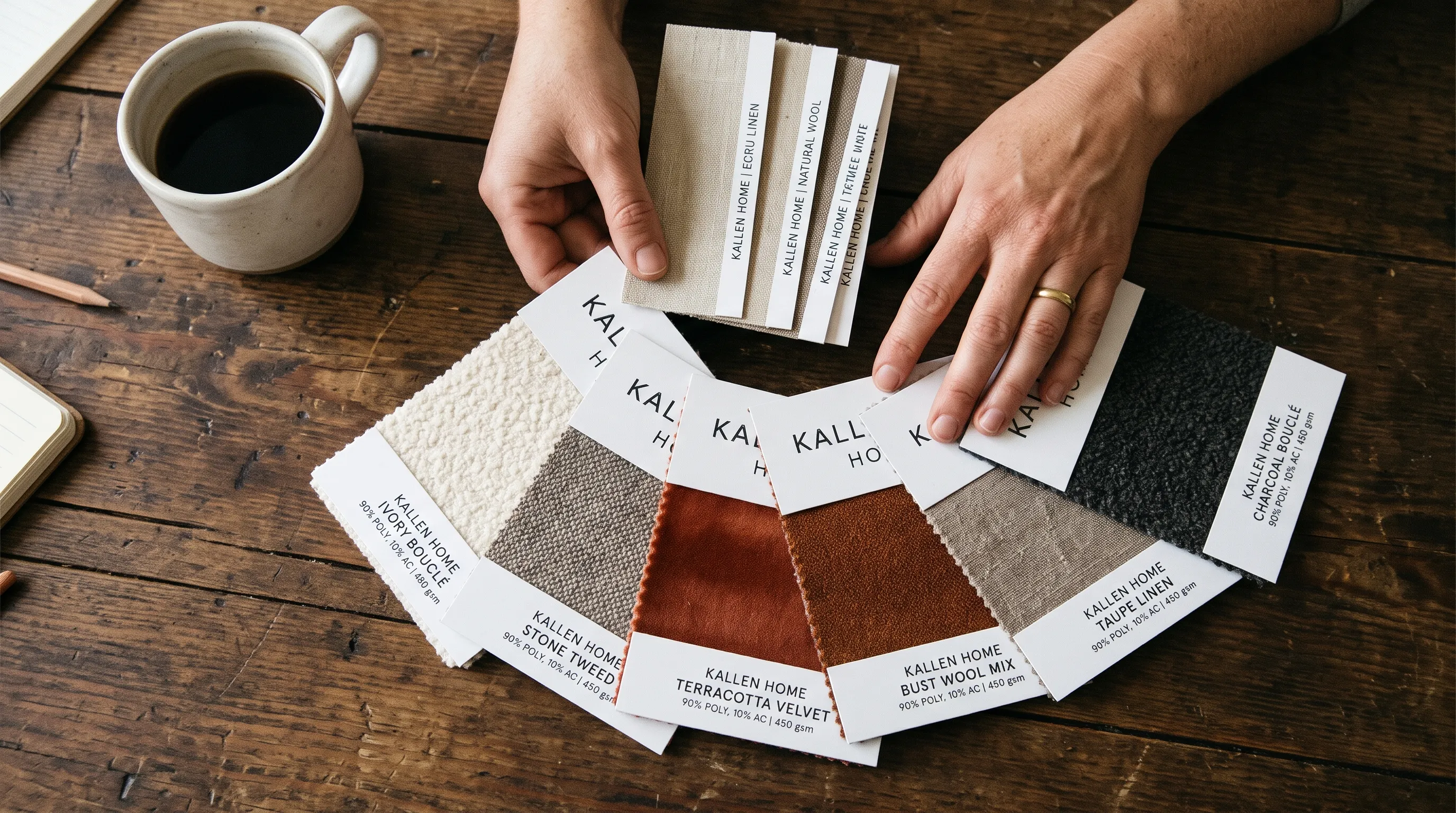
Besides Martindale and pilling, upholstery wool’s weight in grams per square metre matters: light wool at 280–320 gsm suits cushions and low-load backs, while a daily-use seat and armrests need 450 gsm or more. Too-light fabric on a loaded zone sags and loses tension before it visibly abrades.
Upholstery wool versus apparel wool
Apparel wool and upholstery wool serve different purposes even from the same fibre type — apparel wool is spun to drape softly, upholstery wool to hold shape under years of repeated friction. Using apparel-grade wool for upholstery, a common mistake by non-specialist workshops, wears out far faster.
Wool colour, and how it ages
Naturally toned or lightly dyed wool — milk to dark grey and brown — ages more calmly than deeply saturated dyed wool, where intense dye slightly stiffens the fibre and contact-zone wear shows a touch earlier. For a decade-long chair, a natural tone is a small practical insurance, not just taste.
What a wrong wool choice actually costs
If a chair is upholstered in cheap short-staple wool without a pilling check and the armrests pill within a year, the only fix is a local reupholster of that zone — 25–35% of the full chair’s upholstery cost. That usually outweighs whatever was saved by skipping the better yarn upfront.
What to ask the workshop before ordering a wool armchair
- Martindale abrasion rating and a separate ISO 12945-2 pilling grade
- Fibre length and yarn twist density, not just "100% wool" in the description
- Fabric weight in gsm for the seat and armrest zones specifically
- Whether synthetic fibre is blended in, and at what percentage
A trial swatch: why a small scrap does not tell the whole story
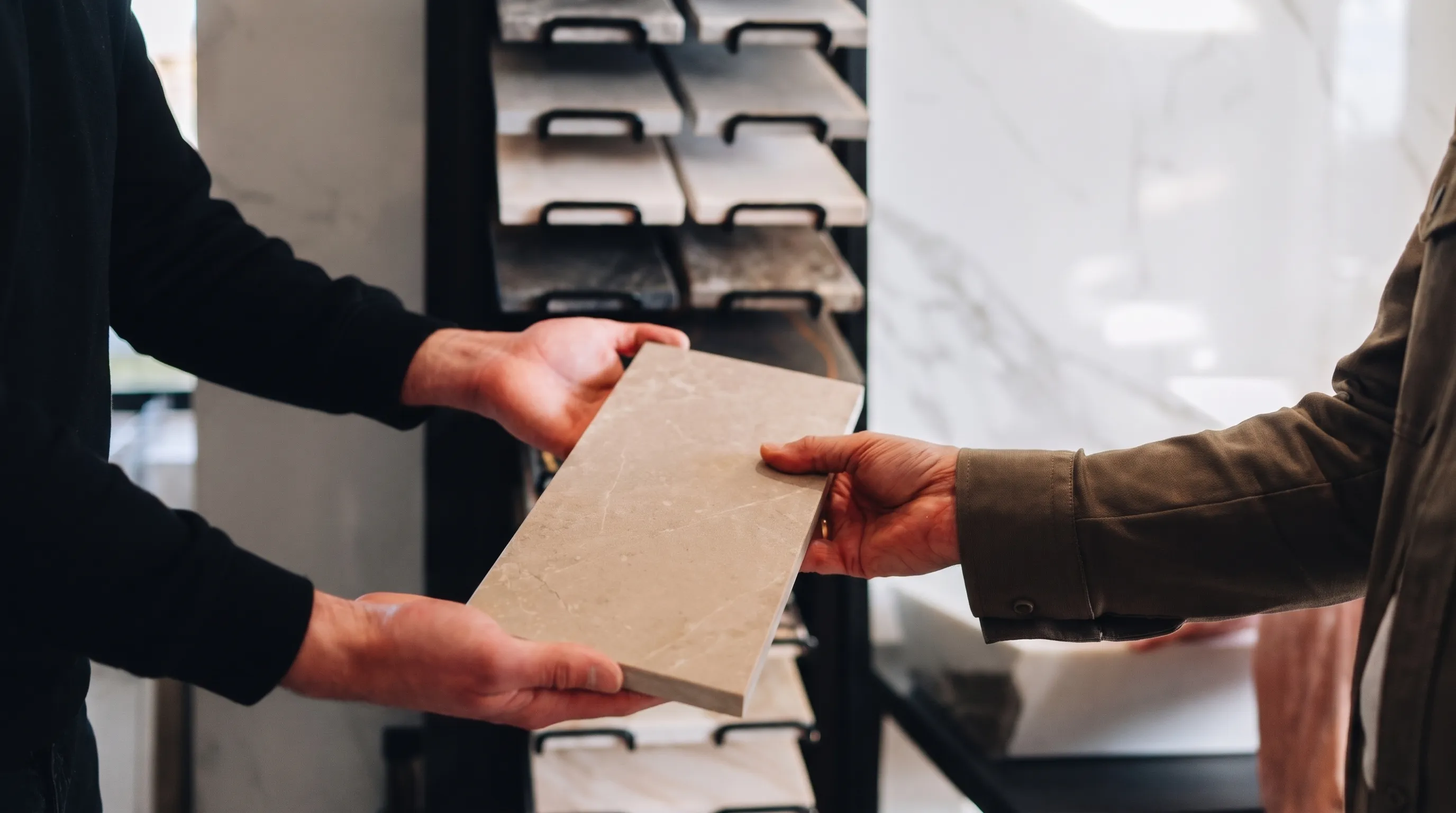
A standard 10×10 cm swatch is honest about colour and texture but says almost nothing about how the wool will behave specifically on an armrest under hours of contact. For a close call between two wools, ask for a larger piece, 15×15–20×20 cm, and brush past it with a sleeve all week.
The MONACO armchair, and why wool is so often chosen for it
The MONACO model is built with a firm seat and crisp, gathered frame lines — a silhouette that benefits from a dense, static fabric rather than velvet’s mobile sheen. Wool keeps the armrest shape without sagging even after years, which shows more clearly on this model’s open, legible armrest geometry than on softer, shapeless silhouettes.
Wool’s seasonality in a study
Unlike a living room, where a sofa might want a lighter summer look, a study armchair needs almost no seasonal adaptation — a study is usually heated and used year-round at a steady level, without the swings a dacha sees. This is another reason wool earns its price here specifically — the investment works all twelve months, not part of the year.
Takeaway: what to check first
If the choice has narrowed to wool but it is unclear where to start the conversation with a workshop, the fastest path is asking for three numbers at once: Martindale rating, pilling grade, and gsm weight for the armrest zone — together they predict the chair’s look a year from now far better than any catalog description.
One last point: no number on a fabric passport replaces holding the actual swatch. Before confirming an order, run a hand over it a few times and imagine a year of daily contact — the numbers matter, but the final call is made by touch, not the test report alone.
Wool does not forgive a rushed choice, but rewards attention to it generously — a chair built from the right long-staple, densely woven fabric looks almost the same after ten years as on delivery day, a rare quality for any material in a home.
If the choice still has not narrowed to one fabric after all this, it helps to return to the article’s opening question: who sits in this chair, and for how long, every day. The answer usually sorts out priorities between price, texture and durability better than comparing passport numbers alone.
It is a rare case where a slower, more thoughtful decision upfront literally saves money later, not just the buyer’s conscience.
See the MONACO armchair in the catalog
Frequently asked questions
Does wool build up static in winter?
Noticeably less than synthetic fabrics, thanks to the fibre’s natural structure and residual moisture.
Does wool suit people with allergies?
Natural wool is hypoallergenic for most people, but if there is a confirmed allergy to animal wool, another fabric should be chosen.
How much more expensive is wool than velvet or linen?
Usually 20–40% more — the premium pays for long-staple, tightly twisted yarn that resists pilling.
Why does one wool pill and another does not?
It comes down to fibre length and yarn twist, not the word "wool" — ask separately for an ISO 12945-2 pilling score of 4 or higher.
Does wool suit a living-room sofa with children?
Not wool’s best scenario — for heavy daily use a dense blend or herringbone weave, covered in our general sofa-fabric guide, usually suits better.