For a study armchair used daily, wear resistance matters more than texture, especially on the armrests. Wool and dense velvet outlast bouclé over several years.
Armrests are the most vulnerable spot
A study armchair’s armrests take the most friction — sleeves slide across them dozens of times a day, and that is where fabric wears fastest, faster than the seat or back.
The local wear on a 15 cm strip of armrest fabric over an eight-hour workday can exceed the distributed wear on a whole sofa seat used the same number of hours.
The Martindale threshold for a chair differs from a sofa
Furniture for light home use needs about 20,000–30,000 Martindale cycles; a daily-use study armrest, with concentrated wear, needs 25,000–35,000+.
- Under 20,000 cycles — a decorative chair, rarely used
- 25,000–30,000 — moderate daily use, a few hours a day
- 35,000+ — a desk chair used 8 hours a day
Bouclé: handsome, but not for a work zone
Bouclé’s looped weave diffuses light beautifully and holds rounded shapes well, but the loops pull from constant sleeve friction — and on a work chair’s armrests, that shows within months, not years.
In a study, bouclé almost never covers the armrests outright — better on the back, seat or a nearby cushion, with a denser material where the sleeve actually touches.
Wool: warm, durable, but needs gentle handling
Well-woven wool does not pill and holds its shape for decades — a fit for studies and libraries. It also builds up far less static than synthetics, so it attracts less dust near a radiator-dried desk.
Wool’s downside is sensitivity to water and harsh cleaning — blot stains, do not rub, and use professional cleaning for anything serious. It also attracts moths more than synthetics, so store spares with lavender, not sealed away.
Velvet: a practical compromise on price and durability
Dense, short-pile velvet offers durability close to wool at a lower price, with a warmer, deeper colour from how light plays on the pile. Short pile wears far slower than long on armrests.
Velvet’s usual downside applies here too: temporary handprint marks on the armrests from constant contact — not a defect, just part of living with this fabric.
If a cat visits the study
Fabric mills are usually honest: neither velvet nor bouclé is truly claw-proof — loops and pile both catch a claw. A tight twill weave without an obvious loop or long pile is the more realistic choice.
- Tight herringbone or twill without long pile — hardest for claws to catch
- Short dense velvet — more risk than herringbone, less than bouclé
- Tightly woven pure wool — moderate risk depending on yarn density
- Classic bouclé and long-pile velvet — highest risk with a cat around
A quirky detail: for right-handed people, the left armrest often wears first — the resting hand while the right works a mouse. Mentioning hand dominance to the workshop can justify zoning just one side.
A realistic timeline: what happens to the fabric in year one
In the first one–two months any new armrest fabric looks flawless. By month three or four, bouclé already shows pulled loops under daily use, velvet shows light marks that no longer fully brush out. Wool, at this point, usually still looks new.
By the end of year one the gap between fabrics is visible without any test: bouclé armrests usually need a local redo; velvet shows a stable light pattern that does not worsen; wool looks much as it did on day one.
The armrest’s own shape matters too — a wide, flat top wears faster than a narrow, rounded one simply because more surface touches the arm.
The price difference between zoning and one fabric
Zoning usually raises the quote slightly, mainly from the extra seam needed to join two fabrics neatly — but that premium is smaller than the price gap between cheap and premium velvet, and it pays for itself in armrest longevity.
Also ask about edge piping on the armrest — a leather or faux-leather trim along the edge takes much of the friction off even a delicate fabric at the most vulnerable seam.
Claws are not just a fabric problem
If a cat has already chosen the chair as its scratching spot, changing fabric alone only partly solves it — a nearby scratching post, soft nail caps, or simply a throw over the armrests when no one is home cut the damage more than fabric choice alone.
Zoning: different fabric for different parts of one chair
As with sofas, a chair can be zoned: durable fabric on the armrests, the preferred fabric on the back and seat — the look stays, the wear concentrates where it matters less.
Care for each fabric — a short reference
- Wool: dry cleaning, blotting stains, lavender storage for spares, never sealed bags
- Velvet: weekly vacuuming, brushing the pile after cleaning
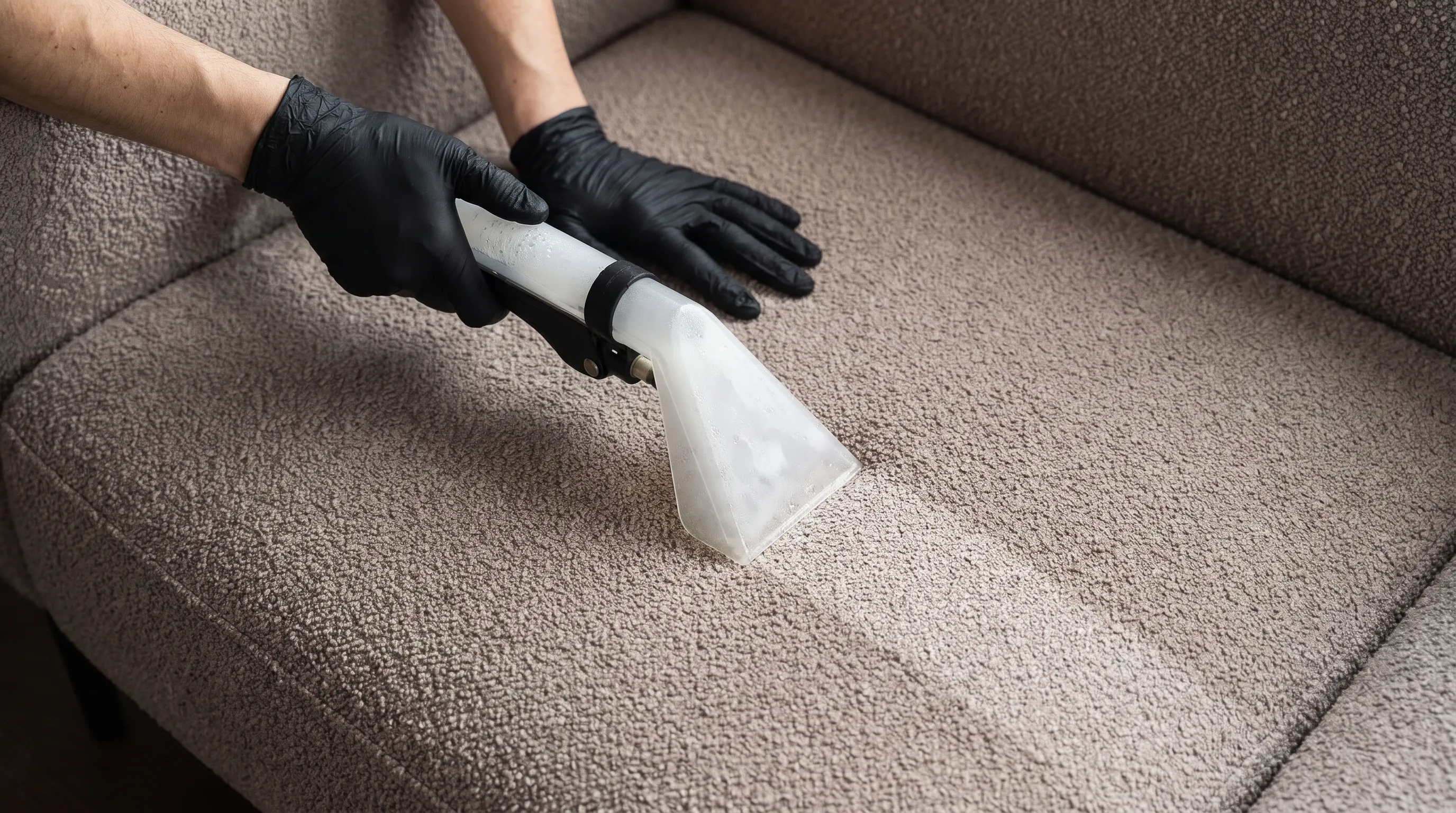
- Bouclé: soft attachment, dry sponge for stains, never a steamer
- Any armrest fabric: a protective finish right after upholstery adds a year or two of good looks
What to ask before ordering a chair
- Can the armrests be done in a denser fabric than the back and seat
- What is this specific batch’s Martindale rating, not just the collection’s
- Was a protective finish applied against dirt and hand oils
- What would it cost to reupholster just the armrests later, if they wear first
Colour and how visible wear becomes
Colour affects how visible wear looks: light, flat-toned fabrics show both velvet’s light marks and bouclé’s pulled loops more clearly than darker, textured ones. A mid-tone often ages more gracefully for daily desk use.
A study chair and a meeting-room chair are different briefs
A meeting-room chair used by many different people faces a different load — less constant point contact, more repeated sitting and rising. Its Martindale threshold should be closer to contract-grade, 50,000+ cycles, not the 25,000–35,000 of a personal study chair.
A trial period: why ask for an armrest-sized swatch specifically
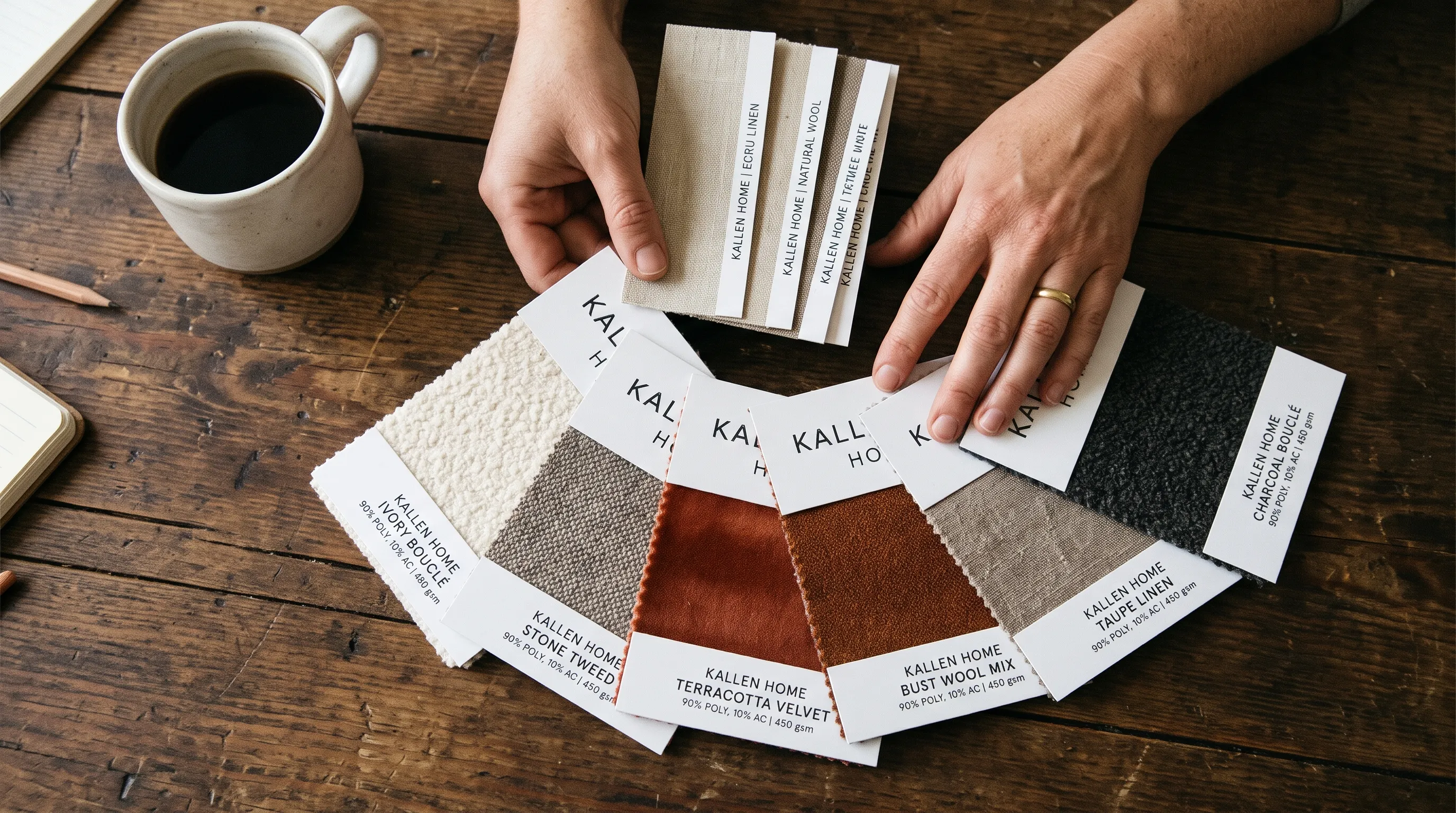
A standard 10×10 cm swatch shows colour but not armrest wear. For a close call between two fabrics, ask for a larger 20×30 cm piece and brush past it with a sleeve all week — a rough but honest simulation of real use.
A note from a KALLEN HOME upholstery technologist
"For an eight-hour-a-day armchair, we almost always recommend wool or dense velvet — bouclé less often. One client insisted on full bouclé two years ago and came back within six months to redo just the armrests in velvet," notes the production team.
The question that actually decides this is not which fabric looks best, but what happens to the armrests specifically after a year.
If the chair is ordered alongside the rest of the study’s furniture, it is worth discussing zoning for the whole room at once, rather than deciding piece by piece.
In practice there is rarely one "perfect" fabric for every case — even within one study, a sunlit chair and a shaded corner chair can reasonably use different fabrics if that matters for the room’s look.
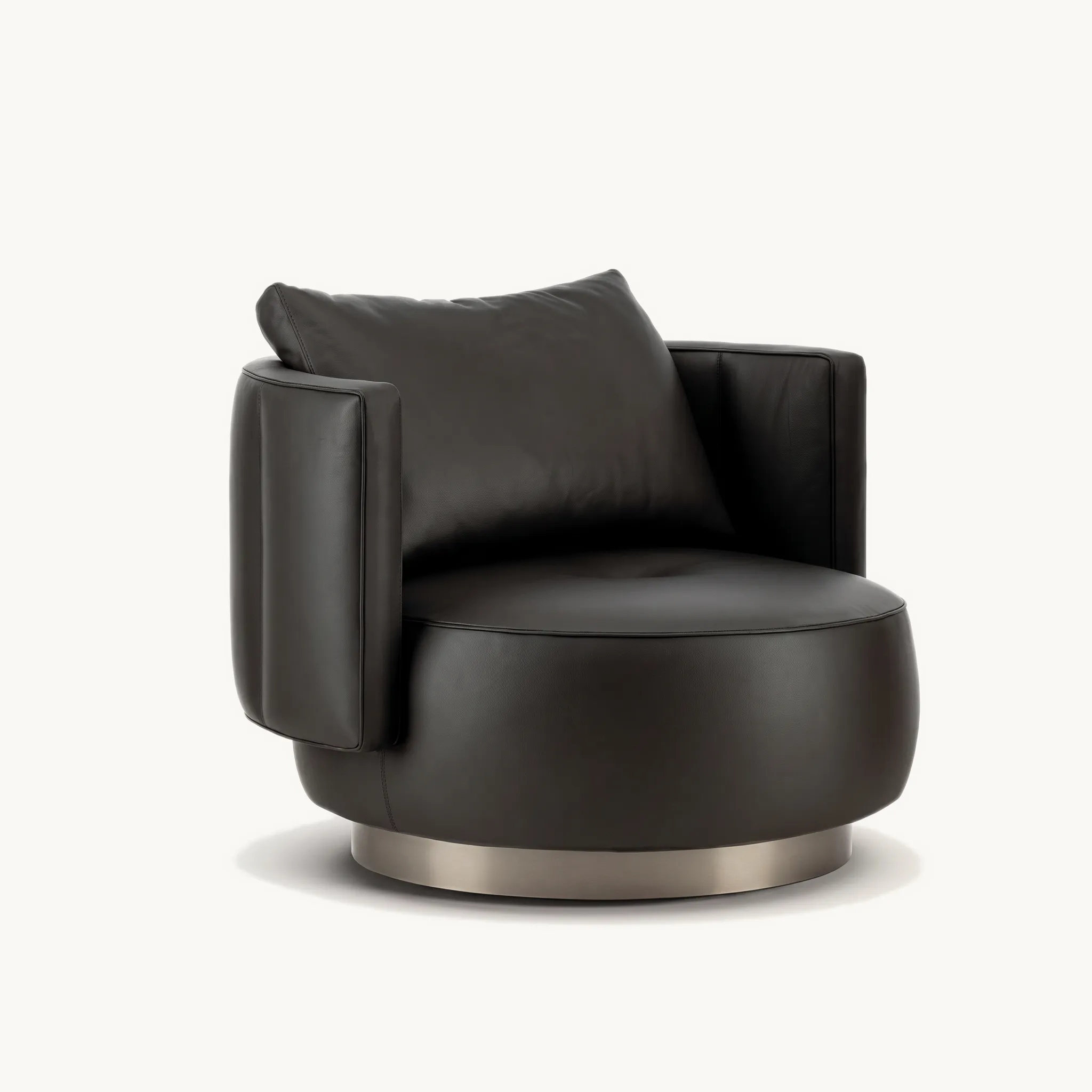
See the Bold armchair in the catalogue
Frequently asked questions
Which fabric lasts longest for a study armchair?
Wool and dense velvet rated 25,000–35,000 Martindale cycles, depending on how heavily the chair is used.
Is bouclé suitable for a daily-use armchair?
On the seat and back, yes — but the armrests are better in a denser material, or the loops will pull within months.
How often should a study armchair be reupholstered?
With quality fabric and moderate use, not sooner than 7–10 years, though the armrests sometimes need a local redo earlier than the rest.
Is there a fabric fully resistant to cat claws?
No — mills are honest that neither velvet nor bouclé is fully claw-proof; a tight herringbone weave without long pile comes closest.
Can the armrests be a different fabric from the rest of the chair?
Yes, this is standard zoning practice — a durable fabric on the armrests, a more decorative one on the back and seat.