Marble fears acid, oak fears dry air — understanding each material’s one weak spot keeps both looking new for a decade.
Two materials, two different care logics
Marble and oak often share one interior, but their care rules barely overlap — marble’s enemy is acid and harsh chemicals, while oak reacts to air humidity and direct heat. Mixing up the two rule sets is the fastest way to damage either material.
Why marble is porous, and what that means
Marble stays microscopically porous even after polishing, so acidic liquids — wine, lemon or tomato juice, salad vinegar — soak in and react with the calcite, etching a dull, slightly rough mark rather than leaving a simple stain that soap and water can lift.
Light and dark marble are similarly porous — the difference is visibility, not resistance: an etch mark blends into dark stone more than into light stone, even though the damage itself is identical.
Sealant: what it does and when to renew it
Sealant does not make marble immune — it temporarily closes surface pores, slowing absorption and buying time to wipe up a spill before acid reacts with the stone; it needs renewing roughly once a year, depending on use.
A simple water-drop test tells you: if the drop beads on the surface for a minute, the sealant is still working; if it darkens and soaks in faster than that, it is time to reapply, before the first real wine stain.
What to do with a fresh stain, and what never to do
- Blot spills immediately from the edge inward, never rub them outward
- A baking-soda poultice under plastic wrap for a few hours helps fresh grease marks
- Never use vinegar, lemon juice or other acidic cleaners on marble, even "for shine"
- Abrasive sponges and powders scratch the polished surface, creating new spots prone to staining
- Old, already-etched marks rarely respond to soda — a stone specialist can grind and re-polish the local area
Marble vs engineered stone: the care difference
Natural marble and porcelain stoneware that imitates it need different care — stoneware is fired nearly pore-free and shrugs off acids with no sealant, while real marble stays porous regardless of polish quality, which is why the coaster-and-sealant rule applies only to genuine stone.
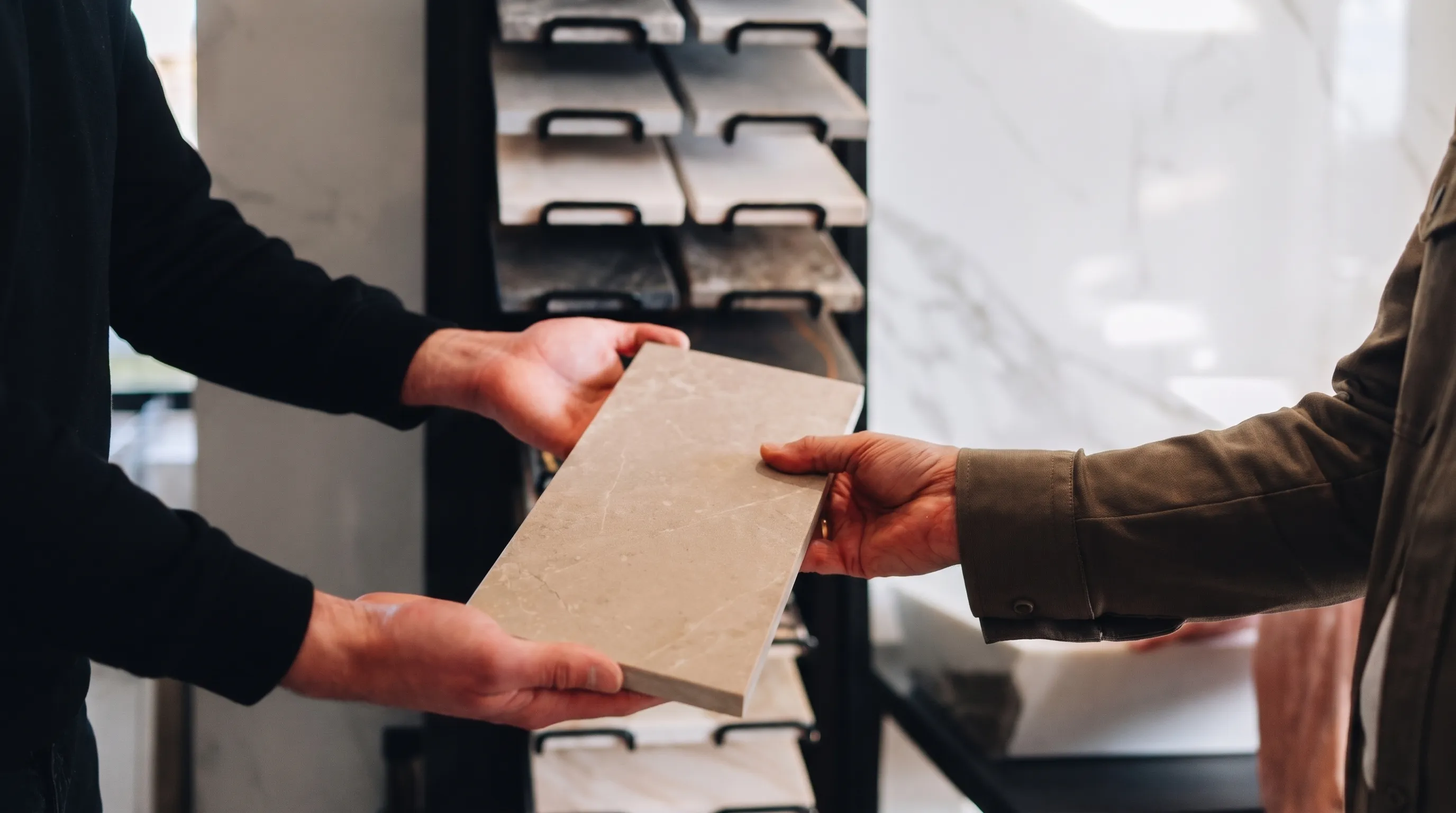
Before buying, it is worth confirming whether the veining is genuine, one-of-a-kind marble or a printed stoneware pattern that eventually repeats — not a question of which is objectively better, but of how much upkeep you are actually willing to keep up with.
The three-coaster rule
Wine, lemon juice and vinegar cause most marble stains in an ordinary home — coasters and placemats are a required habit here, not a decorative extra.
When only a stone specialist will do
Deep edge chips, cracks reaching the slab’s base, and widespread scratch patterns from abrasive cleaning need a stone specialist, who grinds the area with progressively finer diamond pads and re-polishes it to match — attempting this with ordinary sandpaper leaves a duller patch than the original damage.
Common care mistakes with both materials
Most damage to both materials comes from a few repeated habits, not heavy use: an acidic "all-surface" cleaner for marble, or a damp humidifier tray or a windowsill throw left directly on oak, drying the wood unevenly overnight.
Legs and hardware: a separate risk zone for oak
Thin oak legs wear differently from a wide tabletop — most scuffing happens where they meet the floor; felt pads under the legs protect both the floor and the leg’s end grain from chipping when furniture gets shifted.
Why oak is the most durable solid wood
Replace felt pads once the felt thins and the hard backing shows through — usually every year or two with active household use.
Oak’s dense fibre structure resists scratches and dents noticeably better than pine, birch or most mid-range furniture woods, which is why it is chosen for tables, shelving and bed frames used daily for decades.
Oak’s real enemy is not time but dry air — below 30% humidity, typical in winter near a radiator, the wood shrinks unevenly and can crack along the growth rings; keeping humidity at 40–60% removes the risk almost entirely.
Oil or lacquer: which to choose for an oak tabletop
Hardwax oil keeps the wood feeling warm and alive to the touch, but leaves no fully waterproof film — a forgotten water or sauce spill can leave a faint mark, and the finish needs renewing every three to four months with heavy use.
Lacquer forms a continuous protective film and handles moisture and household chemicals for years without renewal, at the cost of flattening the wood’s texture compared with oil — practical for a daily dining table, less necessary for a lightly used console.
Signs that oak’s finish needs renewing
- The same water-drop test as marble: faster than a minute means it is time to re-oil
- The surface feels drier than before, or shows light scratches that do not wipe away
- Uneven lightening or darkening compared with the original look, usually where the finish has worn through
- A local oil touch-up rarely needs sanding the whole table, just the affected spot
Sun and oak: fading that shows up slowly
Solid wood by a window shifts tone under UV over months, not weeks — light oak usually yellows slightly, while dark-stained wood can fade unevenly where a tablecloth or vase blocks the sun from part of the surface.
Near an uncurtained window, periodically moving decorative objects around the table lets any tonal shift happen evenly rather than leaving a contrasting outline where one object stood for years.
Daily care for oak
A slightly damp soft cloth is enough for daily care — no alcohol, vinegar or bleach-based products, which break down the oil or lacquer layer; follow with a dry cloth so moisture does not linger.
Seasonal care: spring and autumn checkpoints
Both materials benefit from a seasonal checkpoint rather than waiting for a visible problem — autumn, when heating dries the air, is the moment to test and re-oil wood if needed; spring is a good time to check marble for small stains accumulated over winter.
A humidifier running continuously in a room with solid-wood furniture usually solves dryness more reliably than periodic oiling — oil treats the symptom, stable humidity removes the cause; without one, even an open water tray near the radiator helps during the driest winter months.
When marble and oak meet in one piece
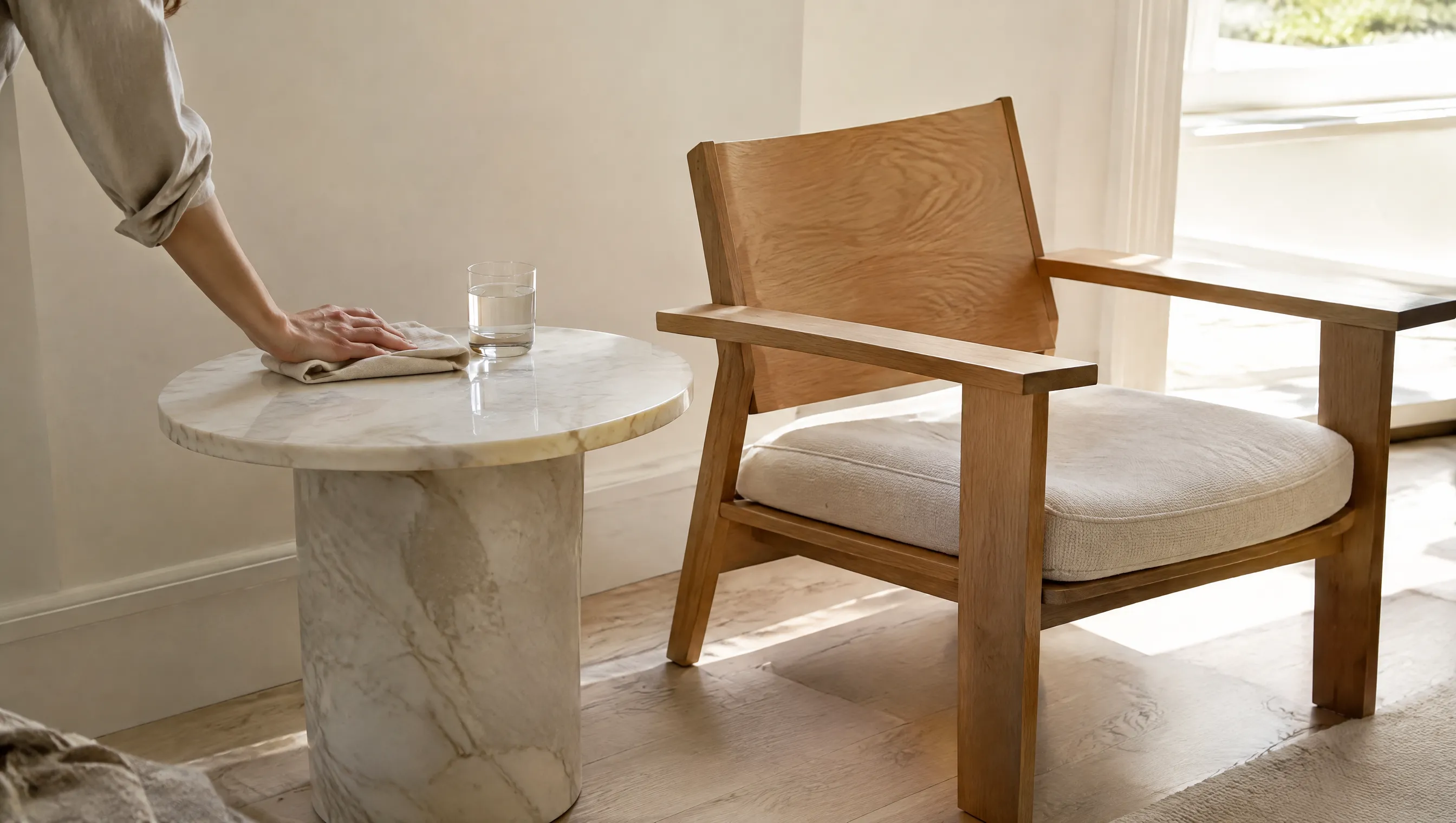
A marble top on an oak base is common, but care cannot be reduced to one universal product — keep a separate cloth for each material and avoid letting stone sealant drip onto the wood underneath.
The seam where stone meets wood often gets missed during routine wiping — dust and moisture collect there, and without a soft brush every few weeks it can leave a visible buildup on light-toned materials.
A shorter rule to remember: for marble, the risk is what lands on the table; for oak, it is what happens in the room’s air.
A note from a KALLEN HOME workshop craftsman
"Nine out of ten marble complaints are a wine or lemon stain that one coaster would have prevented. With oak it is the opposite — problems almost always come from dry winter air, not spills," says the workshop team.
Frequently asked questions
How do you know when to renew marble sealant?
Drip water on the surface — if it soaks in within a minute instead of beading up, it is time to reapply the sealant.
Which marble shows stains less — light or dark?
Porosity is the same, but etch marks are visually less noticeable on dark stone.
Oil or lacquer for an oak dining table?
For daily use, lacquer is more practical — it handles moisture better and does not need renewing every few months like oil.
What humidity does solid oak furniture need?
40–60% — below that, wood can shrink and crack along the growth rings, especially near a winter radiator.
Can an old marble stain be removed with baking soda?
Fresh grease marks, yes, with a soda-and-water poultice under plastic wrap. Old etched stains rarely respond, and the stone is best shown to a specialist.
How does caring for engineered stone differ from natural marble?
Porcelain stoneware and engineered stone have almost no open pores and tolerate acids without sealant — the coaster-and-annual-sealant rule applies only to genuine marble.