Direct sunlight fades upholstery faster than expected, especially dark, saturated tones. What actually happens to fabric in the sun, and what genuinely protects it.
Why this deserves a full article, not just a curtain tip
Most advice on protecting upholstery from the sun boils down to one line — "close the curtain" — and stops there, even though fading follows a specific, well-studied physical process with its own patterns: dye type, fibre, window orientation, even fabric surface temperature. Understanding those patterns means deciding at the ordering stage, not fighting the consequences of a bad colour choice a year later.
What physically happens to fabric in the sun
Fading is not colour being "washed out" by water or air — it is a photochemical reaction: UV light carries enough energy to break chemical bonds in the dye molecule responsible for absorbing part of the visible spectrum and producing the colour we see. Once those bonds break, the dye stops working as before and the fabric loses saturation — this happens whether the fabric is dry or damp, simply continuously in sunlight.
Prolonged UV exposure has a second, less visible but equally important effect: gradual breakdown of the fibre’s own polymer chains, which lowers tensile strength over time, not just colour. A sun-exposed sofa fabric is not just paler — it is genuinely physically weaker than the same fabric kept in shade, even before the colour difference becomes obvious.
Why dark, saturated tones fade more visibly
A faded-versus-original gap is more visible on dark, saturated colours than on light, neutral ones, for two reasons at once. First, the human eye detects brightness shifts in the dark end of the spectrum better than in the light end — so the same absolute colour change shows more on a dark blue sofa than on beige. Second, a saturated colour physically needs more dye molecules per unit of fabric, and under intense UV each one carries its own chance of breaking down — more molecules involved means a more visible cumulative effect over the same time.
Pigment and reactive dyes behave differently
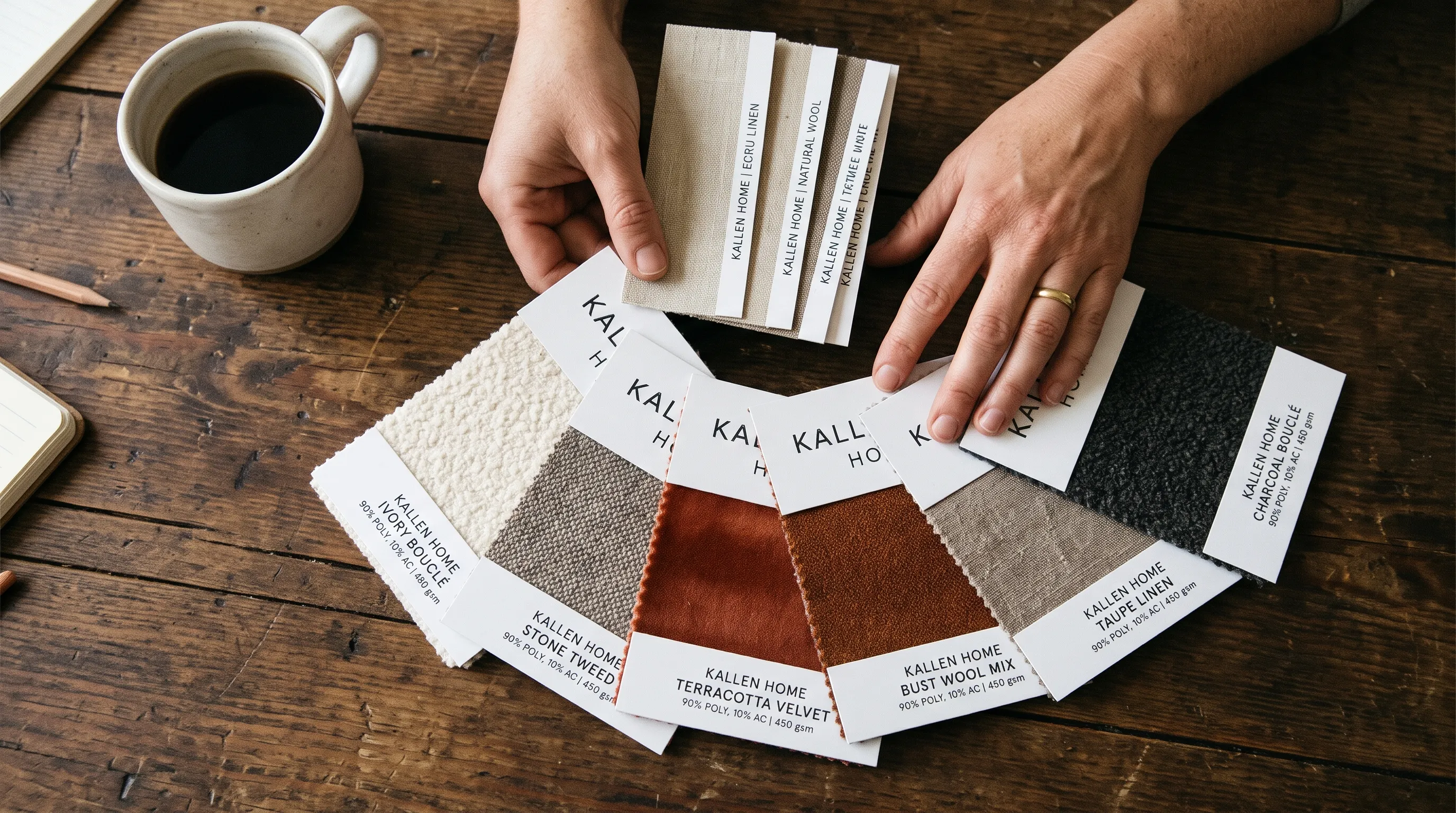
Not all dyes are equally light-sensitive — mills rate each colour and dyeing method for light fastness under ISO 105-B02, tested in a xenon chamber simulating daylight rather than real sun. The result is scored on the blue wool reference scale — the higher the grade, the more light-fast the colour, and each step up is roughly twice as fast as the one before.
- For rooms without direct sun, grade 4–5 on the blue scale is usually enough
- For windows in direct sun several hours a day, aim for grade 6 or higher
- For verandas and consistently bright rooms, the highest grade a collection offers
- Ask for light fastness separately from the abrasion rating — two different numbers on one fabric passport
Protection without moving the furniture
Heavy curtains or a voile that diffuses direct daylight reduce the strain on the fabric without needing to move the sofa — light scattered through thin curtain fabric loses much of its UV energy before reaching the upholstery. Dedicated UV window films work on a similar principle but act on the whole window, not just when curtains happen to be drawn.
Flip removable cushions
If cushions are removable, turning and flipping them periodically spreads the fading evenly across the whole surface instead of concentrating it on one side that always faces the sun. For non-removable upholstery, periodically rearranging the room’s furniture layout achieves a similar effect, where physically possible without losing function.
Window orientation matters more than it seems at the fabric-choice stage
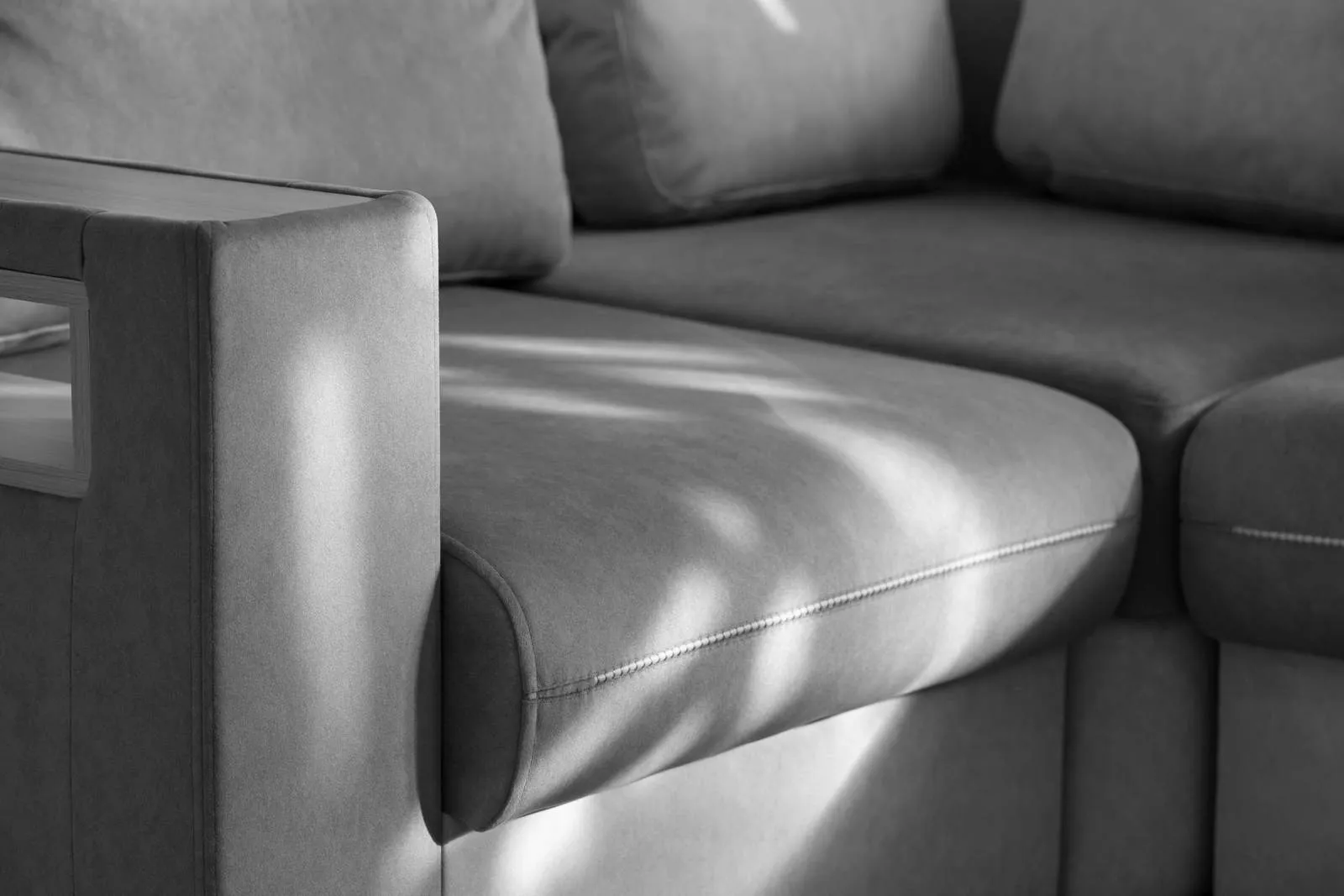
A sofa by a south- or west-facing window gets several times more direct UV per day than the same sofa by a north window — orientation can matter more than the gap between average and good light fastness. Facing a choice between similar fabrics in a south-facing room, it is worth paying for the higher light-fastness grade.
How different fibres hold up to UV
Fade resistance depends not only on dye but on the fibre holding it. Synthetic fibres like acrylic were partly designed for light resistance and often outperform natural fabrics at the same price point — why acrylic is so common in outdoor and dacha furniture. Natural fibres vary: wool holds colour reasonably well thanks to its protein structure, while viscose and pure linen lighten noticeably faster under the same sun intensity.
Velvet sits in between — its short dense pile scatters incoming light somewhat due to its structure, theoretically reducing direct UV load on any single thread versus a flat weave, but in practice light fastness is driven mainly by that collection’s dye and finishing, not pile texture alone.
What else, besides sun, speeds up fading
UV is the main factor but not the only one. Elevated surface temperature on a sun-exposed sofa, noticeably above room temperature in summer, speeds up dye-breakdown chemistry generally, including the photochemical kind — so a sofa in the sun on a hot day fades faster partly from heat on top of light itself. Contact with chlorine-based or strongly alkaline cleaners also bleaches fabric independent of sun, and the resulting local patch sometimes gets mistaken for accelerated window-side fading.
What to ask the workshop about light fastness when ordering
- The fabric’s light-fastness grade on the blue scale, not just its abrasion rating
- Whether a UV-stabilising treatment or additive was used in dyeing or finishing
- Whether a more light-fast version of the same colour exists in that collection for sunny rooms
- Whether the workshop keeps fabric from the same batch for a local reupholstery years later
A year-round habit, not just a summer one
Though summer delivers more UV per unit of time, low winter sun at a sharp angle can hit a ground-floor window just as directly, simply for fewer hours a day — so cushion rotation and curtain protection are worth making a year-round habit, not a one-off summer fix forgotten by autumn.
Seasonality: why summer is the riskiest time
In summer the sun sits higher and days are longer, so the total UV dose a window-side sofa absorbs in one summer month is noticeably higher than in a winter one at the same cloud cover — fading accumulated over several summers can look like a sudden jump, though it is really a slow, continuous process running at different speeds through the year.
Testing a swatch for light fastness yourself
Not every swatch comes with a lab report, but a rough home test works: leave half the swatch on a sunny windowsill and the other half in a dark drawer, then compare after four to six weeks. The result will not be as rigorous as an ISO 105-B02 xenon chamber, but for comparing two or three similar fabrics before ordering, it is usually enough to see which fades noticeably faster.
Furniture placement as a protection tool, not just aesthetics
A sofa placed perpendicular to a window, rather than facing it, catches direct sun only on its end, not across the whole visible seat and back — a simple layout change can sometimes protect more than upgrading to a pricier light-fast fabric. Worth raising at the room-planning stage, before the layout locks around other furniture.
What happens to wood and metal parts in the sun
UV affects more than textile — exposed wooden legs and armrests also lighten slightly over time and can shift the shade of lacquer or oil, especially on dark wood. Metal hardware — brass, chrome — is essentially UV-neutral but can heat up noticeably more than wood or fabric in the sun, worth considering if it sits where hands touch it often.
Fading versus ordinary fabric ageing
It is easy to confuse sun fading with ordinary fabric ageing from use — pile wear, pilling, general dulling from dust. The test is simple: compare a sun-exposed area with a spot that was always covered by a cushion or another piece of furniture. If the shade differs between those two zones of equal age and use, that is fading, not general ageing.
Can faded fabric be fixed without full reupholstery
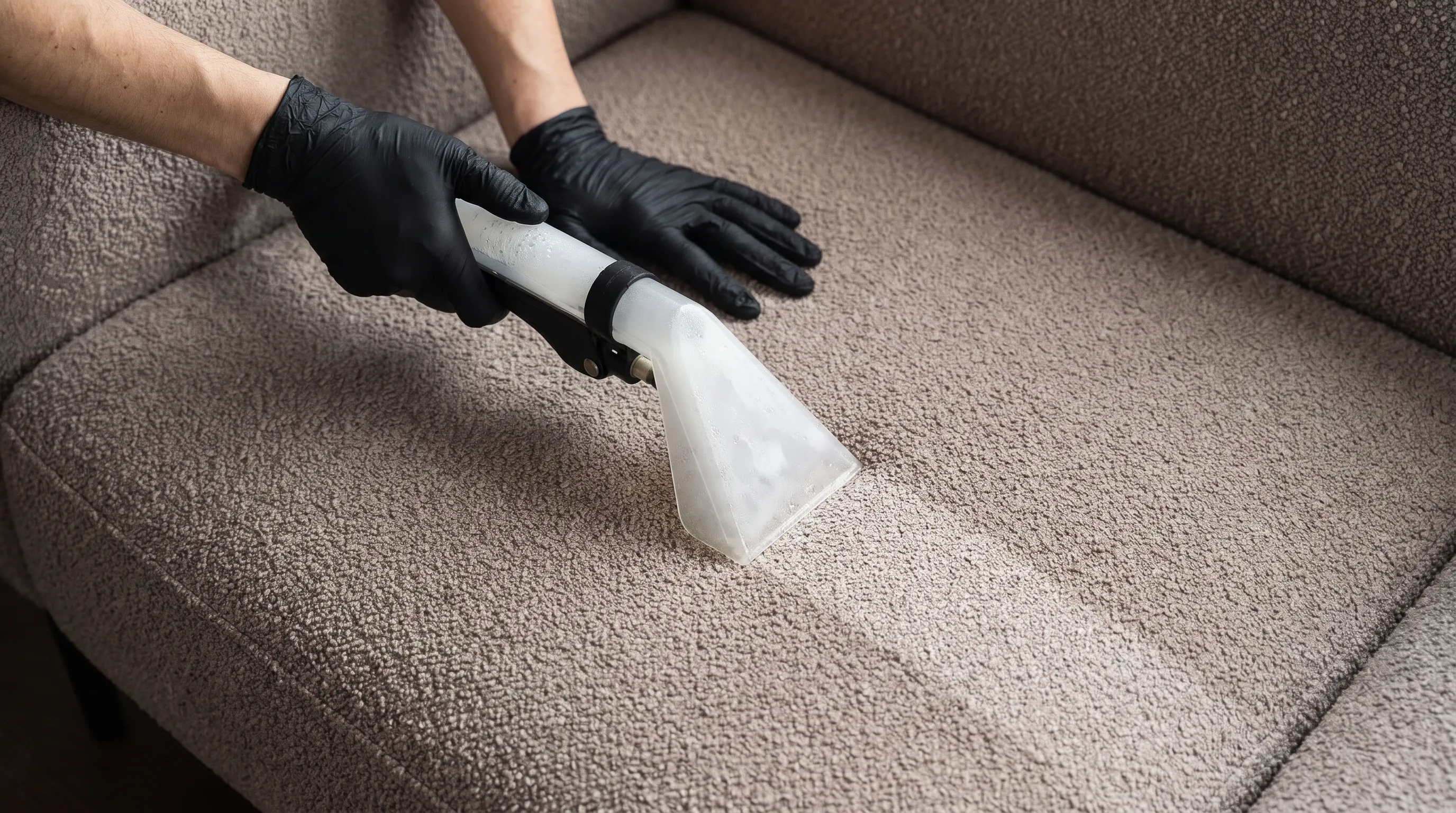
The original dye’s molecular structure cannot be restored — a broken bond is not fixed by any external treatment, so "restoring" sprays are only a temporary visual effect, not a real repair. If only one section or side has faded, local reupholstery of just that part is sometimes possible, depending on whether the workshop has leftover fabric from the same batch.
A note from a KALLEN HOME upholstery technologist
"Clients often ask about a protective sun spray — the honest answer is it reduces risk but does not remove it, and works noticeably worse than simply choosing a higher light-fastness fabric at the ordering stage. Checking the fabric passport once beats treating the sofa monthly with a product of unproven effect," notes the production team.
In their experience, clients who mention a sunny room upfront and get a higher light-fastness fabric almost never come back about fading — those who chose purely by colour without discussing window orientation sometimes return a year later asking to reupholster exactly the section nearest the light.
Window glazing and UV film: another layer of protection before the fabric
A modern double- or triple-glazed window itself blocks a meaningful share of UV compared with old single glazing — one reason sofas in recently renovated flats with new windows sometimes fade noticeably slower than in homes with original Soviet-era frames. A dedicated UV film applied to the glass cuts UV further still — 80–99% depending on the film type — with almost no loss of visible light and no visible change to the view.
For a room with a particularly expensive or fade-prone fabric, a window film sometimes saves more than settling for a more fade-resistant but less desired colour — worth discussing not only with the furniture workshop but with whoever installed or services the home’s windows.
Frequently asked questions
Which upholstery colours fade fastest in sunlight?
Saturated and dark tones — the eye catches brightness shifts in dark colours more easily, and they contain more dye molecules per unit of fabric.
What does a light-fastness grade on the blue wool scale mean?
The higher the ISO 105-B02 grade, the more fade-resistant the colour; aim for 6+ in direct sun, 4–5 for ordinary rooms.
Does voile help protect upholstery from the sun?
Yes, light scattered through voile loses some UV energy before reaching the fabric — a noticeable reduction compared with direct rays.
Can faded upholstery be fixed with a spray or treatment?
No, broken dye bonds cannot be restored — sprays give only a temporary visual effect, not a real colour fix.
Why does fabric fade faster in summer than winter?
The sun sits higher and days are longer, so the total UV dose in a summer month is far greater than in a winter one under the same cloud cover.
Which fibre holds colour best in the sun?
Synthetics like acrylic are usually more resistant than natural fibres in the same class — why they are common in outdoor and dacha furniture.
Does furniture placement help protect upholstery from the sun?
Yes, a sofa placed sideways to a window catches direct light only on its end, not the whole visible surface — sometimes more effective than a fabric change.