Velvet feels warm to the touch, but in practice it depends on pile density and height: short pile is almost as comfortable in summer as cotton, while long pile is better saved for the cooler season. Here is why velvet is unfairly branded a purely "winter" fabric.
Why velvet has a "warm fabric" reputation
Velvet’s reputation as a warm material rests on visual impression and on experience with a specific, often long-pile decorative velvet, not on the properties of the fabric class as a whole. Deep, rich colour and a softly shimmering surface read as "cosy and warm" to the eye exactly the way dark upholstery feels warmer than pale — a perception independent of how much air actually passes through the pile.
Short pile versus long: the physical difference
Upholstery velvet pile height can vary several times over — from 1–2 mm on dense "technical" velvet to 5–7 mm on expressive decorative versions. The taller the pile, the more air it traps right at the surface, acting like a thin insulating layer — that is what feels warm on skin contact. Short, tightly packed pile gives almost none of that effect: air circulates more freely at the surface, and the fabric feels closer to dense cotton than a winter throw.
This is not a marketing claim about a "breathable structure" but a direct consequence of pile geometry — the shorter and denser the yarn stands on its backing, the less air it can trap at the surface, and the closer the feel is to a smooth, flat fabric of the same fibre.
- 1–2 mm dense short pile — nearly as cool-feeling as cotton, suits year-round use
- 3–4 mm medium pile — a noticeable but moderate "warm" effect, a versatile choice
- 5–7 mm long decorative pile — the strongest effect, better for the cool season and lighter use
- Backing fibre (cotton, viscose, polyester) matters less to the feel than pile height itself
Colour affects perceived temperature as much as pile
Light velvet in cool tones — dusty blue, pale green, milky — is perceived as cooler than a saturated dark shade, even at identical pile density and height — the same colour-perception mechanism that applies to any other upholstery. For a summer interior, short pile paired with a cool light tone gives the maximum "cool" effect velvet as a fabric class can offer.
Where velvet suits summer with no compromise at all
On a chair or armchair used briefly at a time — a quick breakfast, half an hour of evening reading — the thermal difference between short velvet and cotton barely has time to show: body heat builds up gradually and does not reach a noticeable level within a few minutes of contact. This is exactly why velvet stays a good choice for chairs even at the height of summer, if the pile is chosen correctly.
For a main sofa used several hours at a stretch on a hot evening, the difference is more noticeable, and it is wiser to either choose dense short pile specifically for summer use, or combine velvet on decorative elements (cushions, a headboard) with a more breathable fabric on the seat itself.
Moisture and sweat: a second reason velvet feels warm
Besides trapping air, pile fabrics have a second summer-discomfort factor — a denser surface releases skin moisture into room air less readily than a porous natural fibre like linen. It is the combination of trapped heat and trapped moisture, not either alone, that creates the "sticking to the seat" feeling on a hot day people usually just describe as "velvet is warm."
How to test a specific velvet swatch yourself
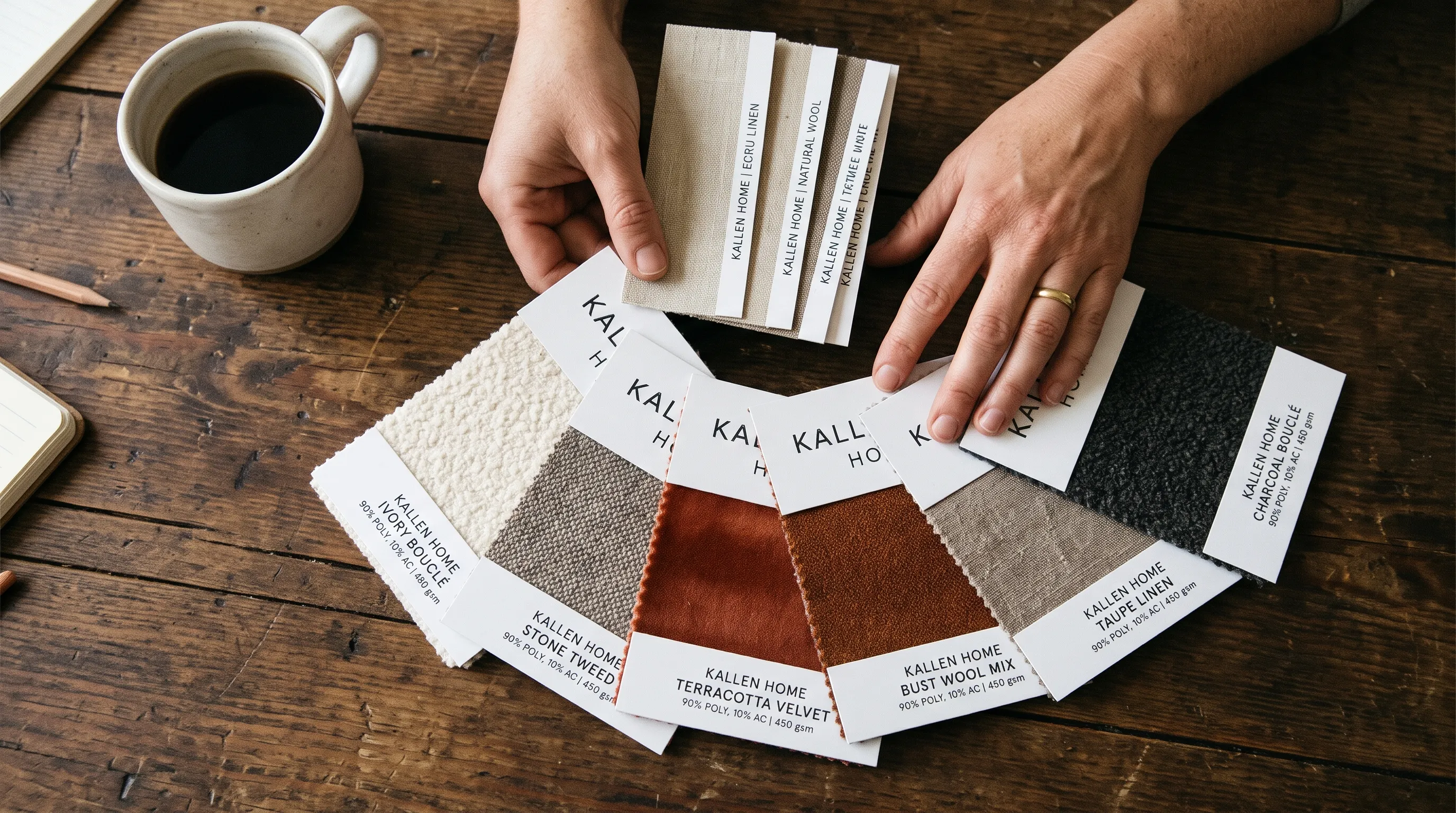
The simplest home test is resting a palm on the swatch for 15–20 seconds and comparing with a palm on the table nearby — if the warmth difference is barely noticeable, the pile is short enough for summer; if the palm noticeably warms within those seconds, consider a shorter pile or a different fabric for the main seat before ordering.
A note from a KALLEN HOME technologist
"We hear the 'velvet is winter-only' myth every summer, and it almost always traces back to one long-pile sample the client saw before, not to velvet as a fabric class. Dense short-pile velvet gets ordered for chairs year-round here with zero heat complaints," says a KALLEN HOME technologist.
By his observation, clients who arrive with a fixed "velvet equals warm" opinion almost always change it the moment they feel a short-pile sample next to a long-pile one — the difference registers in seconds and usually settles the question faster than any explanation.
The backing fibre: viscose, cotton or polyester
Besides pile height, the fibre behind velvet’s backing matters for summer comfort too. Viscose-backed velvet feels cooler at the first touch than a polyester equivalent of the same pile height, since viscose wicks moisture from skin better — this does not override pile height’s effect, but strengthens or weakens the overall feeling within the same short- or long-pile category.
Seasonal rotation: velvet in winter, something else in summer
For those unwilling to compromise on one fabric year-round, a sensible option is a removable summer cover for a velvet chair or stool, the same way sofas in denser upholstery get them. The cover can match the room’s other summer cotton or linen textiles, with velvet returning for autumn with no touch to the base upholstery — a compromise that removes the "pretty versus cool" choice entirely.
When velvet genuinely should not be ordered for summer
The one scenario where even short velvet is a poor fit for the hot season is furniture on a glazed, unconditioned veranda or in an unventilated room where ambient air temperature itself runs high all day. There, pile structure is not what decides comfort — overall room temperature is — and cotton or linen is the wiser choice regardless of that velvet’s pile height.
How velvet behaves against skin in heat
A practical detail rarely asked about in advance — velvet in heat sticks to bare skin less than faux leather or glossy textile, thanks to the pile creating a microscopic air gap between skin and fabric. This does not make velvet an unequivocally summer material, but explains why, unlike smooth synthetic coatings, it does not leave that unpleasant sticky feeling after a long hot-day sit — the gap works both ways, as a heat source and as a barrier against direct skin contact.
Bottom line: not avoiding velvet in summer, but choosing it deliberately
The main practical takeaway from this whole breakdown is simple — avoiding velvet entirely in summer is a common but unnecessary measure. It is wiser to ask the workshop for the exact pile height in millimetres and the backing fibre before ordering, rather than go by the single word "velvet" in a fabric name — those two parameters, not the season itself, decide whether a specific sofa or chair stays comfortable in July heat.
How velvet behaves near an air conditioner
In an air-conditioned room, the "warm or cool velvet" question resolves almost automatically — at a comfortable 22–24°C room temperature, the gap between short and long pile stops being decisive, since room air already prevents excess heat building up on the fabric surface. This means an air-conditioned bedroom or study can order more expressive, long-pile velvet without much worry, if its texture is preferred — the pile-height breakdown matters most specifically in homes and rooms without air conditioning.
Velvet on a summer chair’s armrests: a separate case
Even when a chair’s main seat uses a more breathable summer fabric, armrests are often left in velvet for aesthetic reasons — that zone has less contact with bare skin on the back and thighs, where heat is felt more acutely, and more with forearms, less sensitive to fabric warmth. This zoning solves an aesthetic and practical task at once — keeping velvet’s deep colour where it looks striking from across the room, and a cooler seat where comfort matters more than the picture.
Vacuuming and heat: does velvet need special summer care
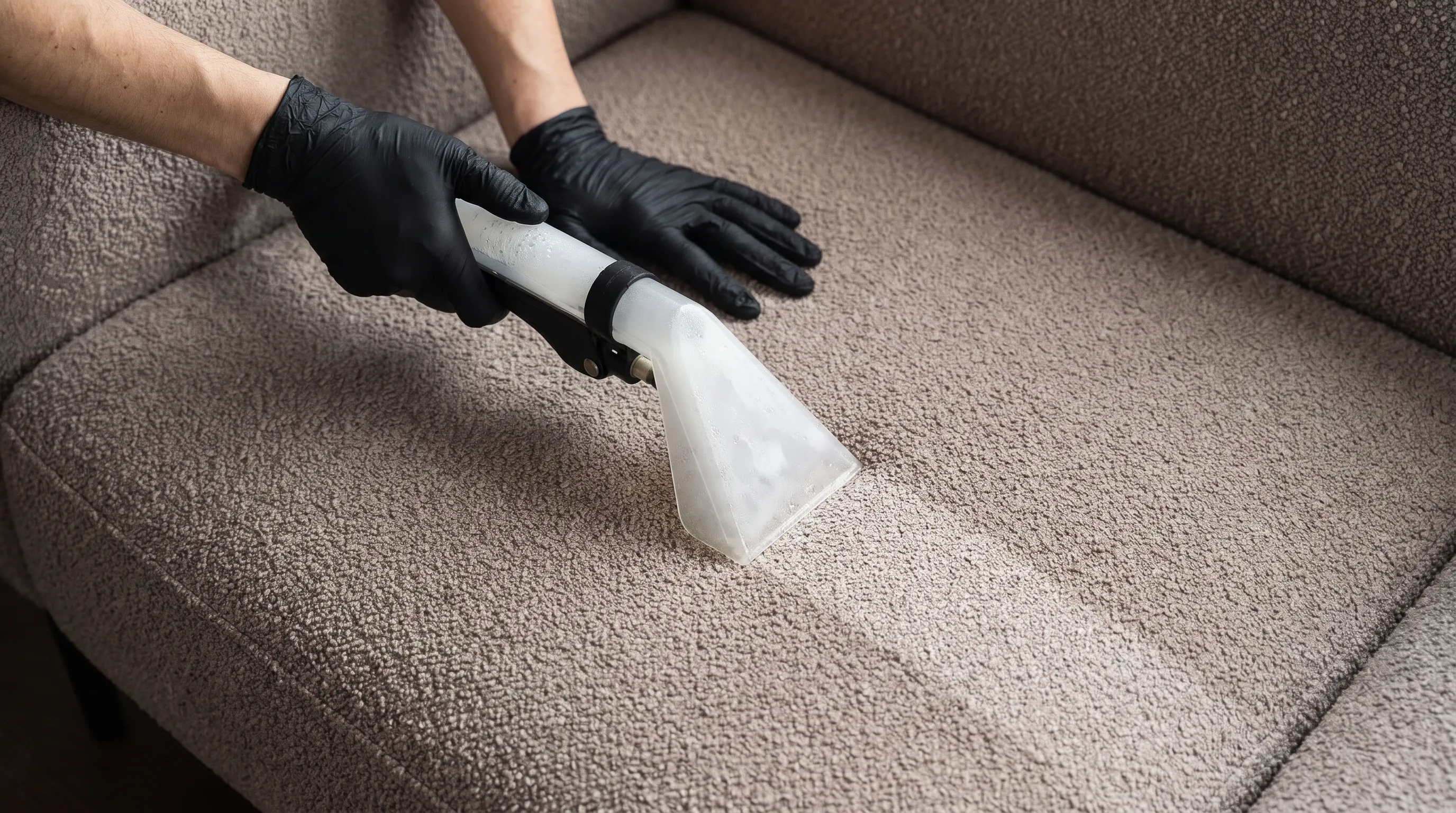
Velvet care itself does not change by season — the same weekly upholstery-attachment vacuuming and brushing the pile one direction after cleaning — but summer calls for closer attention to indoor humidity if air conditioning is running, since sharp swings from outdoor heat to dry cooled indoor air speed up natural pile tangling and flattening where fabric is touched most, so brushing velvet a touch more often in summer than winter is not unreasonable.
- Short dense pile (1–2 mm) — the best summer choice, nearly as cool as cotton
- Medium pile (3–4 mm) — a versatile year-round compromise
- Long decorative pile (5–7 mm) — for the cool season or an air-conditioned room
A short summary for anyone choosing fabric right now
For a quick decision without deep engagement with the parameters, one rule is enough to remember — pile shorter than 2 mm and a light cool tone is a no-compromise summer pick, pile longer than 4 mm and a dark saturated colour suits the cool season or an air-conditioned room, and anything between those extremes is worth checking by hand in person rather than guessing from a photo or the single word "velvet" in a product description.
Talking to the workshop: what to ask when choosing velvet
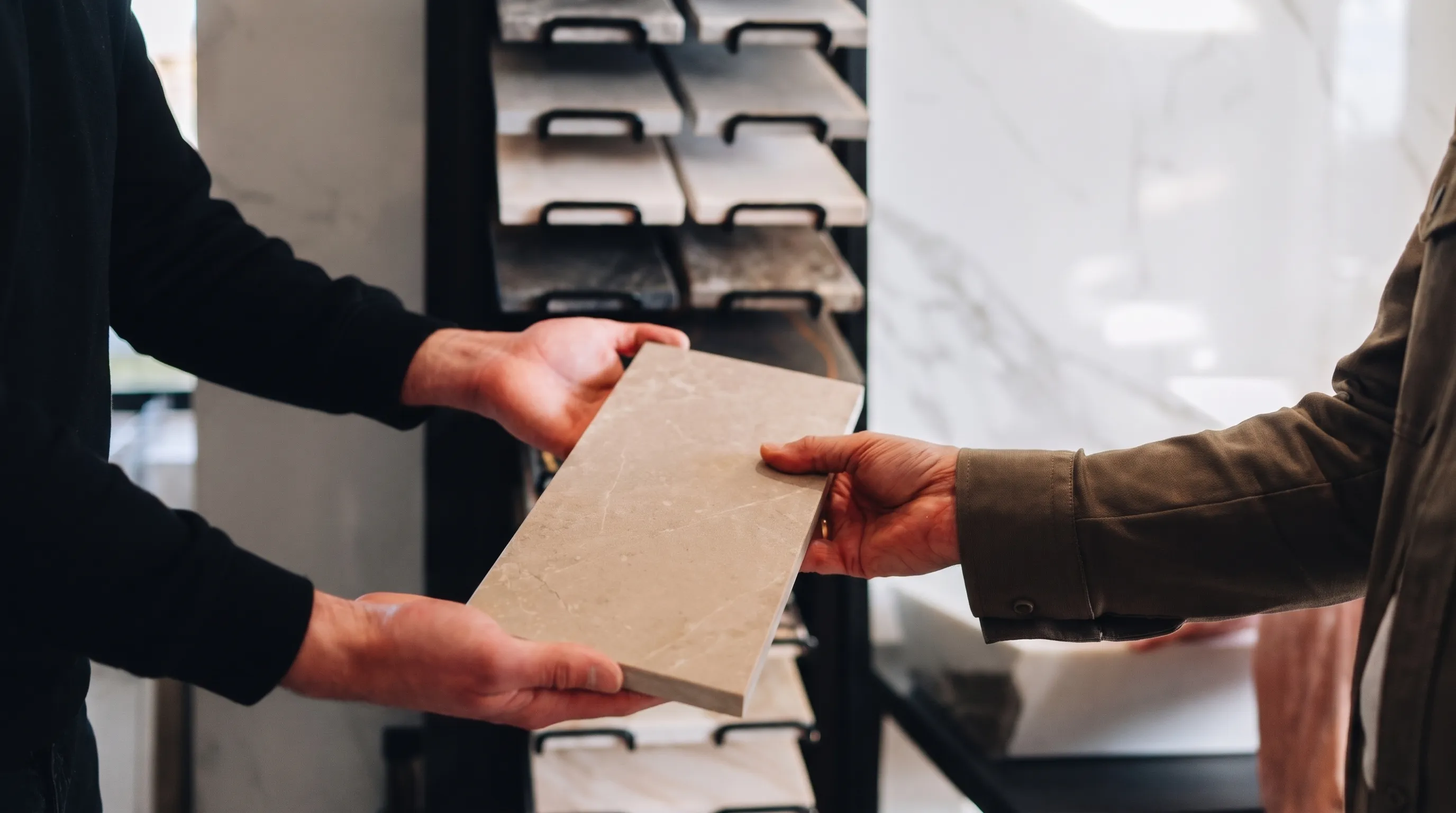
Before approving the fabric, it is worth asking the workshop directly for three concrete answers — pile height in millimetres from the fabric’s technical passport, not a general catalogue description; the backing composition (viscose, cotton or polyester); and the Martindale rating for that specific batch. These three figures give a far more reliable basis for a decision than the word "velvet" and a magazine photo, where lighting and angle almost always hide the real pile height.
If a workshop cannot immediately state pile height in millimetres and suggests going by the collection name alone, that is a cue to ask for a larger swatch and run the hand test on the spot, rather than postpone the decision hoping a small scrap’s feel will match the whole sofa’s a month into use.
Why the "velvet in summer" question surfaces now, not earlier
A few years ago, dense velvet was almost synonymous with a winter interior, and the question of its summer suitability simply did not come up as often. Growing interest in velvet as a year-round material coincided with fabric makers expanding their shade and density ranges — today the same brand offers velvet for a winter study and a covered summer terrace alike, and much of the buyer confusion traces to that expanded range, not to any real contradiction in the material’s properties.
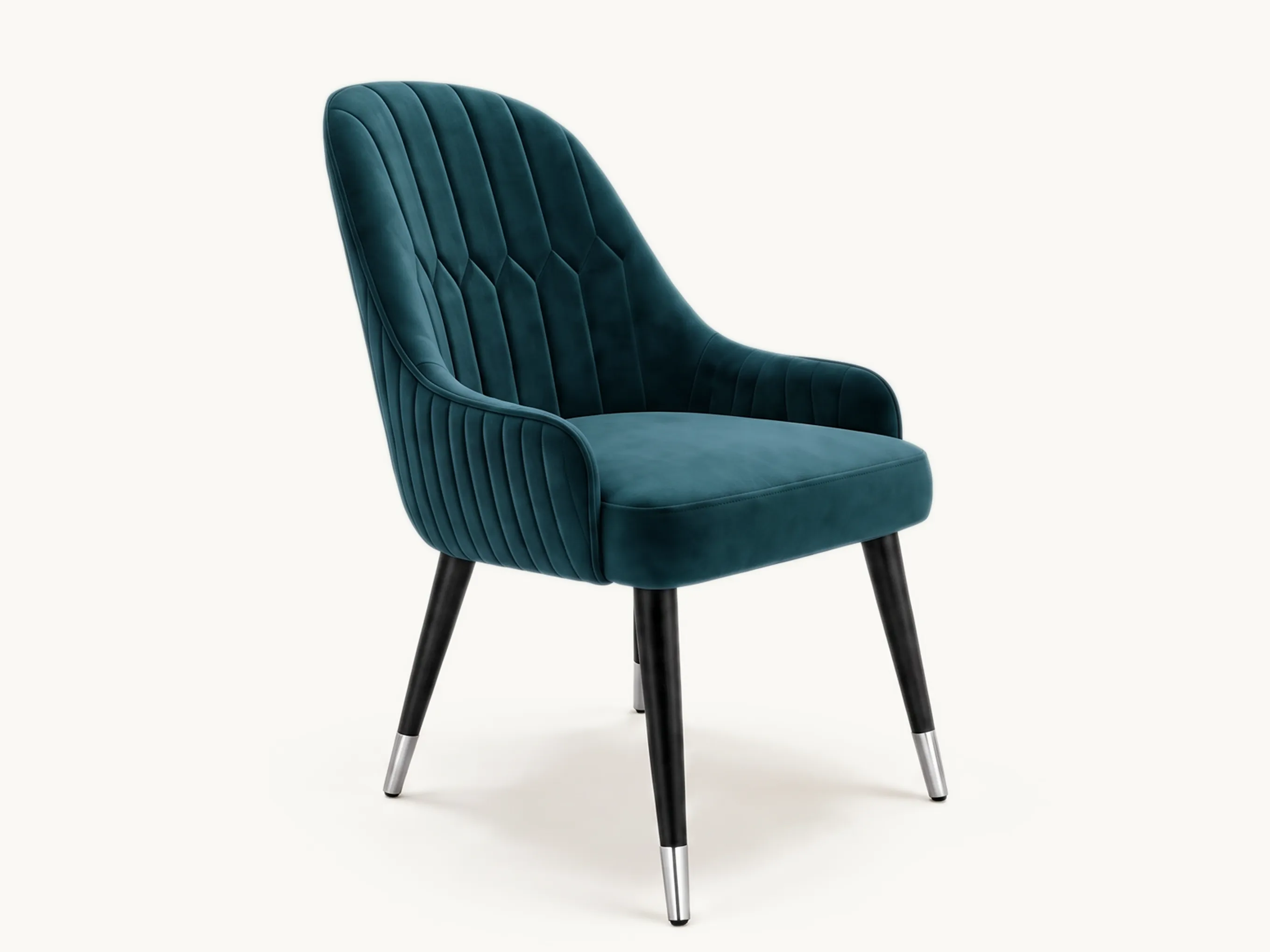
The MONAKO and BOLD armchairs in velvet: one material, different pile proportions
A catalogue often offers the same velvet in different pile heights for different models for exactly this reason — an armchair meant for a study with moderate year-round use gets a longer, more expressive pile, while a model more often ordered for an open terrace or bright summer room gets short, dense pile. The gap in fabric parameters sometimes affects the final summer feel of a piece more than the difference in the chair’s own shape.
The main idea worth taking from this whole breakdown is not to avoid the word "velvet" in the hot season, but to read a specific fabric’s passport as carefully as a product’s ingredient list — pile height, backing composition and abrasion rating together give a far more accurate answer than any general impression from one sample seen once in someone else’s interior.
Short pile does not mean "less luxurious" — it simply reflects light differently, with less shadow depth between fibres, while keeping the velvety sheen velvet is chosen for. The difference shows mainly in a direct side-by-side swatch comparison, not when looking at a finished sofa in a room.
Frequently asked questions
Does velvet suit a summer interior?
Yes, especially short dense pile (1–2 mm) in light, cool tones — it is almost as comfortable as cotton.
How does short pile differ from long pile in feel?
Short pile traps less air at the surface and feels noticeably cooler than long decorative pile.
Should velvet upholstery be changed for summer?
No, if it is short pile — for seating used briefly at a time, it stays comfortable year-round.
Why does velvet feel warmer than cotton even with equally short pile?
Partly visual perception of deep colour, partly weaker moisture release than a porous natural fibre.
How to check whether a specific velvet suits summer?
Rest a palm on the swatch for 15–20 seconds and compare with the table nearby — noticeable warming signals longer pile.