Handprints on velvet are a temporary pile-direction change, not dirt — the physics behind it, what actually helps, and who should pick a different fabric.
Pile is built to catch light — and to show touch
Velvet’s short, dense pile leans in one shared direction from the start — that directionality is exactly what gives the deep colour it is prized for. Each fibre acts like a tiny mirror, reflecting light differently with or against the grain.
When a hand, elbow or paw presses the fabric, some fibres tip away from the shared direction there, reflecting light at a different angle — the zone reads lighter or darker depending on light source position, with zero actual change in pigment.
Why the same mark sometimes looks darker, sometimes lighter
The direction pile shifts under pressure is consistent — a hand presses roughly the same way each time. Whether it looks darker or lighter depends on where the room’s light source sits relative to that direction; daylight and an evening lamp can make the same mark read oppositely.
This explains a common velvet-owner observation: a mark visible in the morning seems to "vanish" or get more visible by evening — nothing physically changed except the room’s lighting.
Skin oil and dust — a second, more stubborn cause
Beyond the optical shift, there is a cumulative effect: skin oil slightly glues neighbouring fibres together, and the stuck, denser patch attracts household dust that would otherwise just fall off upright pile. A one-off mark is almost always optical and temporary; a mark that persists for weeks in the same spot is accumulated oil and dust, not just shifted pile.
What actually removes a fresh mark
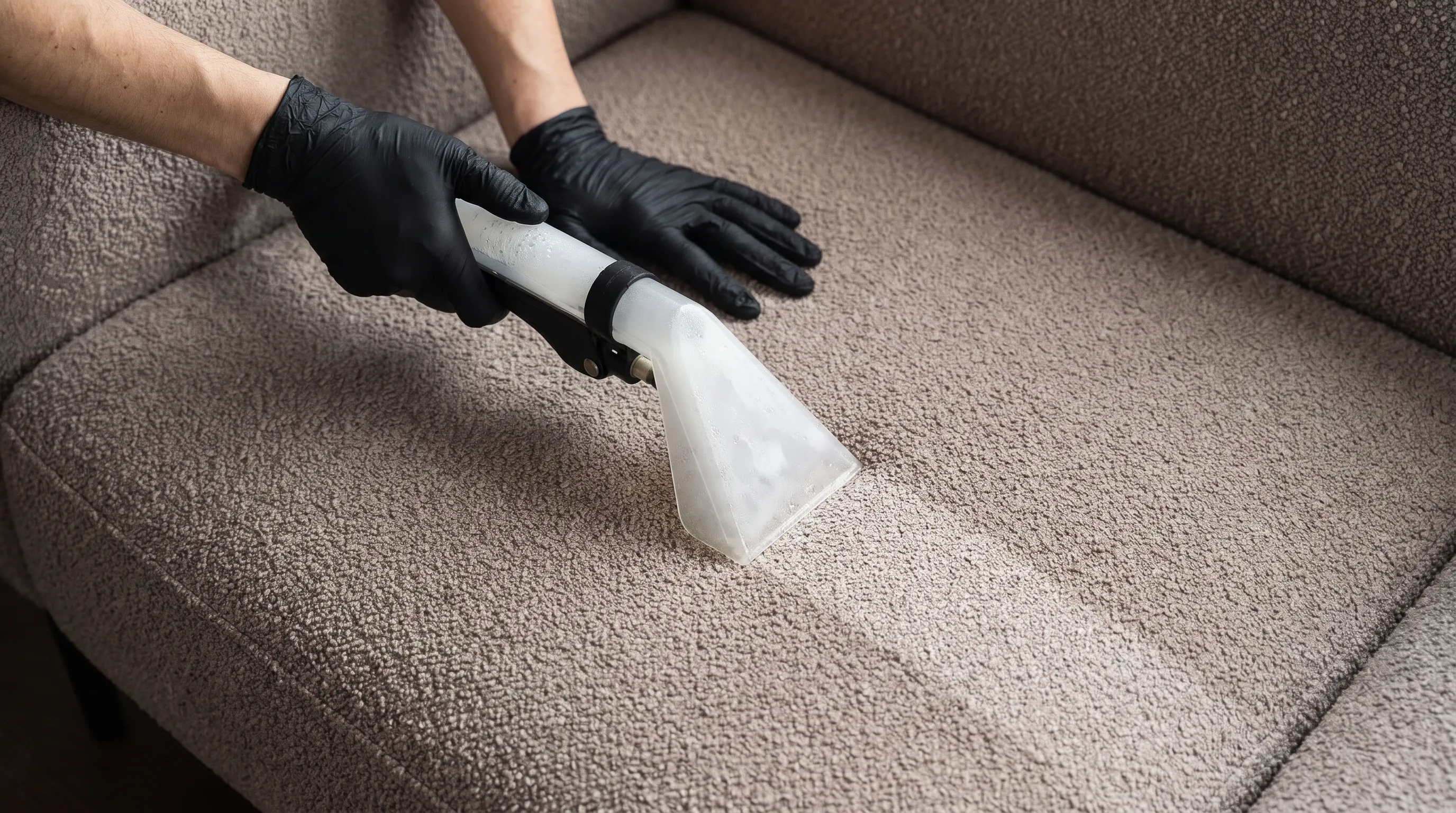
A fresh optical mark usually needs just a soft brush — or a hand — stroked along the pile’s original direction, physically returning fibres to a shared position. An oil-accumulated patch needs a proper wet clean first, with the same brushing afterward to finish the job.
- Fresh handprint — soft brush or a dry hand along the pile, 10–15 seconds
- Spill — blot immediately edge to centre, do not rub, then brush
- Old persistent mark in one spot — wet clean with a velvet-safe product, then brush
- Steam cleaner — only for short, dense pile, and cautiously even then
Room lighting matters more than it seems
In a room with one directional light source, marks show almost constantly from one side. In a room with several sources at different angles, the same zone alternates between visible and nearly invisible through the day.
The practical upshot: diffused, multi-point lighting visually "calms" velvet more than one bright directional source, which is exactly what sharpens the contrast between shifted and ordinary pile.
- Classic upholstery velvet, 1–2 mm pile — mark shows clearly but clears fastest
- Plush and long-pile velvet, 3–5 mm — more dramatic, lasts longer
- Chenille — a similar but much weaker effect from its chaotic weave
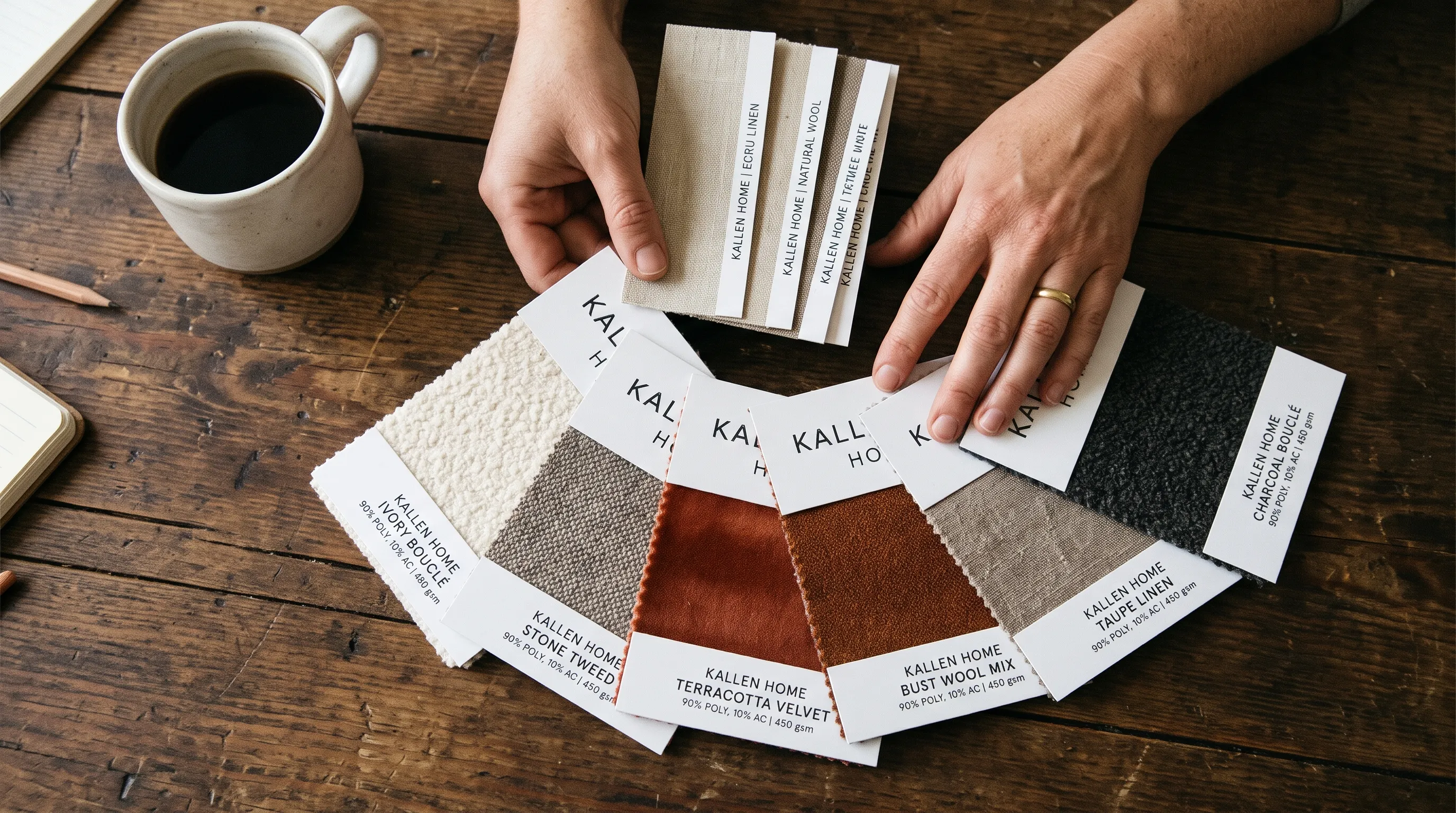
- Herringbone, bouclé, dense wool — almost no effect: no long directional pile
What velvet is made from, and how that affects marks
Cotton velvet has a soft, slightly springy pile that settles back on its own fairly quickly. Polyester velvet, now dominant in upholstery, holds a fibre’s displaced position a touch more firmly at first but usually clears faster overall, since synthetic fibre "remembers" a shift less. Viscose-blend velvet sits between the two.
How many wet cleans velvet can take before it loses its look
Good polyester-based upholstery velvet can typically handle dozens of wet cleans over its lifetime without visible pile loss — regular monthly or bimonthly spot cleaning does not itself wear the fabric out faster. The real risk is harsh solvents and too-hot water softening the backing the pile is anchored to, not the cleaning frequency.
How velvet compares to other fabrics on this point
Comparing fabrics for touch-mark visibility, not dirt: velvet and its longer-pile cousin plush show the most. Chenille, with its more chaotic yarn weave, shows a similar but weaker effect. Herringbone, bouclé and dense wool show almost none — there is no long directional pile to shift.
Velvet, velour and plush are not the same, though often confused
These terms get mixed up, but pile length and density differ, and so does the tendency to show marks. Classic upholstery velvet has short, dense 1–2 mm pile that shows marks clearly but briefly; plush and long-pile velvet, at 3–5 mm or more, show more dramatic marks that last longer, simply because longer fibres take more time and force to settle back.
True velvet, in the strict textile sense, is a historic silk or viscose fabric with very short, evenly standing pile, rarely used in furniture today due to cost and finicky care. When catalogues say "velvet," they almost always mean dense upholstery velour — a decades-old naming convention worth knowing, not a deception.
Who it suits, and who it doesn’t
Velvet suits a study, bedroom or living room where the piece is not touched every minute. For a hallway, child’s room or a home with several active pets, a denser, less directional weave — herringbone or flock — avoids the optical effect entirely.
A mid-tone shows marks less dramatically than a very pale or very dark one, where the contrast between shifted and undisturbed pile reads more sharply.
What can be adjusted at the order stage
Zoning works here too — a denser, less directional weave on the armrests where contact concentrates, the richer long-pile velvet on the back and cushions where it matters most for the overall look.
A note from a KALLEN HOME workshop craftsman
"We explain the physics of marks before the order, not after — otherwise a month later we get a ‘defective fabric’ message for completely normal velvet behaviour. If daily marks are not acceptable at all, we honestly recommend herringbone or flock instead," says the workshop team.
By their observation, within six months to a year most clients who initially worried about marks stop noticing them — the eye adjusts to a living, shifting texture the way it adjusts to linen creases or marble veining.
Photos versus seeing it live: why online images skew expectations
Catalogue and social-media photos of velvet furniture are almost always shot from one flattering angle under pre-set lighting that minimises marks. That sets an expectation no real velvet can meet with ordinary home light and actual people sitting on it — live velvet looks like what is described here, not a catalogue cover.
If marks are simply a dealbreaker
For anyone who, after all this, is simply unwilling to live with marks at all, the honest advice is not to buy velvet for a daily-use piece — reserve it for lightly used decorative chairs or cushions, and put herringbone, short-pile bouclé or dense wool where the real daily load falls.
How this behaviour changes as the fabric ages
In the first year, pile is at its springiest and settles back fastest — paradoxically making a brand-new velvet sofa seem "fussier" about marks than the same sofa years later. As the backing naturally softens with age, the optical effect becomes less sharp, and older velvet "forgives" touch more gently.
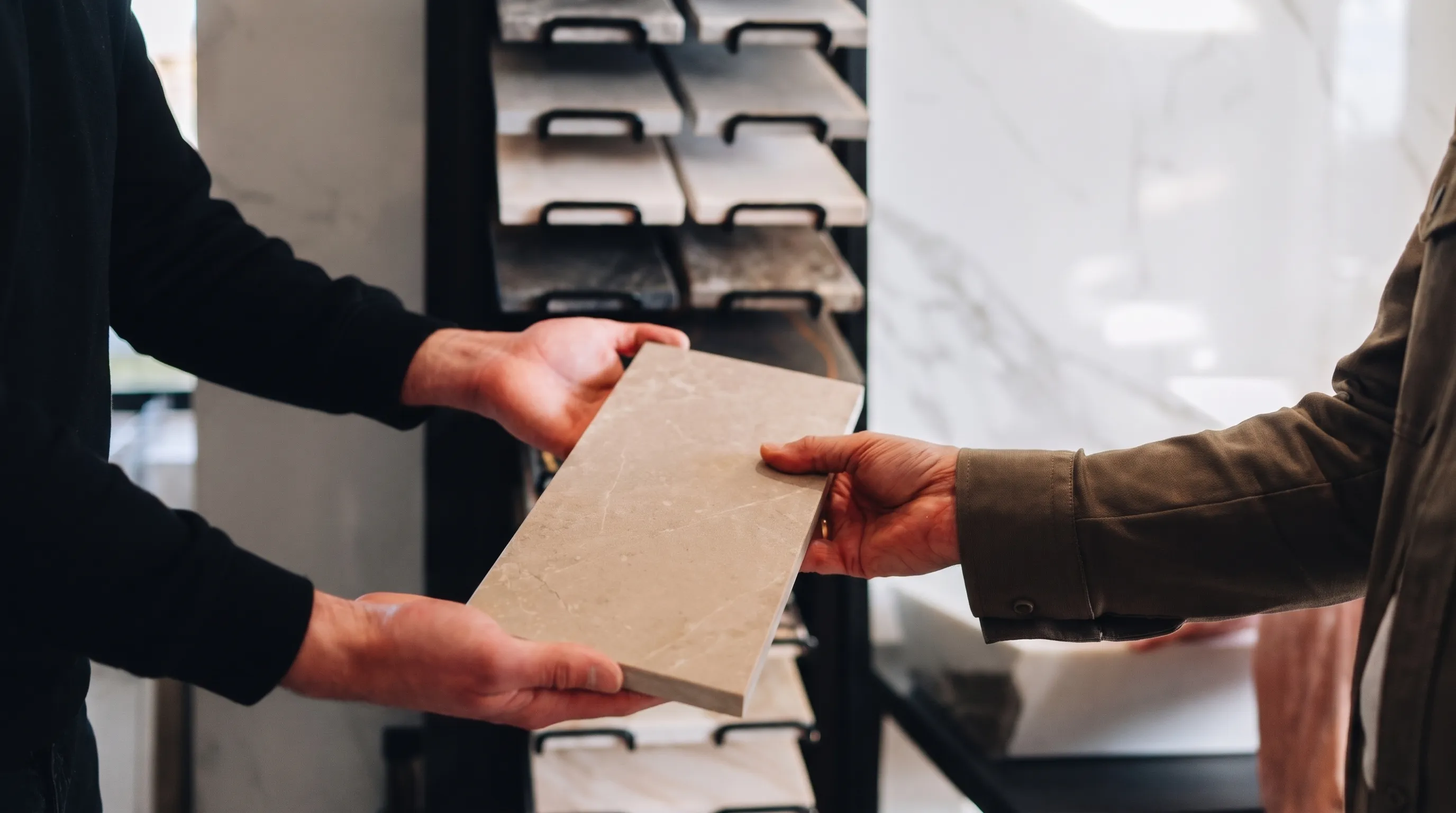
Worth knowing in a showroom specifically: the sample there is almost always brand new, showing marks at their most pronounced. A year into home use, the same velvet behaves more gently than the showroom sample suggests — no need to be put off by a demo mark on a fresh swatch.
A small practical takeaway follows for existing velvet owners worried it will only look worse with age: in most cases the opposite is true — the first months are the fussiest, and the fabric only grows calmer and more predictable from there.
If the mark comes not from a hand but a heavy object left in one spot for weeks — moving boxes, say — the mechanism is the same, but recovery takes longer, since the pile stayed compressed for weeks, not seconds. Give it a day or two after brushing before deciding a deeper clean is needed.
See the BOLD armchair in the catalog
Frequently asked questions
Can velvet be vacuumed?
Yes, with an upholstery attachment, along the pile, without heavy pressure — weekly is enough.
Does velvet fade in sunlight?
Yes, like most pile fabrics — for sunny rooms it is best to choose pieces that can be positioned out of direct light.
Does velvet suit a home with a cat?
Velvet copes less well with claws than dense, pile-free fabrics — training to a scratching post lowers but does not remove the risk.
Why does a handprint sometimes look darker, sometimes lighter?
It depends on the light’s position relative to the shifted pile direction — the same mark can look different by morning and evening light.
Is it a fabric defect if marks do not fade on their own?
No, if it clears with a brush or a wet clean — this is normal directional-pile behaviour, not a material defect.